What is turmeric in skincare?
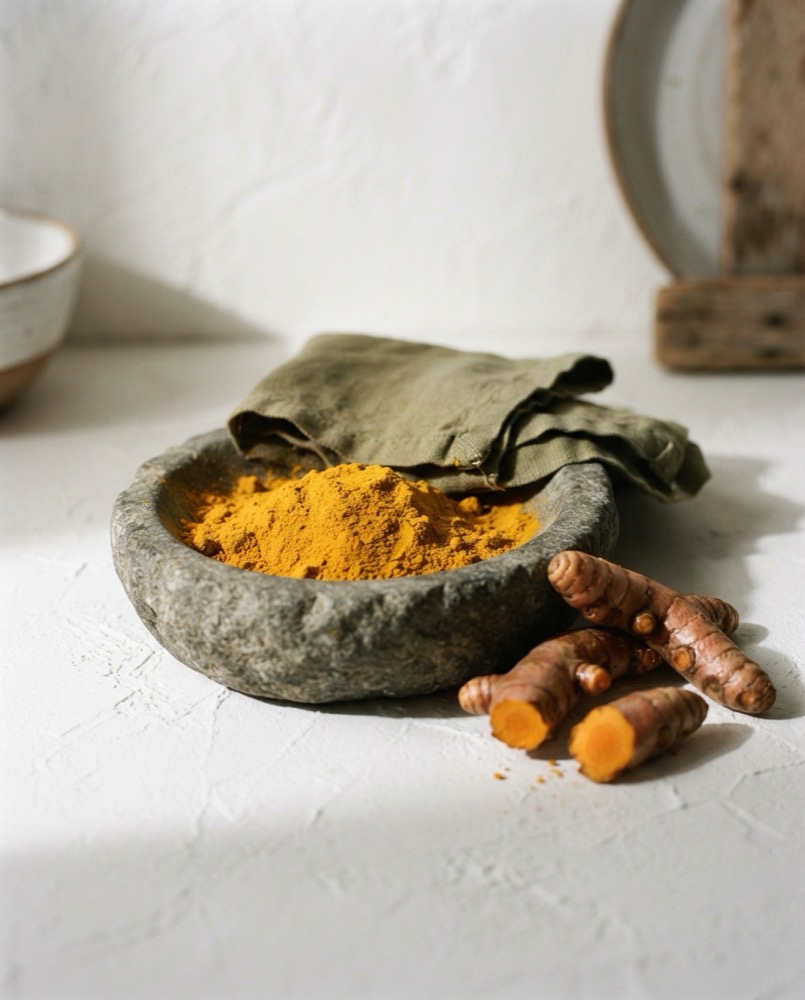
Turmeric is the rhizome of Curcuma longa, a member of the ginger family, ground into the bright yellow powder used in cooking. Its skincare activity comes from curcuminoids – principally curcumin – which are potent antioxidants and anti-inflammatories.
Curcumin is poorly absorbed and unstable on its own, so modern formulations use extracts or encapsulated forms rather than raw powder. Systematic review of clinical evidence finds genuine but modest benefit across a range of skin conditions.
What skin concerns does turmeric treat?
Its anti-inflammatory action helps acne, eczema, psoriasis and general redness, and its antioxidant capacity works against the free-radical damage behind photoageing. It also inhibits melanin production, which is why it appears in brightening masks.
Research also supports a role in wound healing and several skin disorders. The practical drawback is staining – turmeric is a powerful dye and will tint pale skin and fabric yellow.
What ingredients are best paired with turmeric?
In DIY masks it is traditionally combined with yogurt, honey or oatmeal, which buffer the staining and add their own soothing effect.
In formulated products it pairs well with niacinamide and vitamin C for tone, and with ceramides and squalane for barrier support. Patch test first – curcumin causes contact dermatitis in a minority of people. Take our Skin Quiz.
What is pigmentation?
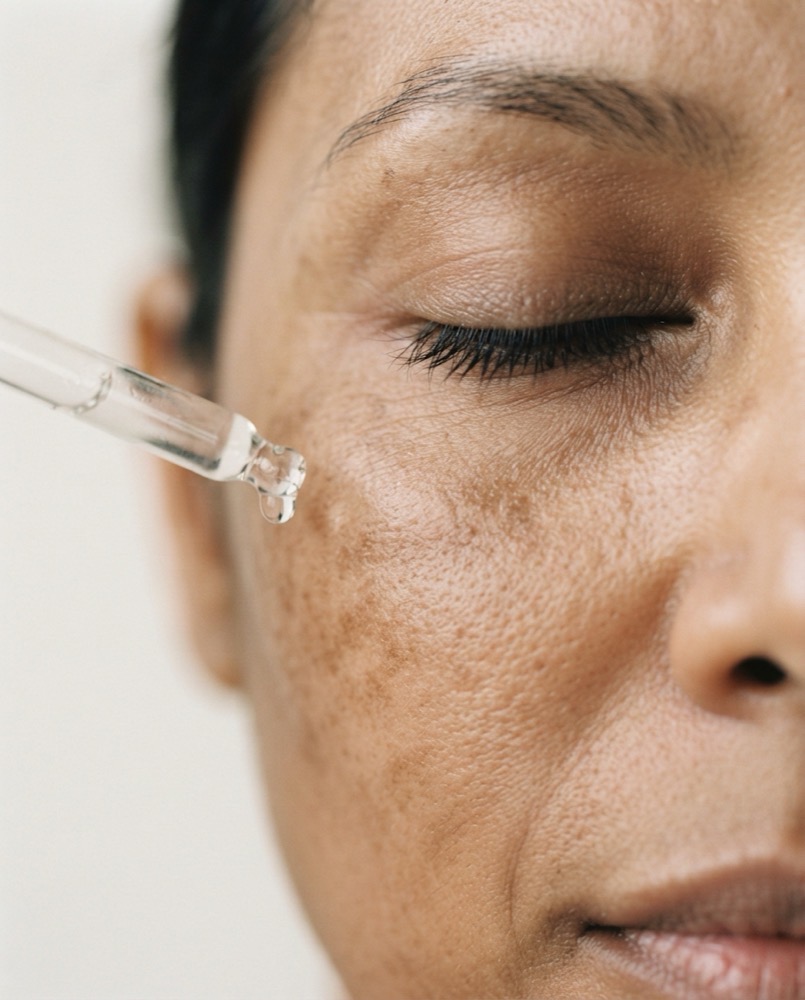
Pigmentation refers to any change in the colour of the skin caused by melanin. Hyperpigmentation – the common form – means patches darker than your natural tone, including sun spots, melasma, freckles and the marks left behind after acne or injury.
Melanin is produced by melanocytes in the lower epidermis and handed to surrounding skin cells. When that process is over-stimulated or unevenly distributed, the result is a visible patch rather than an even tone.
What causes pigmentation?
Ultraviolet exposure is the single largest trigger, because UV directly activates melanin production as a protective response. Inflammation is the second: acne, eczema, friction, waxing, burns or harsh procedures can all leave post-inflammatory hyperpigmentation, which is more common and longer-lasting in deeper skin tones.
Hormonal change, certain medications, heat and genetics complete the picture. Without daily sun protection, treated pigment reliably returns.
What ingredients are best for pigmentation?
The most effective topicals work at different points of melanin production: vitamin C and niacinamide, azelaic acid, tranexamic acid, alpha arbutin, kojic acid and liquorice root extract.
Retinoids and gentle AHAs speed up turnover so pigmented cells clear faster. But broad-spectrum SPF worn daily is the ingredient that decides whether any of it holds – without it, results reverse within weeks. Take our Skin Quiz.