

What is tretinoin in skincare?
Tretinoin is all-trans retinoic acid – the biologically active form of vitamin A, and the only one that binds directly to retinoic acid receptors without needing conversion by the skin. It is available on prescription rather than over the counter.
It was the first topical treatment proven to reverse signs of photoageing, and remains the benchmark against which every other anti-ageing active is measured. Common strengths are 0.025%, 0.05% and 0.1%.
What skin concerns does tretinoin treat?
It treats acne at every severity by normalising how follicles shed, and it is extensively documented for photoageing – fine lines, wrinkles, roughness, sallowness and mottled pigmentation.
A vehicle-controlled comparison found 0.025% delivered improvement similar to 0.1% with markedly less irritation, so higher strength is not automatically better.
What ingredients are best paired with tretinoin?
Support the barrier hard: ceramides, hyaluronic acid, niacinamide, panthenol and squalane make the retinisation period far more tolerable. Applying moisturiser before tretinoin (the sandwich method) reduces irritation without eliminating benefit.
Use at night, start two or three times a week, and never skip morning SPF. Do not combine with AHAs, BHAs or benzoyl peroxide in the same application, and do not use it if you are pregnant or trying to conceive. Take our Skin Quiz.
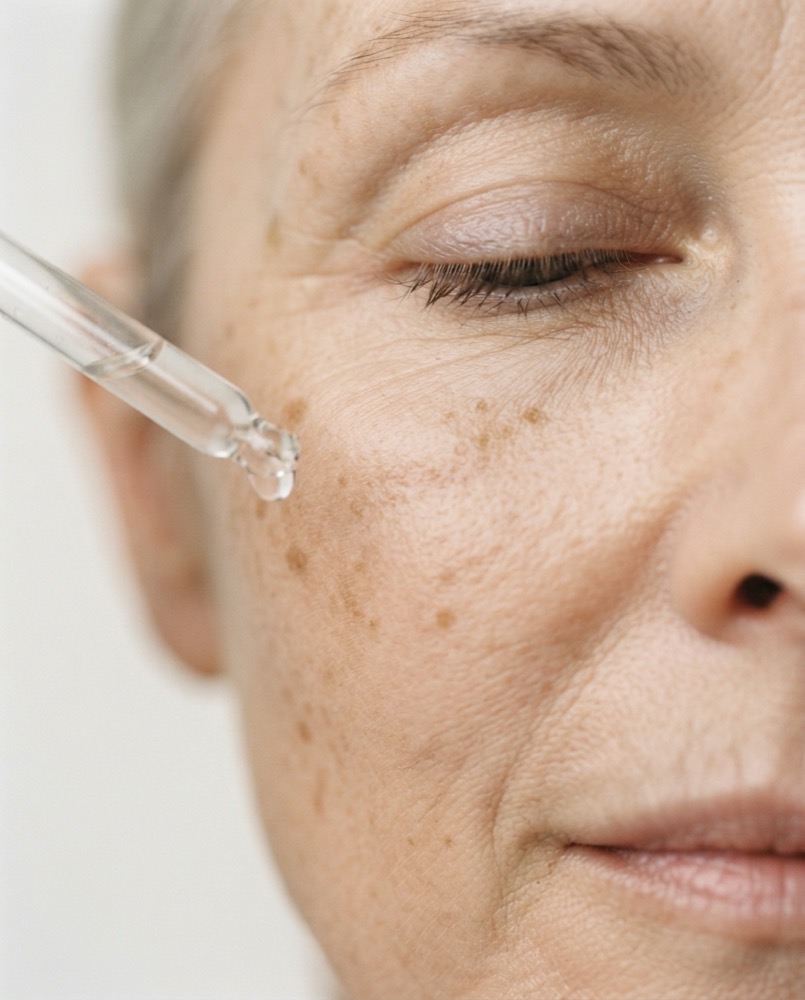
What are age spots?
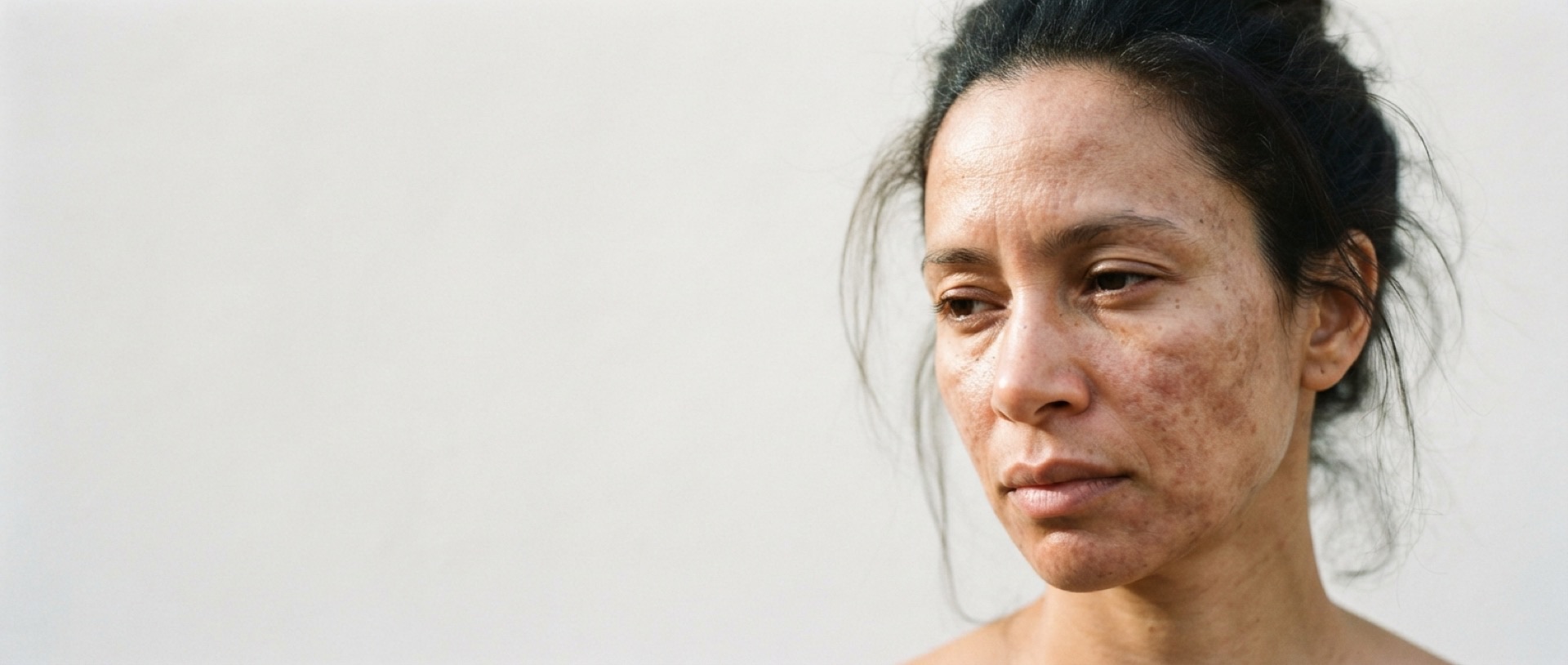
Age spots – known clinically as solar lentigines, and sometimes as liver spots – are flat, well-defined brown or tan patches that appear on skin with the most cumulative sun exposure: the face, backs of the hands, forearms, shoulders and upper chest.
Despite the name, they are not caused by age itself. They are a record of ultraviolet exposure, which is why they are common from the forties onward and why they cluster on areas that rarely get sunscreen.
What causes age spots?
Long-term UV exposure drives melanocytes to over-produce melanin in concentrated spots, and the surrounding keratinocytes stop clearing that pigment efficiently as skin ages.
Fair skin, a history of sunburns, tanning beds and outdoor work all raise the risk. Any new spot that changes shape, colour or size, bleeds or has an irregular border should be checked by a doctor rather than treated cosmetically.
What ingredients are best for age spots?
Topical treatment works but needs patience – expect three to six months. Retinoids speed turnover so pigmented cells shed faster, vitamin C and niacinamide brighten and protect, and alpha arbutin, kojic acid, azelaic acid and liquorice root inhibit new pigment.
Glycolic or lactic acid helps lift existing pigment from the surface. Daily broad-spectrum SPF, including on hands and chest, is what prevents new spots forming. Take our Skin Quiz.