What is tea tree oil in skincare?
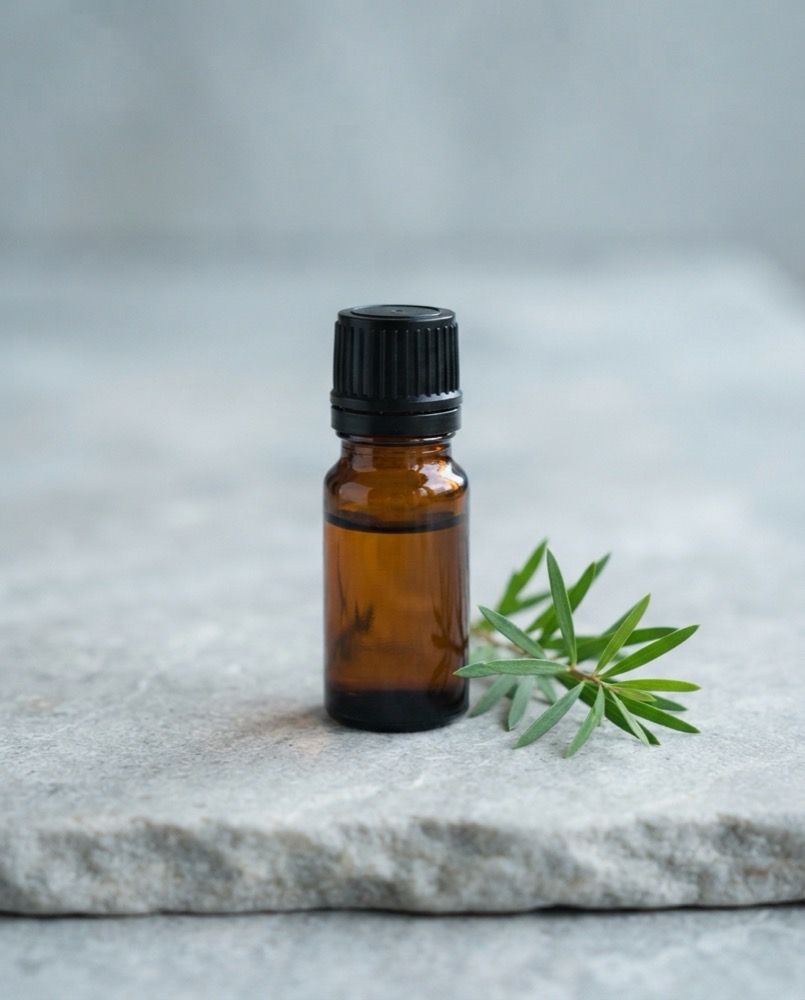
Tea tree oil is an essential oil steam-distilled from the leaves of Melaleuca alternifolia, an Australian shrub used medicinally by Aboriginal communities long before it reached Western pharmacies.
Its active constituent is terpinen-4-ol, which accounts for most of its antimicrobial and anti-inflammatory activity. Quality varies considerably between products, and oil that has oxidised is both less effective and more irritating.
What skin concerns does tea tree oil treat?
Acne is its best-supported use. A comparative trial against benzoyl peroxide found 5% tea tree oil produced a similar reduction in inflamed lesions, more slowly but with markedly fewer side effects.
It is also used for fungal conditions such as athlete’s foot and nail infections, for dandruff, and for insect bites and minor wounds. Its antibacterial and anti-inflammatory action makes it a reasonable spot treatment.
What ingredients are best paired with tea tree oil?
Never apply it undiluted – dilute to around 5% in a carrier such as jojoba or squalane. Pair it with niacinamide and salicylic acid for acne, and with ceramides to protect the barrier.
It is not suitable for delicate or very sensitive skin, and allergic contact dermatitis is relatively common, so always patch test. Store it in dark glass; oxidised tea tree oil is a well-documented sensitiser. Take our Skin Quiz.
What is pigmentation?
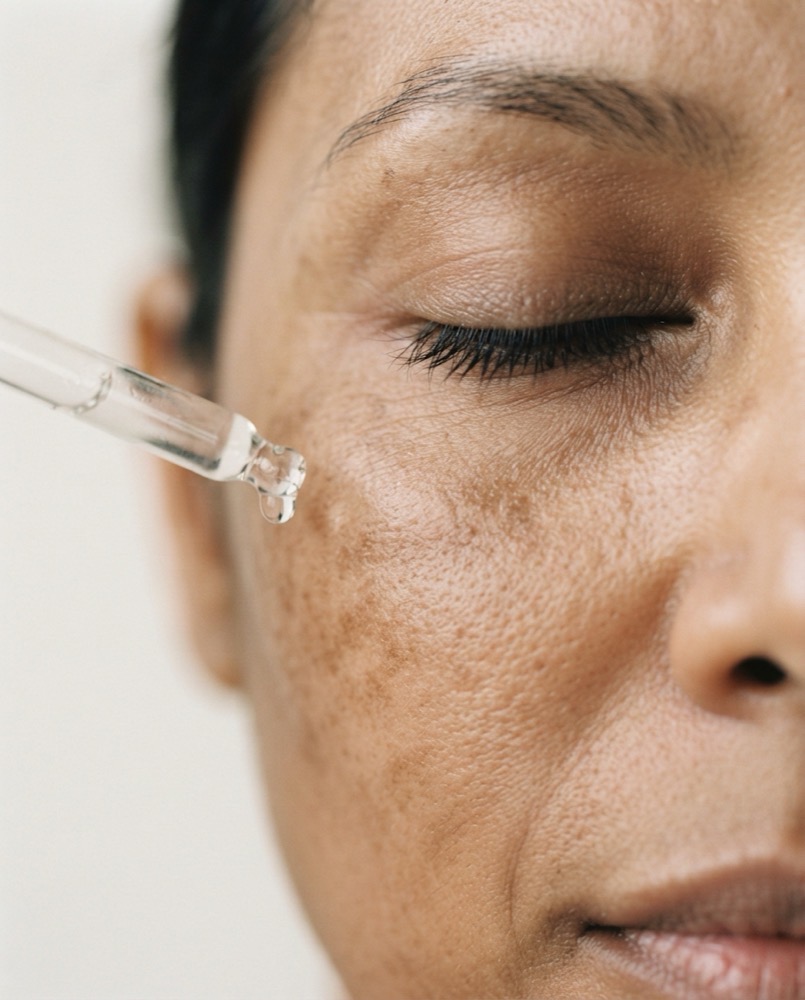
Pigmentation refers to any change in the colour of the skin caused by melanin. Hyperpigmentation – the common form – means patches darker than your natural tone, including sun spots, melasma, freckles and the marks left behind after acne or injury.
Melanin is produced by melanocytes in the lower epidermis and handed to surrounding skin cells. When that process is over-stimulated or unevenly distributed, the result is a visible patch rather than an even tone.
What causes pigmentation?
Ultraviolet exposure is the single largest trigger, because UV directly activates melanin production as a protective response. Inflammation is the second: acne, eczema, friction, waxing, burns or harsh procedures can all leave post-inflammatory hyperpigmentation, which is more common and longer-lasting in deeper skin tones.
Hormonal change, certain medications, heat and genetics complete the picture. Without daily sun protection, treated pigment reliably returns.
What ingredients are best for pigmentation?
The most effective topicals work at different points of melanin production: vitamin C and niacinamide, azelaic acid, tranexamic acid, alpha arbutin, kojic acid and liquorice root extract.
Retinoids and gentle AHAs speed up turnover so pigmented cells clear faster. But broad-spectrum SPF worn daily is the ingredient that decides whether any of it holds – without it, results reverse within weeks. Take our Skin Quiz.