What is collagen in skincare?
Collagen is the structural protein that makes up roughly three-quarters of the skin’s dry weight. It forms the scaffolding in the dermis that keeps skin firm, thick and resilient, and production begins declining from the mid-twenties.
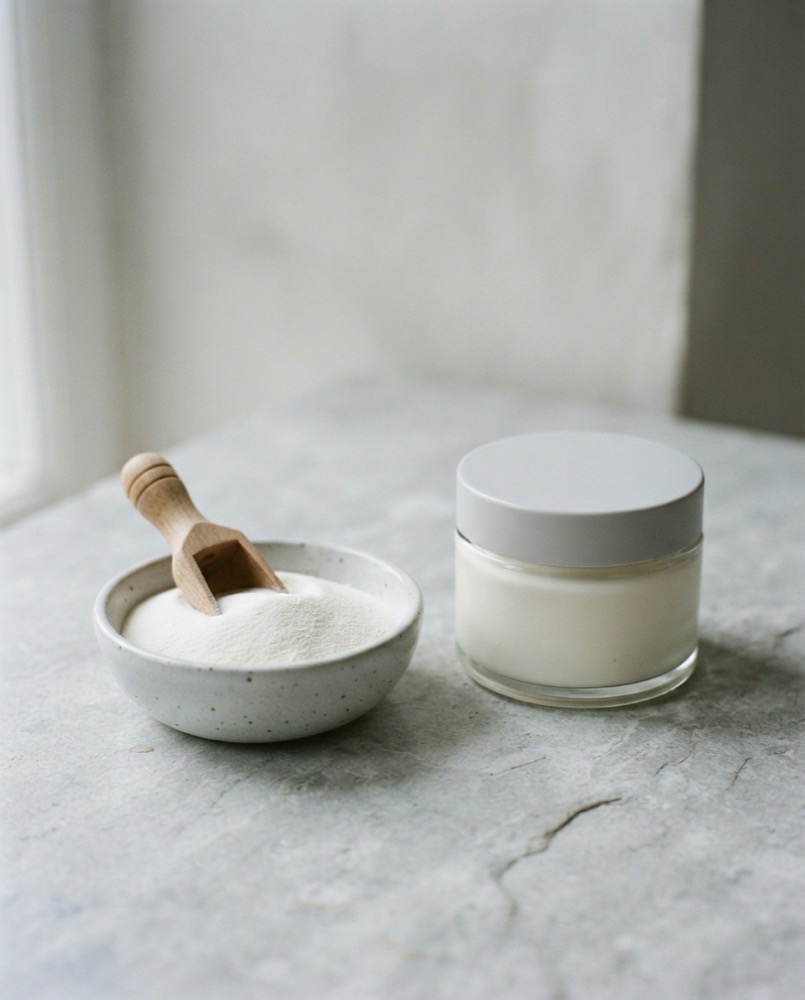
In products it appears either as hydrolysed collagen – broken into smaller peptides – or as an oral supplement. Whole collagen molecules are far too large to cross the skin barrier, so topical collagen works as a humectant and film-former rather than by replacing what you have lost.
What skin concerns does collagen treat?
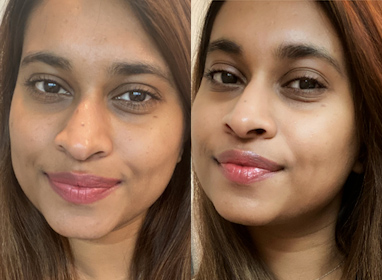
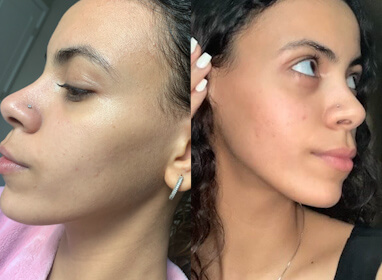
Applied topically, hydrolysed collagen hydrates the surface and temporarily plumps fine lines, improving smoothness and how skin reflects light.
Taken orally the evidence is stronger: a systematic review and meta-analysis of randomised trials found hydrolysed collagen supplementation improved skin hydration and elasticity, with most studies running eight to twelve weeks.
What ingredients are best paired with collagen?
Vitamin C is the essential partner, because it is a required cofactor for the enzymes that cross-link collagen – without it, your body cannot build collagen regardless of intake.
Retinoids and peptides stimulate fibroblasts to produce more of their own, which does more for firmness than any collagen you apply. Hyaluronic acid, ceramides and daily SPF protect what is already there. Take our Skin Quiz.
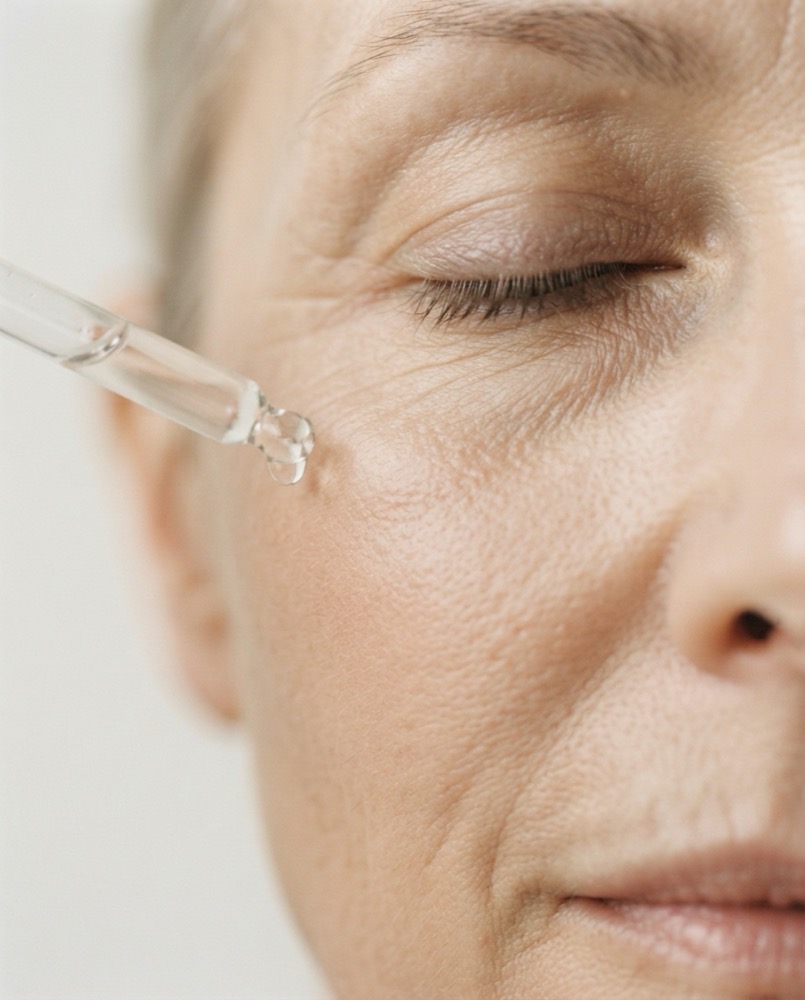
What is crepey skin?
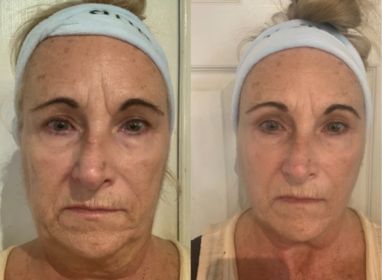
Crepey skin is skin that has become thin, loose and finely wrinkled, with the papery texture of crepe paper. It differs from ordinary wrinkles in that it affects a broad area rather than forming distinct lines, and it appears most on the under-eyes, neck, décolletage, upper arms and inner thighs.
The hallmark is loss of elasticity: pinched skin takes longer to snap back, and the surface looks crinkled even at rest.
What causes crepey skin?
The main driver is degradation of the elastin network in the dermis. Cumulative ultraviolet exposure breaks down elastic fibres and replaces them with disorganised material – the process called solar elastosis – while collagen production falls at the same time.
Age, chronic dehydration, significant weight loss, smoking, and the natural drop in oestrogen around menopause all accelerate it. Body areas get less skincare attention than the face, which is why crepiness often shows there first.
What ingredients are best for crepey skin?
Retinoids remain the best-evidenced option for rebuilding collagen and thickening the dermis over months of use. Peptides support elastin and collagen signalling, and vitamin C protects existing fibres while aiding synthesis.
Layer those over rich hydration – hyaluronic acid, glycerin, ceramides, squalane and shea butter – which visibly improves the crinkled look even before structural change happens. Daily SPF on neck, chest and hands prevents further breakdown. Take our Skin Quiz.