

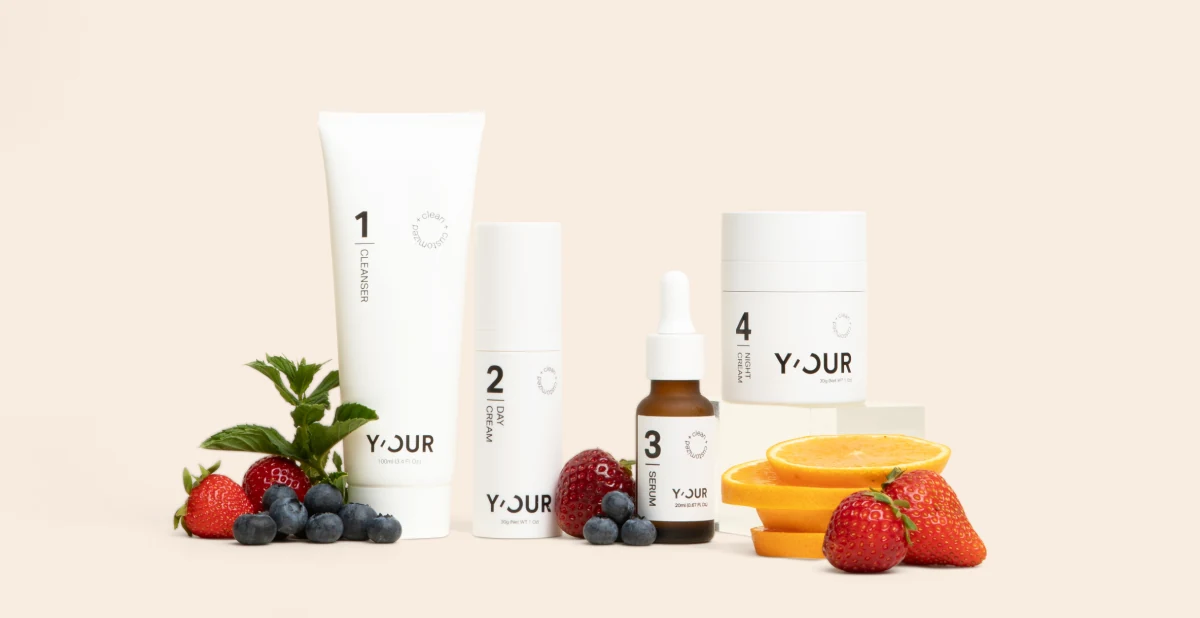
What is collagen in skincare?
Collagen is the structural protein that makes up roughly three-quarters of the skin’s dry weight. It forms the scaffolding in the dermis that keeps skin firm, thick and resilient, and production begins declining from the mid-twenties.
In products it appears either as hydrolysed collagen – broken into smaller peptides – or as an oral supplement. Whole collagen molecules are far too large to cross the skin barrier, so topical collagen works as a humectant and film-former rather than by replacing what you have lost.
What skin concerns does collagen treat?
Applied topically, hydrolysed collagen hydrates the surface and temporarily plumps fine lines, improving smoothness and how skin reflects light.
Taken orally the evidence is stronger: a systematic review and meta-analysis of randomised trials found hydrolysed collagen supplementation improved skin hydration and elasticity, with most studies running eight to twelve weeks.
What ingredients are best paired with collagen?
Vitamin C is the essential partner, because it is a required cofactor for the enzymes that cross-link collagen – without it, your body cannot build collagen regardless of intake.
Retinoids and peptides stimulate fibroblasts to produce more of their own, which does more for firmness than any collagen you apply. Hyaluronic acid, ceramides and daily SPF protect what is already there. Take our Skin Quiz.

What are age spots?
Age spots – known clinically as solar lentigines, and sometimes as liver spots – are flat, well-defined brown or tan patches that appear on skin with the most cumulative sun exposure: the face, backs of the hands, forearms, shoulders and upper chest.
Despite the name, they are not caused by age itself. They are a record of ultraviolet exposure, which is why they are common from the forties onward and why they cluster on areas that rarely get sunscreen.
What causes age spots?
Long-term UV exposure drives melanocytes to over-produce melanin in concentrated spots, and the surrounding keratinocytes stop clearing that pigment efficiently as skin ages.
Fair skin, a history of sunburns, tanning beds and outdoor work all raise the risk. Any new spot that changes shape, colour or size, bleeds or has an irregular border should be checked by a doctor rather than treated cosmetically.
What ingredients are best for age spots?
Topical treatment works but needs patience – expect three to six months. Retinoids speed turnover so pigmented cells shed faster, vitamin C and niacinamide brighten and protect, and alpha arbutin, kojic acid, azelaic acid and liquorice root inhibit new pigment.
Glycolic or lactic acid helps lift existing pigment from the surface. Daily broad-spectrum SPF, including on hands and chest, is what prevents new spots forming. Take our Skin Quiz.