

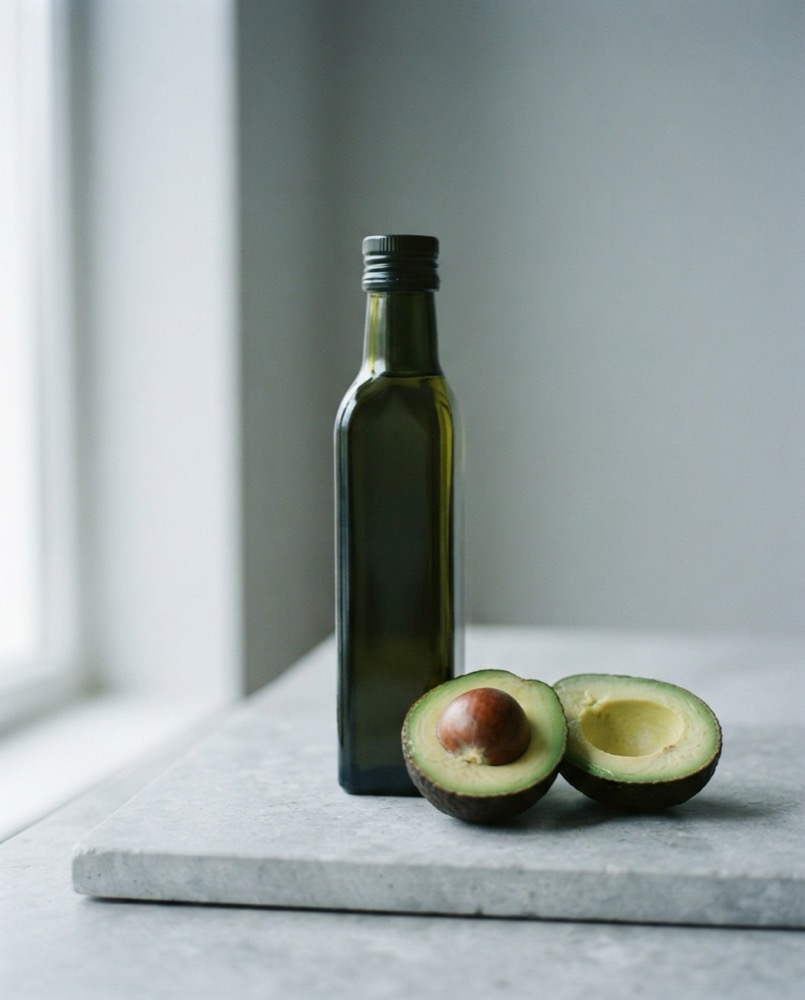
What is avocado oil in skincare?
Avocado oil is pressed from the pulp of the fruit rather than the stone, which is unusual – most plant oils come from seeds. It is thick, deep green when unrefined, and very high in oleic acid, with vitamin E, beta-carotene, lecithin and phytosterols.
That composition makes it one of the richest and most occlusive plant oils in common use, closer in feel to a butter than to a light facial oil.
What skin concerns does avocado oil treat?
It suits very dry, flaky or mature skin and rough body areas, where its high lipid content reduces water loss and softens noticeably. Its sterols and vitamin E give it anti-inflammatory activity useful for eczema and psoriasis-prone skin.
It is often used for stretch marks and after sun exposure. Being oleic-dominant and heavy, it is a poor choice for oily or acne-prone facial skin, where it readily congests pores.
What ingredients are best paired with avocado oil?
Use it as a final sealing layer over humectants such as glycerin and hyaluronic acid, and alongside ceramides and shea butter for intensive dry-skin routines.
It is also a good carrier for vitamin C oils and essential oils. If your skin is combination or breakout-prone, reserve it for body and hands, and use squalane or jojoba on the face. Take our Skin Quiz.
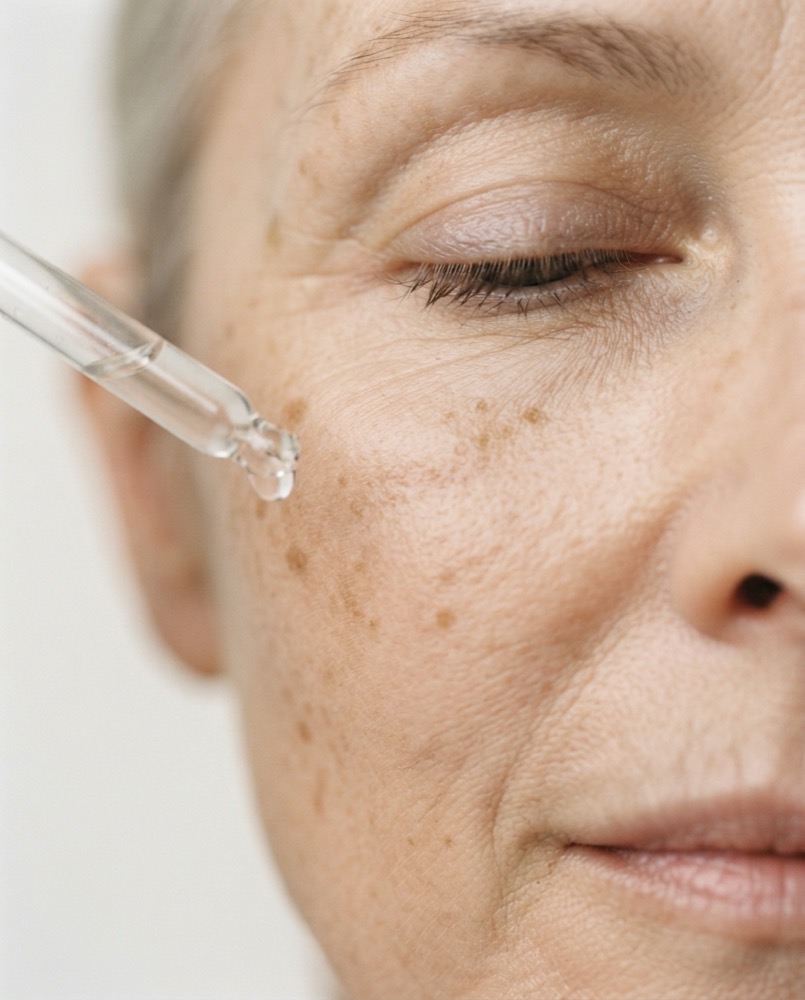
What are age spots?
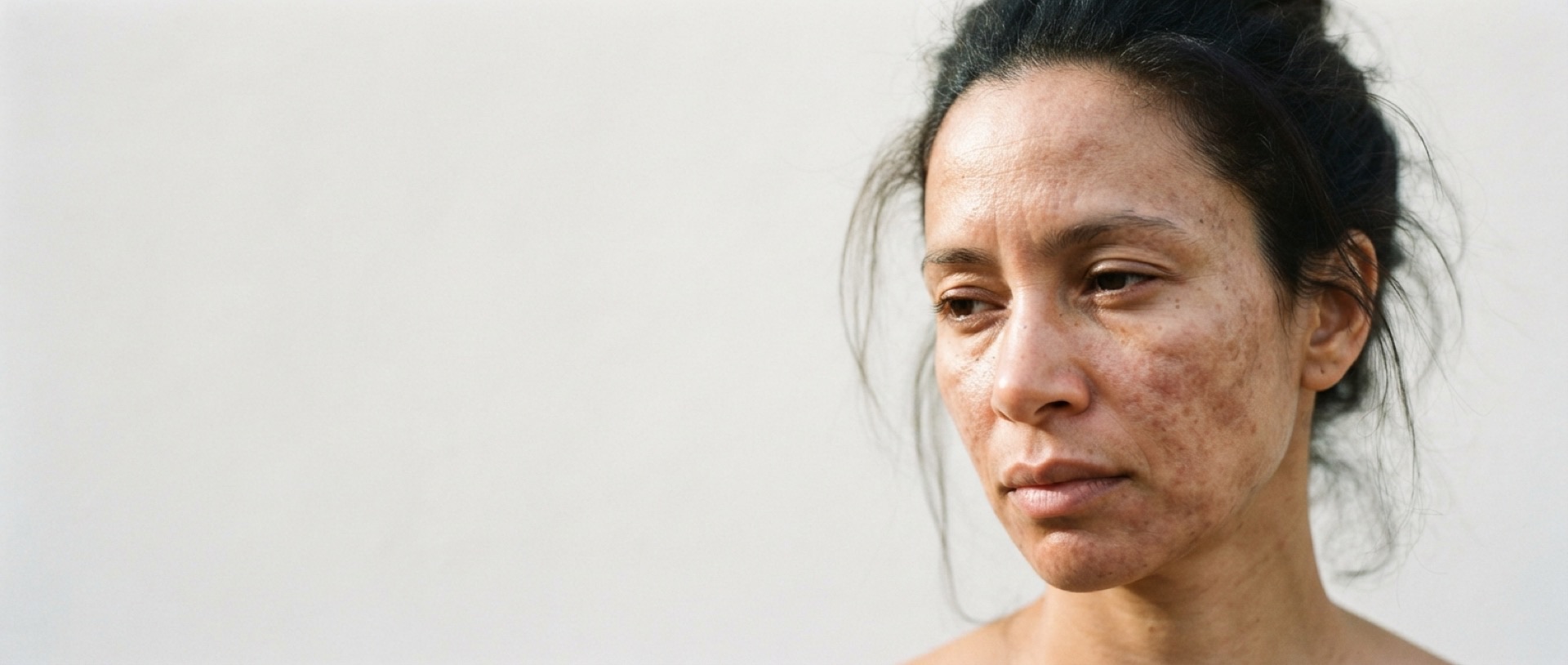
Age spots – known clinically as solar lentigines, and sometimes as liver spots – are flat, well-defined brown or tan patches that appear on skin with the most cumulative sun exposure: the face, backs of the hands, forearms, shoulders and upper chest.
Despite the name, they are not caused by age itself. They are a record of ultraviolet exposure, which is why they are common from the forties onward and why they cluster on areas that rarely get sunscreen.
What causes age spots?
Long-term UV exposure drives melanocytes to over-produce melanin in concentrated spots, and the surrounding keratinocytes stop clearing that pigment efficiently as skin ages.
Fair skin, a history of sunburns, tanning beds and outdoor work all raise the risk. Any new spot that changes shape, colour or size, bleeds or has an irregular border should be checked by a doctor rather than treated cosmetically.
What ingredients are best for age spots?
Topical treatment works but needs patience – expect three to six months. Retinoids speed turnover so pigmented cells shed faster, vitamin C and niacinamide brighten and protect, and alpha arbutin, kojic acid, azelaic acid and liquorice root inhibit new pigment.
Glycolic or lactic acid helps lift existing pigment from the surface. Daily broad-spectrum SPF, including on hands and chest, is what prevents new spots forming. Take our Skin Quiz.