What is vitamin E in skincare?
Vitamin E is a family of eight fat-soluble antioxidants – four tocopherols and four tocotrienols. In cosmetics it usually appears as alpha-tocopherol or its more stable ester, tocopheryl acetate.
Because it is fat-soluble, vitamin E concentrates in the skin’s lipid layers and in sebum, where it intercepts free radicals before they can damage cell membranes. It is one of the most established antioxidants in dermatology.
What skin concerns does vitamin E treat?
It protects against oxidative damage from UV and pollution, supports the moisture barrier, and softens dry or roughened skin as an emollient. It also stabilises other ingredients in a formula, extending their shelf life.
Evidence for fading scars is much weaker than folklore suggests, and pure vitamin E oil applied neat causes contact dermatitis in a minority of people. It performs best as part of a formulation rather than straight from a capsule.
What ingredients are best paired with vitamin E?
Vitamin C is the classic partner: together with ferulic acid they measurably increase photoprotection beyond what either achieves alone, which is why that trio anchors so many antioxidant serums.
It also works alongside squalane, ceramides and niacinamide for barrier repair. Oily and acne-prone skin should use it in a light formulation rather than as a heavy oil. Take our Skin Quiz.
What is uneven skin tone?
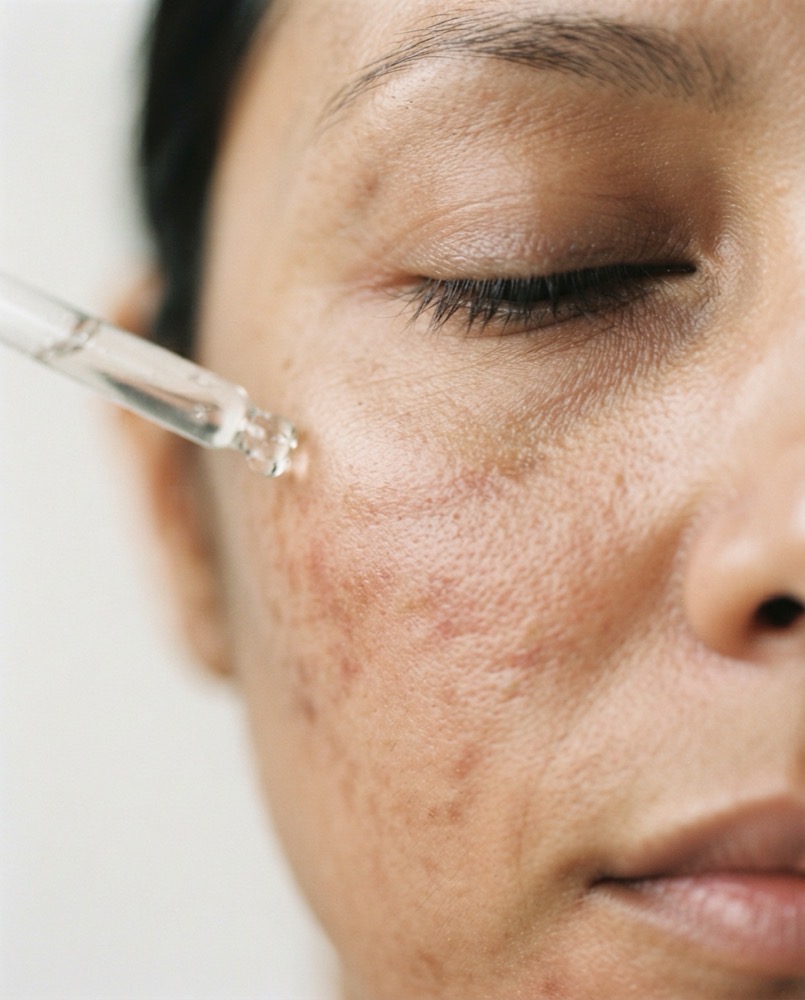
Uneven skin tone describes a complexion that reads patchy rather than uniform – a mix of darker and lighter areas, lingering red or brown marks, blotchy cheeks, and a general loss of clarity.
It usually combines several things at once: hyperpigmentation from sun or inflammation, persistent redness, and surface build-up of dead cells that makes the whole face look mottled and dull.
What causes uneven skin tone?
Ultraviolet exposure is the dominant cause, stimulating melanin unevenly across the face. Post-inflammatory marks from acne, eczema or irritation add brown or red patches that can persist for months.
Hormonal pigmentation, slowed cell turnover with age, dehydration, pollution, smoking and a damaged barrier all compound it. Aggressive scrubbing or unsupervised strong actives frequently make tone more uneven, not less.
What ingredients are best for uneven skin tone?
Vitamin C and niacinamide are the reliable everyday choices – one protects and brightens, the other evens tone and strengthens the barrier. Azelaic acid is unusually useful because it addresses brown marks and redness at once.
Add gentle exfoliation with lactic or glycolic acid to clear surface build-up, retinol to accelerate turnover, and alpha arbutin or tranexamic acid for stubborn pigment. Daily broad-spectrum SPF is what makes the results stick. Take our Skin Quiz.