

What is tetrahexyldecyl ascorbate in skincare?
Tetrahexyldecyl ascorbate – usually shortened to THD ascorbate or THDA – is an oil-soluble ester of vitamin C. Attaching fatty chains to ascorbic acid makes it lipophilic, so it dissolves in the oil phase of a formula rather than the water phase.
That solves two problems at once. It is far more stable than pure L-ascorbic acid, and being oil-soluble it penetrates the lipid-rich barrier more readily. It also works at skin-friendly pH, so it does not sting the way a low-pH vitamin C serum can.
What skin concerns does tetrahexyldecyl ascorbate treat?
Once converted to ascorbic acid in the skin it does what vitamin C does: neutralises free radicals, inhibits tyrosinase to fade pigment, and supports collagen synthesis for firmness and fine lines.
It is a good fit for dry and sensitive skin that cannot tolerate L-ascorbic acid. One caveat from the stability literature is that THDA degrades quickly under some conditions despite its reputation, so packaging and formulation still matter.
What ingredients are best paired with tetrahexyldecyl ascorbate?
Vitamin E and ferulic acid support it as they do any vitamin C, and because it is oil-soluble it sits naturally alongside squalane, ceramides and facial oils.
It layers comfortably with niacinamide, peptides and retinoids, and it is gentle enough to use morning and night. As with all ascorbic acid derivatives, results depend on conversion in the skin, so give it three months before judging. Take our Skin Quiz.
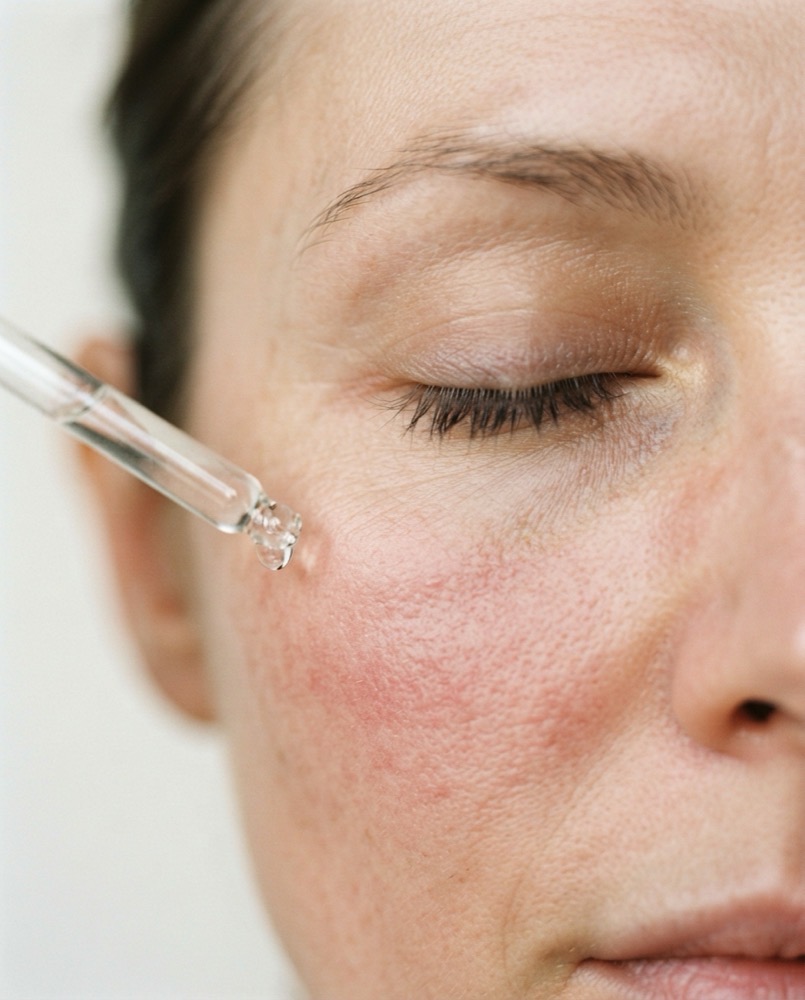
What is redness?
Facial redness is visible dilation of the small blood vessels near the skin’s surface. It ranges from transient flushing that comes and goes, to persistent erythema across the cheeks and nose, to fixed thread veins that stay visible all the time.
Redness is a symptom rather than a diagnosis. It can signal rosacea, irritation, an over-exfoliated barrier, eczema, an allergic reaction or simply reactive skin that responds strongly to heat and stress.
What causes redness?
Most persistent redness traces back to a compromised barrier and heightened nerve sensitivity. When the barrier thins, irritants penetrate more easily and the skin mounts an inflammatory response to things it would normally tolerate.
Common aggravators: over-exfoliation, high-strength actives used too often, fragrance and essential oils, hot water, alcohol, spicy food, sudden temperature change, sun exposure and stress. Trying to treat redness with more actives usually deepens it.
What ingredients are best for redness?
Prioritise calming and rebuilding over correcting. Niacinamide, azelaic acid, centella asiatica, green tea extract, liquorice root, allantoin, bisabolol and colloidal oatmeal all reduce visible inflammation.
Then repair the barrier with ceramides, cholesterol, fatty acids, glycerin, panthenol and squalane, and protect it with a gentle mineral SPF. Strip the routine back to cleanser, moisturiser and sunscreen for a few weeks before reintroducing anything active. Take our Skin Quiz.