What is tea tree oil in skincare?
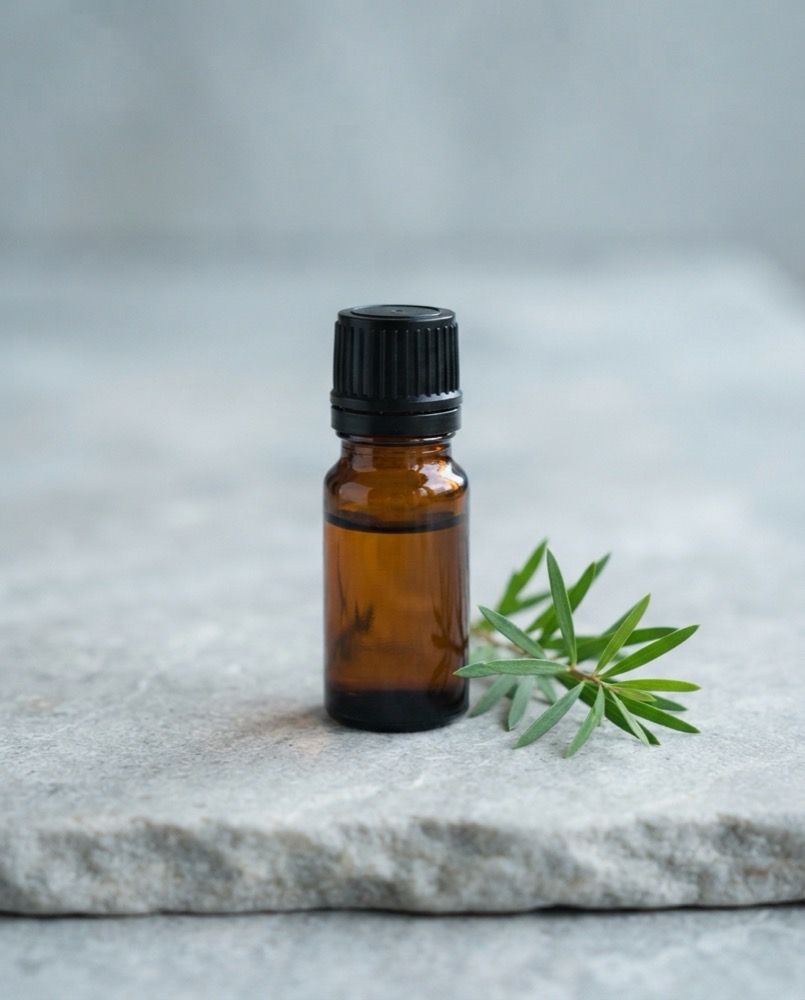
Tea tree oil is an essential oil steam-distilled from the leaves of Melaleuca alternifolia, an Australian shrub used medicinally by Aboriginal communities long before it reached Western pharmacies.
Its active constituent is terpinen-4-ol, which accounts for most of its antimicrobial and anti-inflammatory activity. Quality varies considerably between products, and oil that has oxidised is both less effective and more irritating.
What skin concerns does tea tree oil treat?
Acne is its best-supported use. A comparative trial against benzoyl peroxide found 5% tea tree oil produced a similar reduction in inflamed lesions, more slowly but with markedly fewer side effects.
It is also used for fungal conditions such as athlete’s foot and nail infections, for dandruff, and for insect bites and minor wounds. Its antibacterial and anti-inflammatory action makes it a reasonable spot treatment.
What ingredients are best paired with tea tree oil?
Never apply it undiluted – dilute to around 5% in a carrier such as jojoba or squalane. Pair it with niacinamide and salicylic acid for acne, and with ceramides to protect the barrier.
It is not suitable for delicate or very sensitive skin, and allergic contact dermatitis is relatively common, so always patch test. Store it in dark glass; oxidised tea tree oil is a well-documented sensitiser. Take our Skin Quiz.
What is uneven skin tone?
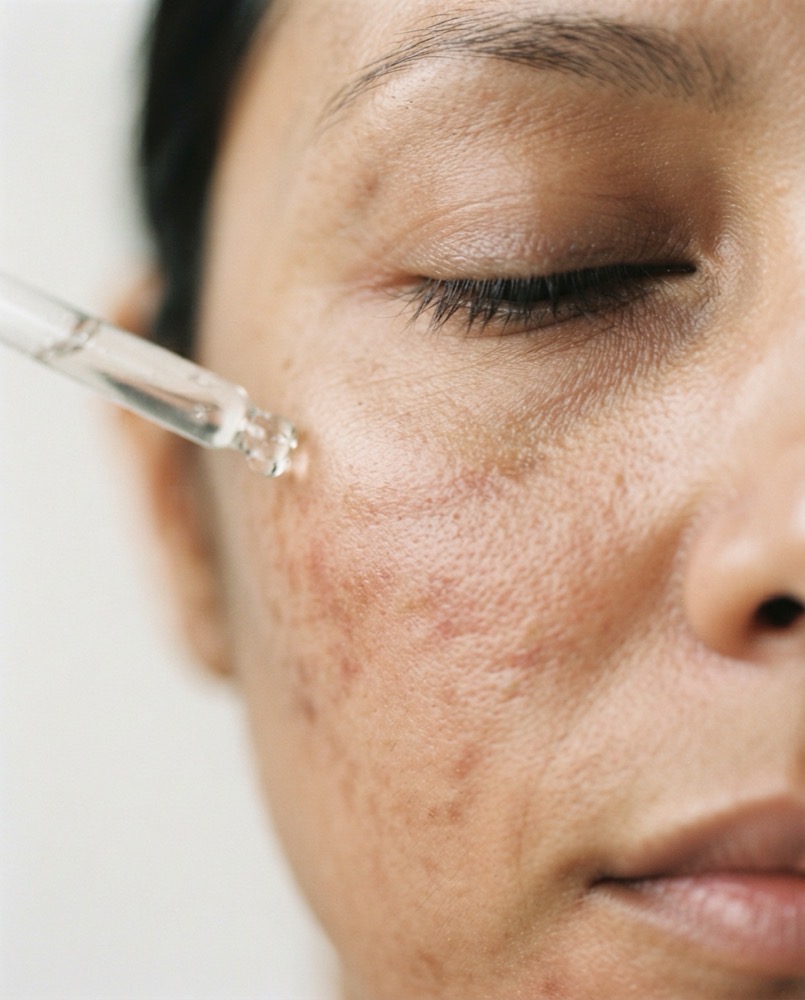
Uneven skin tone describes a complexion that reads patchy rather than uniform – a mix of darker and lighter areas, lingering red or brown marks, blotchy cheeks, and a general loss of clarity.
It usually combines several things at once: hyperpigmentation from sun or inflammation, persistent redness, and surface build-up of dead cells that makes the whole face look mottled and dull.
What causes uneven skin tone?
Ultraviolet exposure is the dominant cause, stimulating melanin unevenly across the face. Post-inflammatory marks from acne, eczema or irritation add brown or red patches that can persist for months.
Hormonal pigmentation, slowed cell turnover with age, dehydration, pollution, smoking and a damaged barrier all compound it. Aggressive scrubbing or unsupervised strong actives frequently make tone more uneven, not less.
What ingredients are best for uneven skin tone?
Vitamin C and niacinamide are the reliable everyday choices – one protects and brightens, the other evens tone and strengthens the barrier. Azelaic acid is unusually useful because it addresses brown marks and redness at once.
Add gentle exfoliation with lactic or glycolic acid to clear surface build-up, retinol to accelerate turnover, and alpha arbutin or tranexamic acid for stubborn pigment. Daily broad-spectrum SPF is what makes the results stick. Take our Skin Quiz.