

What is sugar in skincare?
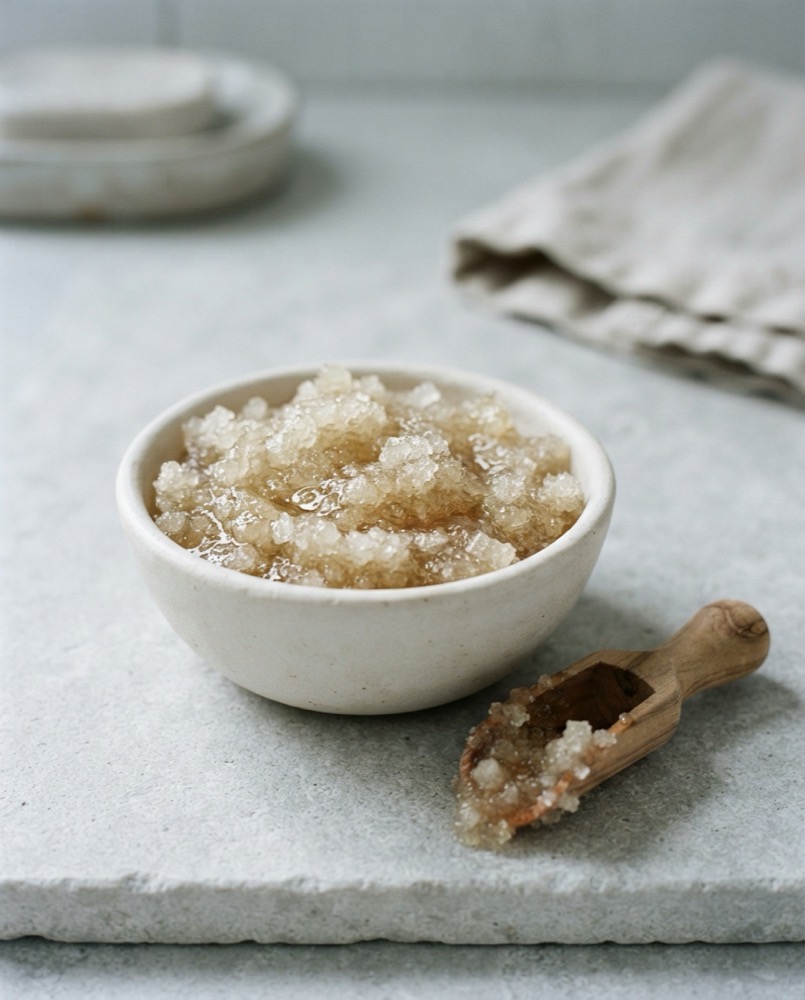
Sugar appears in skincare in two quite different roles. As granulated sucrose it is the base of countless body scrubs; as a chemical precursor it is where glycolic acid – the most studied alpha-hydroxy acid – originally comes from, extracted from sugar cane.
Sugar is also a natural humectant, which is why a sugar scrub leaves skin feeling softer than a salt one, and why honey and molasses behave the way they do on skin.
What skin concerns does sugar treat?
As a body scrub it lifts dead cells and smooths rough patches on elbows, knees and legs. Its crystals are rounder and dissolve faster than salt, so it is the gentler of the two physical exfoliants.
For the face, the derived acid is what matters. Glycolic acid resurfaces, brightens, fades pigmentation and stimulates collagen – none of which a sugar scrub does. Scrubbing facial skin with crystals creates micro-tears and inflammation instead.
What ingredients are best paired with sugar?
In a body scrub, combine it with an oil – coconut, almond, jojoba – which cushions the abrasion and moisturises as you rinse. Use it before shaving, not after, and never on broken or sunburnt skin.
For facial exfoliation, use a formulated AHA: glycolic acid for resilient skin, lactic acid for dry or sensitive skin, or a PHA if acids usually sting. All deliver what a scrub promises, without the mechanical damage. Take our Skin Quiz.

What is redness?
Facial redness is visible dilation of the small blood vessels near the skin’s surface. It ranges from transient flushing that comes and goes, to persistent erythema across the cheeks and nose, to fixed thread veins that stay visible all the time.
Redness is a symptom rather than a diagnosis. It can signal rosacea, irritation, an over-exfoliated barrier, eczema, an allergic reaction or simply reactive skin that responds strongly to heat and stress.
What causes redness?
Most persistent redness traces back to a compromised barrier and heightened nerve sensitivity. When the barrier thins, irritants penetrate more easily and the skin mounts an inflammatory response to things it would normally tolerate.
Common aggravators: over-exfoliation, high-strength actives used too often, fragrance and essential oils, hot water, alcohol, spicy food, sudden temperature change, sun exposure and stress. Trying to treat redness with more actives usually deepens it.
What ingredients are best for redness?
Prioritise calming and rebuilding over correcting. Niacinamide, azelaic acid, centella asiatica, green tea extract, liquorice root, allantoin, bisabolol and colloidal oatmeal all reduce visible inflammation.
Then repair the barrier with ceramides, cholesterol, fatty acids, glycerin, panthenol and squalane, and protect it with a gentle mineral SPF. Strip the routine back to cleanser, moisturiser and sunscreen for a few weeks before reintroducing anything active. Take our Skin Quiz.