What is sugar in skincare?
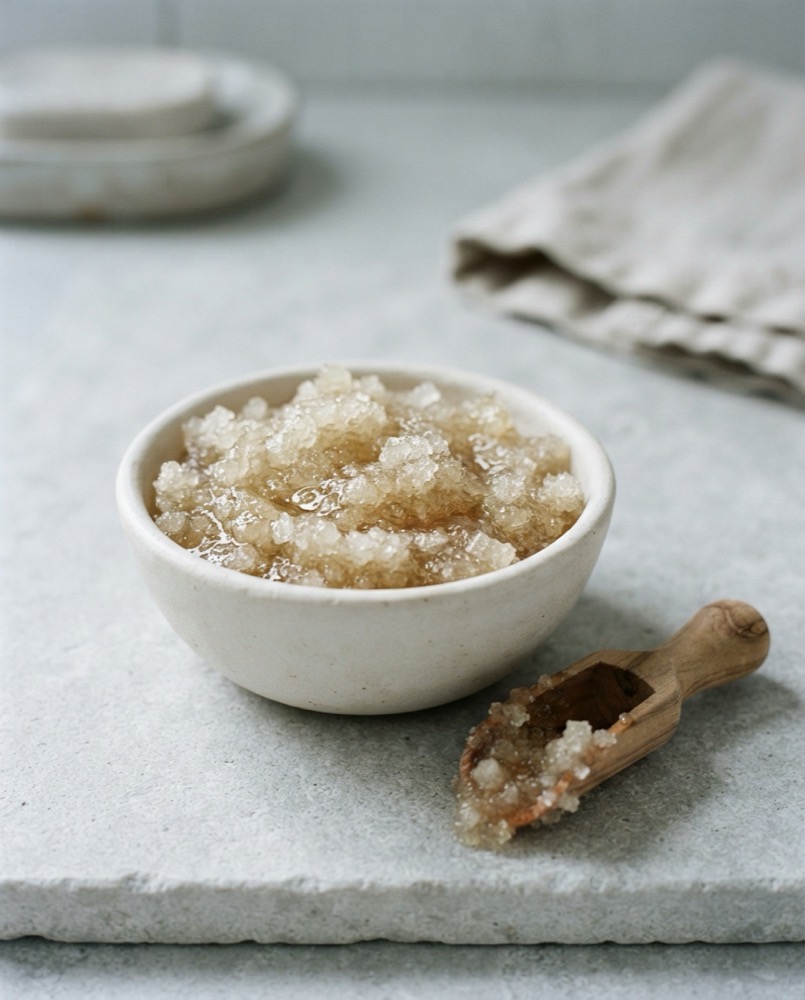
Sugar appears in skincare in two quite different roles. As granulated sucrose it is the base of countless body scrubs; as a chemical precursor it is where glycolic acid – the most studied alpha-hydroxy acid – originally comes from, extracted from sugar cane.
Sugar is also a natural humectant, which is why a sugar scrub leaves skin feeling softer than a salt one, and why honey and molasses behave the way they do on skin.
What skin concerns does sugar treat?
As a body scrub it lifts dead cells and smooths rough patches on elbows, knees and legs. Its crystals are rounder and dissolve faster than salt, so it is the gentler of the two physical exfoliants.
For the face, the derived acid is what matters. Glycolic acid resurfaces, brightens, fades pigmentation and stimulates collagen – none of which a sugar scrub does. Scrubbing facial skin with crystals creates micro-tears and inflammation instead.
What ingredients are best paired with sugar?
In a body scrub, combine it with an oil – coconut, almond, jojoba – which cushions the abrasion and moisturises as you rinse. Use it before shaving, not after, and never on broken or sunburnt skin.
For facial exfoliation, use a formulated AHA: glycolic acid for resilient skin, lactic acid for dry or sensitive skin, or a PHA if acids usually sting. All deliver what a scrub promises, without the mechanical damage. Take our Skin Quiz.
What is dry skin?
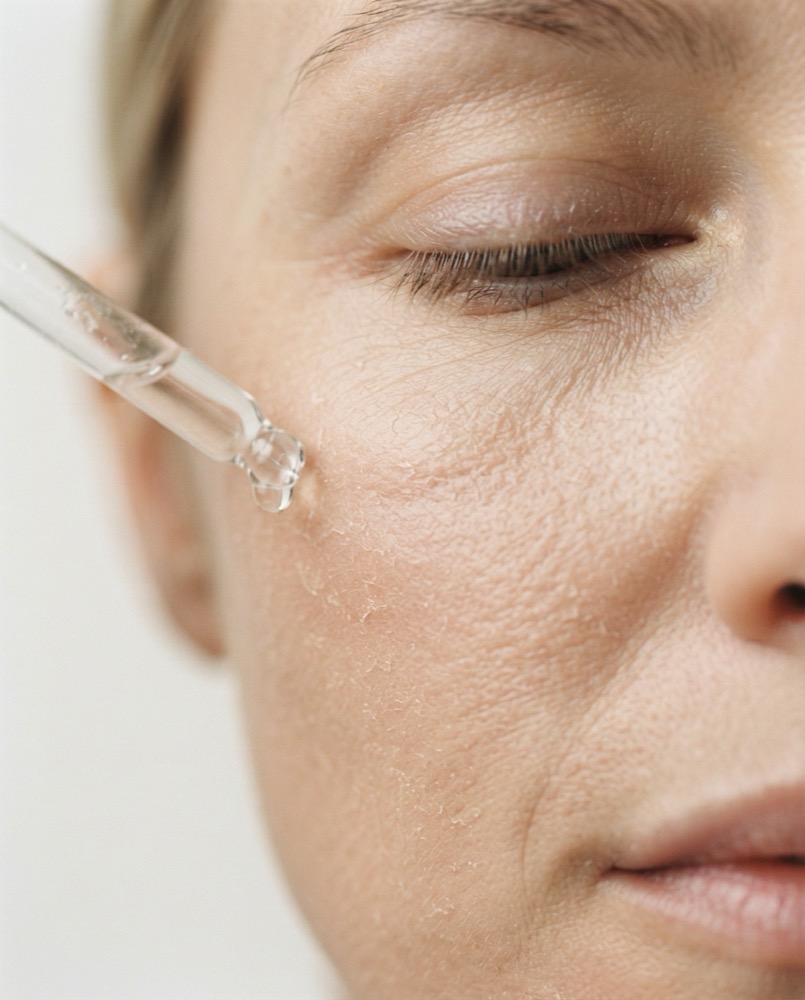
Dry skin – xerosis in clinical terms – is a skin type that lacks oil rather than water. It feels tight after cleansing, looks flaky or rough, may show fine cracking, and often reads dull because the uneven surface scatters light.
It is worth separating dry skin from dehydrated skin: dryness is a lack of lipids and is usually lifelong, while dehydration is a temporary lack of water and can happen to oily skin too. Many people have both at once.
What causes dry skin?
At the root is a compromised moisture barrier. When ceramides, cholesterol, fatty acids and natural moisturising factors run low, water evaporates out of the skin faster than it can be replaced.
Age, genetics, cold weather and low humidity, long hot showers, harsh surfactants, over-exfoliation, some medications, and conditions such as eczema and psoriasis all deplete those lipids. Consistent moisturising is the single intervention with the strongest evidence behind it.
What ingredients are best for dry skin?
Rebuild in layers. Humectants such as hyaluronic acid, glycerin, urea and panthenol draw water in; emollients such as squalane, jojoba oil and shea butter smooth the surface; and occlusives seal the whole thing in.
Ceramides, cholesterol and fatty acids are the priority, because they replace exactly what a dry barrier is missing, with niacinamide helping the skin make more of its own. Apply to damp skin, and swap foaming cleansers for cream or oil-based ones. Take our Skin Quiz to find the right combination for your skin.