What is rose water in skincare?
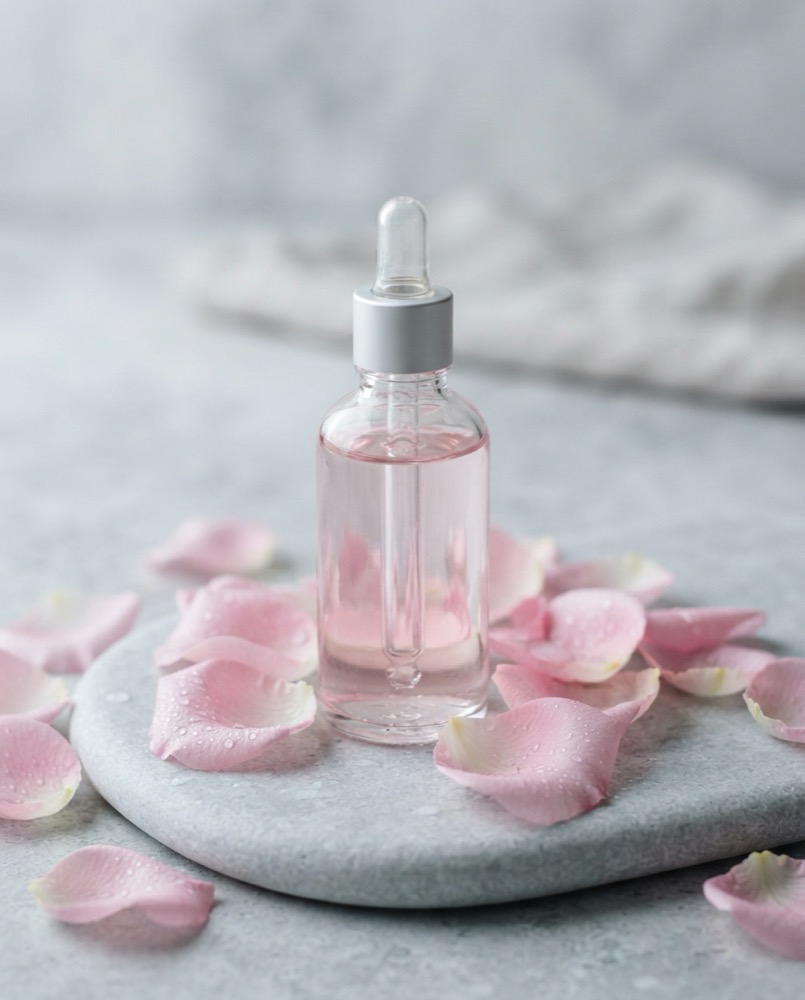
Rose water is the hydrosol left over when rose petals – usually Rosa damascena – are steam-distilled. It is the aromatic water that separates from rose essential oil, and it carries a small fraction of the plant’s water-soluble compounds.
The practice originated in Persia and rose water has been in cosmetic use for well over a thousand years. It should not be confused with rose oil, which is far more concentrated, or with fragranced rose-scented water, which contains no plant material at all.
What skin concerns does rose water treat?
It calms redness and irritation and gives a light, refreshing hydration, which suits sensitive, reactive and post-procedure skin. Extracts of Rosa damascena petal have documented skin anti-inflammatory activity, and its polyphenols contribute antioxidant defence.
It has mild antibacterial properties – a study of rose hydrosol found an effect on skin flora after hand-rubbing. Expect comfort and a pleasant sensory step rather than a measurable change in tone or texture.
What ingredients are best paired with rose water?
Use it as a hydrating base layer and follow with something that holds the water in – hyaluronic acid or glycerin, then ceramides or squalane. On its own it evaporates and leaves skin no better off.
It layers well with niacinamide, centella asiatica and aloe for calming routines. Check the label says rose hydrosol or distillate rather than water plus fragrance, and patch test, since a small number of people are allergic. Take our Skin Quiz.
What is dry skin?
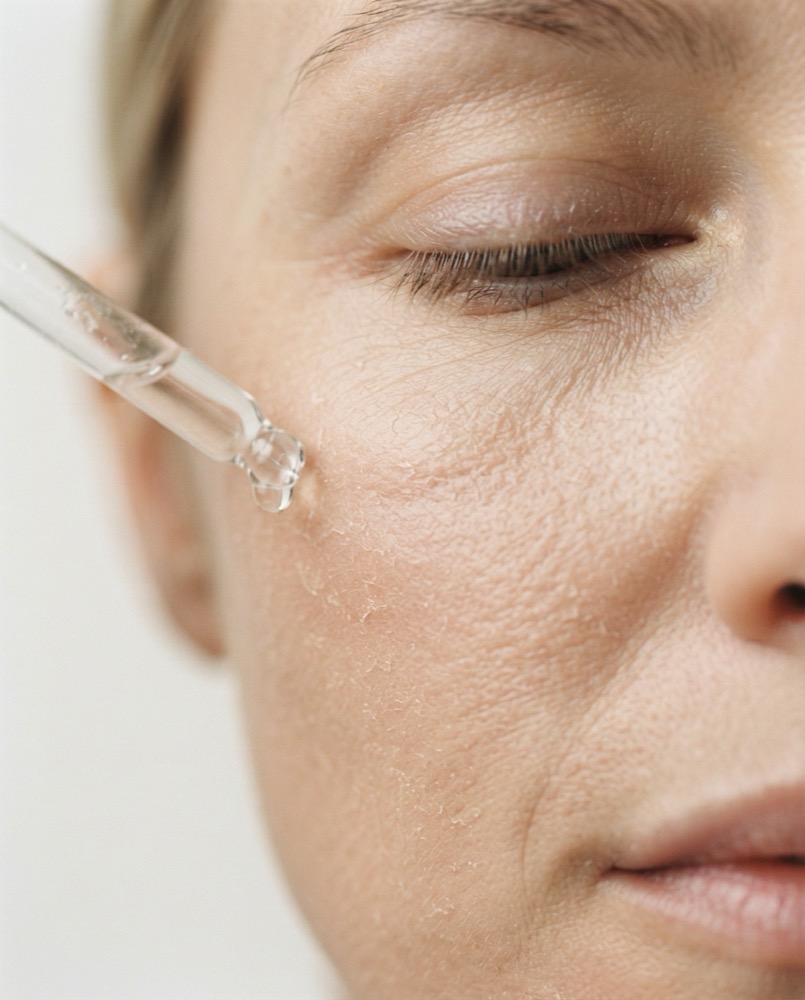
Dry skin – xerosis in clinical terms – is a skin type that lacks oil rather than water. It feels tight after cleansing, looks flaky or rough, may show fine cracking, and often reads dull because the uneven surface scatters light.
It is worth separating dry skin from dehydrated skin: dryness is a lack of lipids and is usually lifelong, while dehydration is a temporary lack of water and can happen to oily skin too. Many people have both at once.
What causes dry skin?
At the root is a compromised moisture barrier. When ceramides, cholesterol, fatty acids and natural moisturising factors run low, water evaporates out of the skin faster than it can be replaced.
Age, genetics, cold weather and low humidity, long hot showers, harsh surfactants, over-exfoliation, some medications, and conditions such as eczema and psoriasis all deplete those lipids. Consistent moisturising is the single intervention with the strongest evidence behind it.
What ingredients are best for dry skin?
Rebuild in layers. Humectants such as hyaluronic acid, glycerin, urea and panthenol draw water in; emollients such as squalane, jojoba oil and shea butter smooth the surface; and occlusives seal the whole thing in.
Ceramides, cholesterol and fatty acids are the priority, because they replace exactly what a dry barrier is missing, with niacinamide helping the skin make more of its own. Apply to damp skin, and swap foaming cleansers for cream or oil-based ones. Take our Skin Quiz to find the right combination for your skin.