

What is elastin in skincare?
Elastin is the dermal protein that lets skin stretch and snap back. It makes up a small fraction of dermal protein compared with collagen, but it does all the recoil – collagen provides strength, elastin provides spring.
The body essentially stops producing meaningful new elastin after adolescence, and existing fibres are progressively broken down by UV exposure in the process known as solar elastosis. That is why lost elasticity is harder to reverse than lost collagen.
What skin concerns does elastin treat?
Loss of elastin shows up as sagging, crepiness, skin that stays tented when pinched, and the loose texture around the jaw, neck and under-eyes.
Topical elastin cannot replace what has degraded – the molecule is far too large to reach the dermis – so in creams it acts as a humectant and film-former that smooths the surface. Oral elastin peptides have more support: a randomised placebo-controlled trial of fish-derived elastin peptide found improvements in biophysical properties of ageing skin.
What ingredients are best paired with elastin?
The practical route to elasticity is protecting and stimulating your own fibres. Retinoids and peptides signal fibroblasts to rebuild, vitamin C protects existing fibres from enzymatic breakdown, and daily broad-spectrum SPF prevents further elastosis.
Alongside those, hyaluronic acid, ceramides and squalane keep the skin hydrated and supple, which improves how elastic it looks day to day. Take our Skin Quiz.
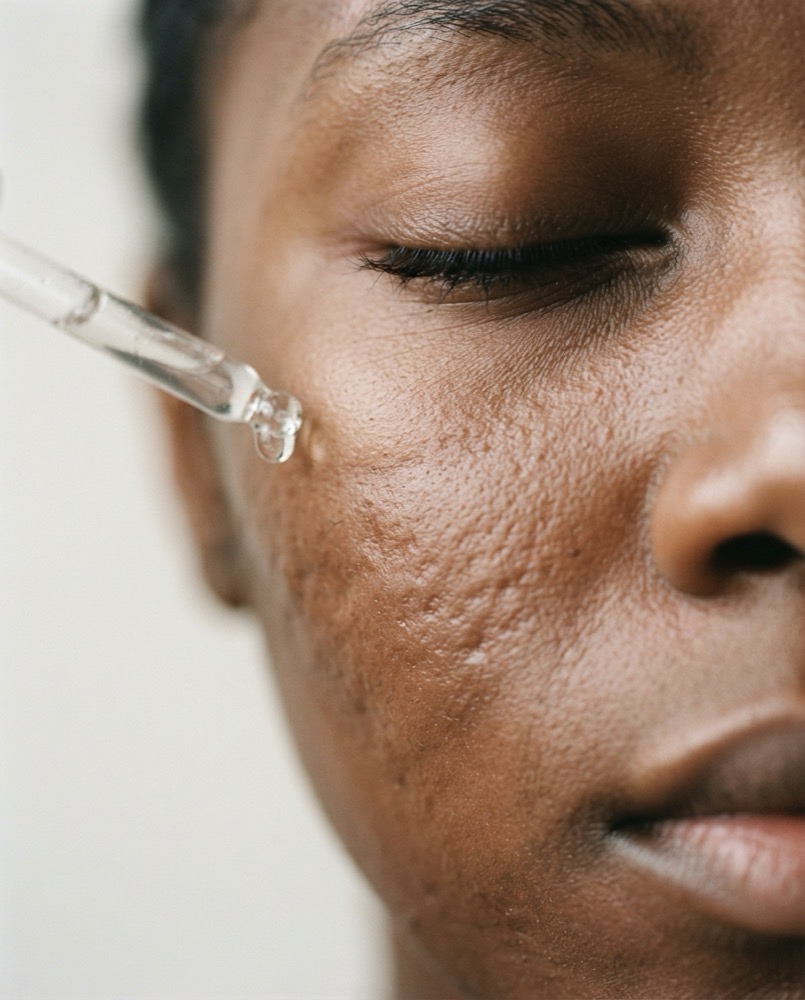
What are acne scars?
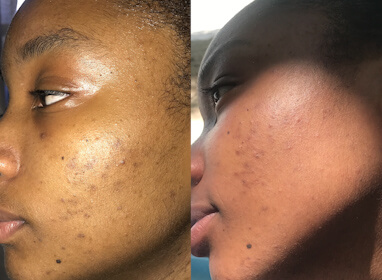
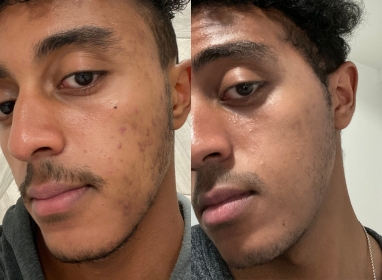
Acne scars are permanent changes in skin texture left behind after inflammatory acne damages the dermis. They fall into two families: atrophic scars, which sit below the surface as ice-pick, boxcar or rolling depressions, and hypertrophic or keloid scars, which sit raised above it.
What most people call scarring is often post-inflammatory hyperpigmentation or erythema – flat brown or red marks with no texture change. Those fade on their own; true atrophic scars do not.
What causes acne scars?
Scarring happens when inflammation reaches deep enough to destroy collagen and the repair process either lays down too little (atrophic) or too much (hypertrophic). Deep nodular and cystic lesions carry the highest risk.
Delaying treatment, picking or squeezing, and prolonged inflammation all increase the odds. Genetics play a large part in who scars and how, which is why two people with identical acne can heal very differently.
What ingredients are best for acne scars?
For flat marks, ingredients that speed turnover and calm pigment work well: retinoids, vitamin C, niacinamide, azelaic acid, alpha arbutin and AHAs, with daily SPF to stop marks darkening again.
For true textural scarring, topicals can soften but not erase – retinoids and peptides help remodel collagen over months, while in-clinic options like microneedling, resurfacing and subcision do the heavy lifting. Preventing new inflammation is the highest-value step. Take our Skin Quiz.