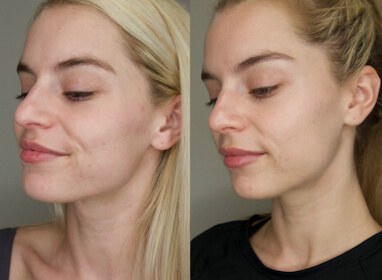


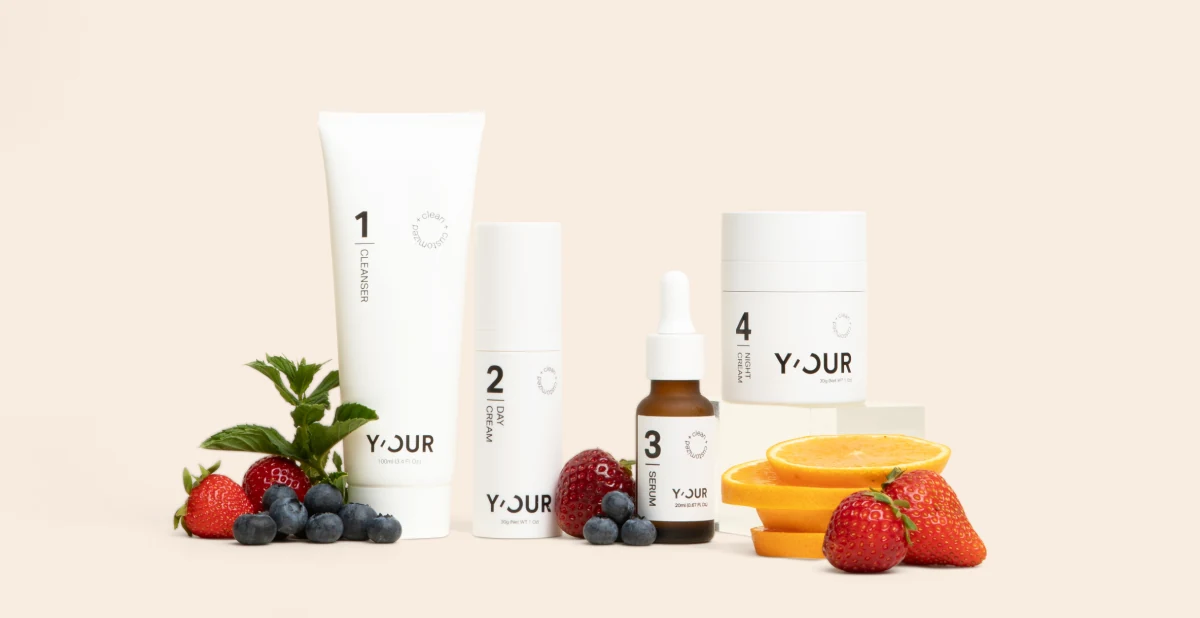
What is collagen in skincare?
Collagen is the structural protein that makes up roughly three-quarters of the skin’s dry weight. It forms the scaffolding in the dermis that keeps skin firm, thick and resilient, and production begins declining from the mid-twenties.
In products it appears either as hydrolysed collagen – broken into smaller peptides – or as an oral supplement. Whole collagen molecules are far too large to cross the skin barrier, so topical collagen works as a humectant and film-former rather than by replacing what you have lost.
What skin concerns does collagen treat?
Applied topically, hydrolysed collagen hydrates the surface and temporarily plumps fine lines, improving smoothness and how skin reflects light.
Taken orally the evidence is stronger: a systematic review and meta-analysis of randomised trials found hydrolysed collagen supplementation improved skin hydration and elasticity, with most studies running eight to twelve weeks.
What ingredients are best paired with collagen?
Vitamin C is the essential partner, because it is a required cofactor for the enzymes that cross-link collagen – without it, your body cannot build collagen regardless of intake.
Retinoids and peptides stimulate fibroblasts to produce more of their own, which does more for firmness than any collagen you apply. Hyaluronic acid, ceramides and daily SPF protect what is already there. Take our Skin Quiz.
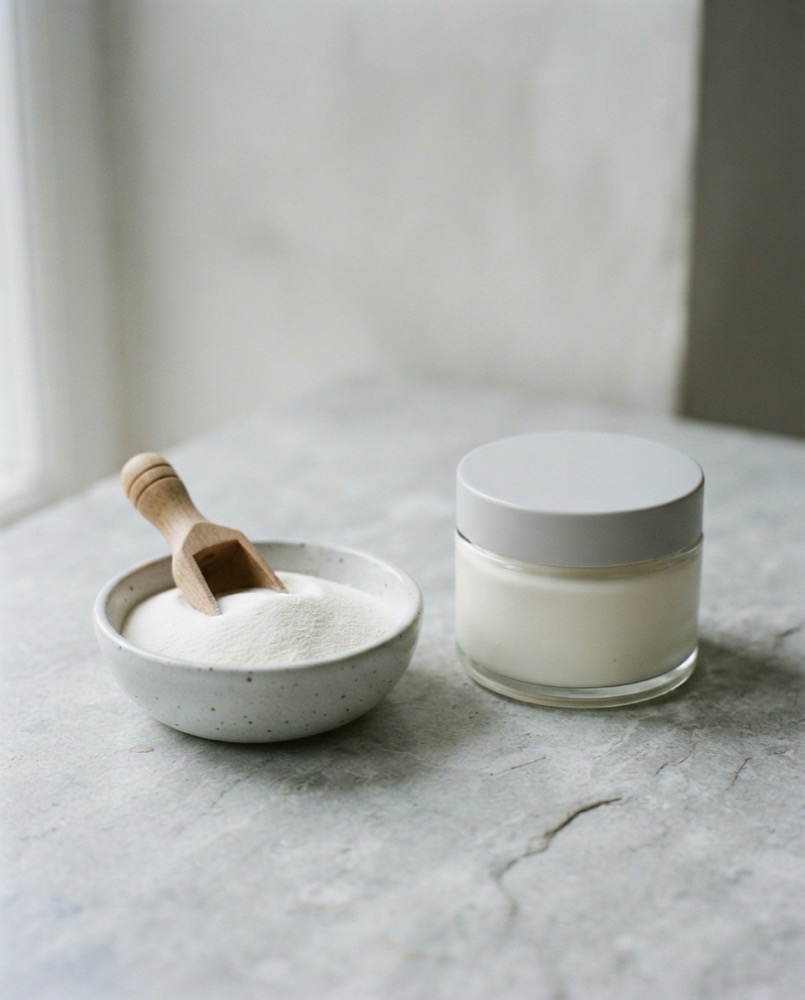

What is redness?
Facial redness is visible dilation of the small blood vessels near the skin’s surface. It ranges from transient flushing that comes and goes, to persistent erythema across the cheeks and nose, to fixed thread veins that stay visible all the time.
Redness is a symptom rather than a diagnosis. It can signal rosacea, irritation, an over-exfoliated barrier, eczema, an allergic reaction or simply reactive skin that responds strongly to heat and stress.
What causes redness?
Most persistent redness traces back to a compromised barrier and heightened nerve sensitivity. When the barrier thins, irritants penetrate more easily and the skin mounts an inflammatory response to things it would normally tolerate.
Common aggravators: over-exfoliation, high-strength actives used too often, fragrance and essential oils, hot water, alcohol, spicy food, sudden temperature change, sun exposure and stress. Trying to treat redness with more actives usually deepens it.
What ingredients are best for redness?
Prioritise calming and rebuilding over correcting. Niacinamide, azelaic acid, centella asiatica, green tea extract, liquorice root, allantoin, bisabolol and colloidal oatmeal all reduce visible inflammation.
Then repair the barrier with ceramides, cholesterol, fatty acids, glycerin, panthenol and squalane, and protect it with a gentle mineral SPF. Strip the routine back to cleanser, moisturiser and sunscreen for a few weeks before reintroducing anything active. Take our Skin Quiz.