What is cacay oil in skincare?
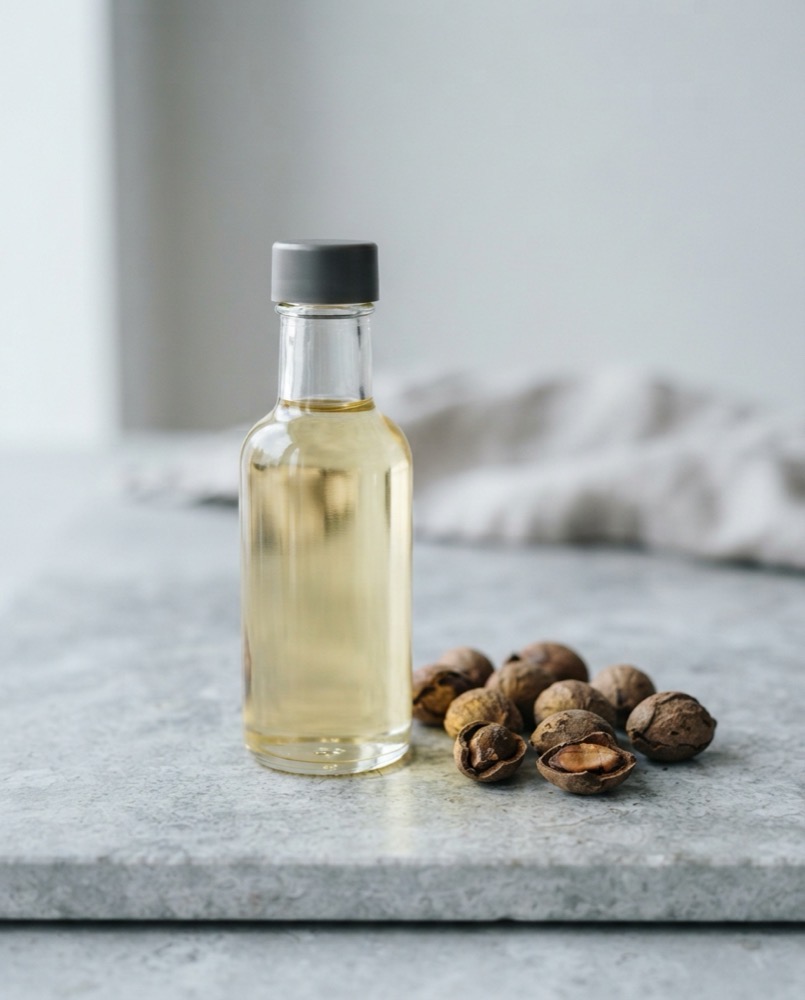
Cacay oil is pressed from the nuts of the cacay tree, which grows in the Amazon basin of Colombia and Peru. It is a relative newcomer to Western skincare and is marketed as a natural source of retinol.
Its composition is genuinely distinctive: a high proportion of linoleic acid, roughly three times the vitamin E of argan oil, and naturally occurring retinol at levels reported to be considerably higher than rosehip oil. Like other linoleic-rich plant oils it supports barrier repair rather than weighing skin down.
What skin concerns does cacay oil treat?
Its retinol content gives it a mild effect on fine lines, uneven tone and texture, without the irritation of a formulated retinoid – useful for people whose skin cannot tolerate one.
The linoleic acid suits dehydrated, combination and mildly acne-prone skin, and the vitamin E provides antioxidant protection. It absorbs quickly and does not leave a greasy film.
What ingredients are best paired with cacay oil?
Layer it over hyaluronic acid and alongside ceramides and niacinamide. It is a sensible bridge for someone easing towards retinoids.
Because it contains vitamin A compounds, use it at night and keep wearing SPF, and introduce it gradually if you already use a retinoid. Expect a gentle, cumulative effect rather than retinol-strength results. Take our Skin Quiz.
What is dullness?
Healthy skin reflects light evenly, which is what reads as bright and glowing. Dull skin does the opposite – it looks flat, ashy, grey or sallow, and makeup tends to sit on top of it rather than blend in.
Dullness is not a condition in itself but a visible symptom: a build-up of dead cells, dehydration and reduced microcirculation that together stop light bouncing cleanly off the skin’s surface.
What causes dull skin?
Dead skin cells that do not shed naturally accumulate on the surface and scatter light unevenly. Dehydration flattens those cells so they no longer sit plump against one another, and overly dry skin can damage the follicles and slow the production of collagen and sebum – all of which make the complexion look duller or ashier.
Lifestyle and environment do the rest. Sun exposure, pollution, smoking, alcohol, broken sleep and stress all accelerate free-radical damage, while cell turnover naturally slows with age, so skin loses the reflectivity it had in your twenties.
What ingredients are best for dullness?
Brightening dull skin comes down to three things: gentle exfoliation, consistent hydration and antioxidant protection. Vitamin C, alpha-hydroxy acids such as glycolic and lactic acid, salicylic acid, retinol and vitamin A, niacinamide, green tea extract, coenzyme Q10 and rosehip oil all help resurface, even out tone and defend against free radicals.
Hyaluronic acid and hydrolysed collagen plump the skin so it reflects more light, and daily broad-spectrum sunscreen prevents the UV damage that dulls the complexion in the first place. Take our Skin Quiz to find the exact combination your skin needs.