

What is avocado oil in skincare?
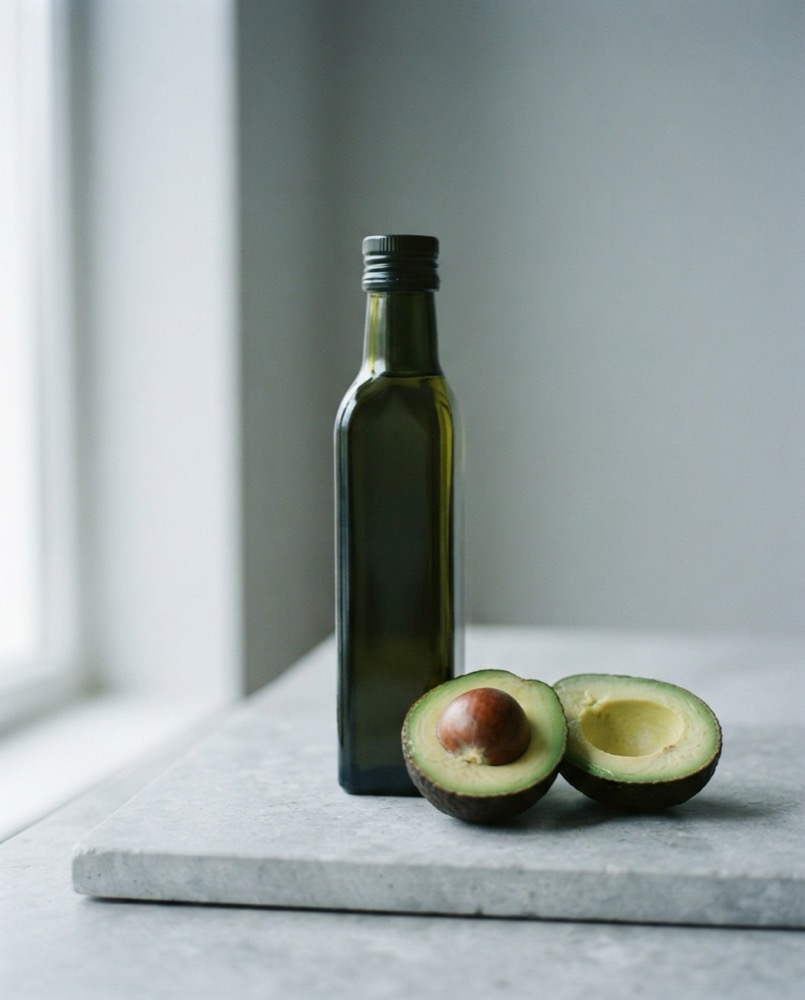
Avocado oil is pressed from the pulp of the fruit rather than the stone, which is unusual – most plant oils come from seeds. It is thick, deep green when unrefined, and very high in oleic acid, with vitamin E, beta-carotene, lecithin and phytosterols.
That composition makes it one of the richest and most occlusive plant oils in common use, closer in feel to a butter than to a light facial oil.
What skin concerns does avocado oil treat?
It suits very dry, flaky or mature skin and rough body areas, where its high lipid content reduces water loss and softens noticeably. Its sterols and vitamin E give it anti-inflammatory activity useful for eczema and psoriasis-prone skin.
It is often used for stretch marks and after sun exposure. Being oleic-dominant and heavy, it is a poor choice for oily or acne-prone facial skin, where it readily congests pores.
What ingredients are best paired with avocado oil?
Use it as a final sealing layer over humectants such as glycerin and hyaluronic acid, and alongside ceramides and shea butter for intensive dry-skin routines.
It is also a good carrier for vitamin C oils and essential oils. If your skin is combination or breakout-prone, reserve it for body and hands, and use squalane or jojoba on the face. Take our Skin Quiz.
What is adult acne?
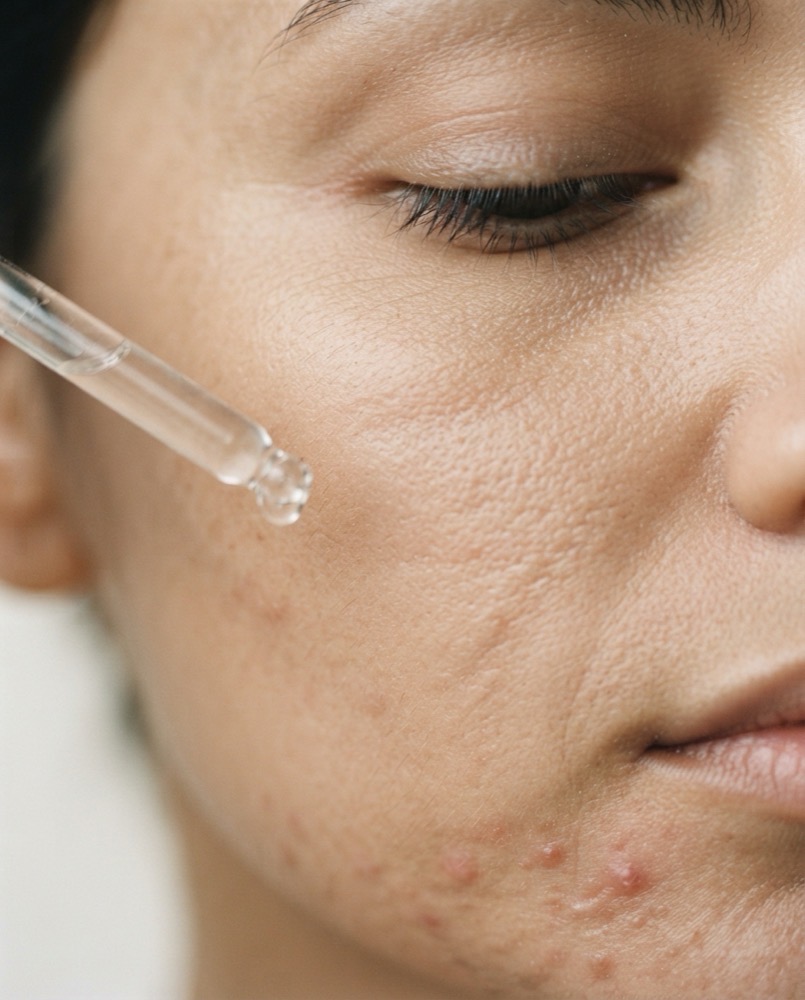
Adult acne is acne that persists past the teenage years or appears for the first time in your twenties, thirties or later. It affects a substantial share of adults, and disproportionately women.
It tends to look different from teenage acne: fewer widespread blackheads, more deep tender lesions along the jawline, chin and neck, often on skin that is simultaneously dry, sensitive or already showing early signs of ageing.
What causes adult acne?
Hormonal fluctuation is the leading driver – menstrual cycles, coming off or starting contraception, pregnancy, perimenopause and conditions such as PCOS all shift androgen activity and sebum output.
Stress and cortisol, sleep debt, high-glycaemic diets, comedogenic makeup and skincare, friction, and certain medications compound it. Adult skin also heals more slowly, so marks linger longer than they did at nineteen.
What ingredients are best for adult acne?
The challenge is treating acne without wrecking a barrier that is also ageing. Retinoids do double duty here, clearing follicles and stimulating collagen at the same time.
Azelaic acid is excellent for adult skin because it handles lesions, redness and post-acne marks together. Add salicylic acid used sparingly, niacinamide to regulate oil and calm inflammation, and ceramides plus hyaluronic acid to keep hydration up. Skip harsh benzoyl peroxide concentrations and scrubs. Take our Skin Quiz.