What are adaptogens in skincare?
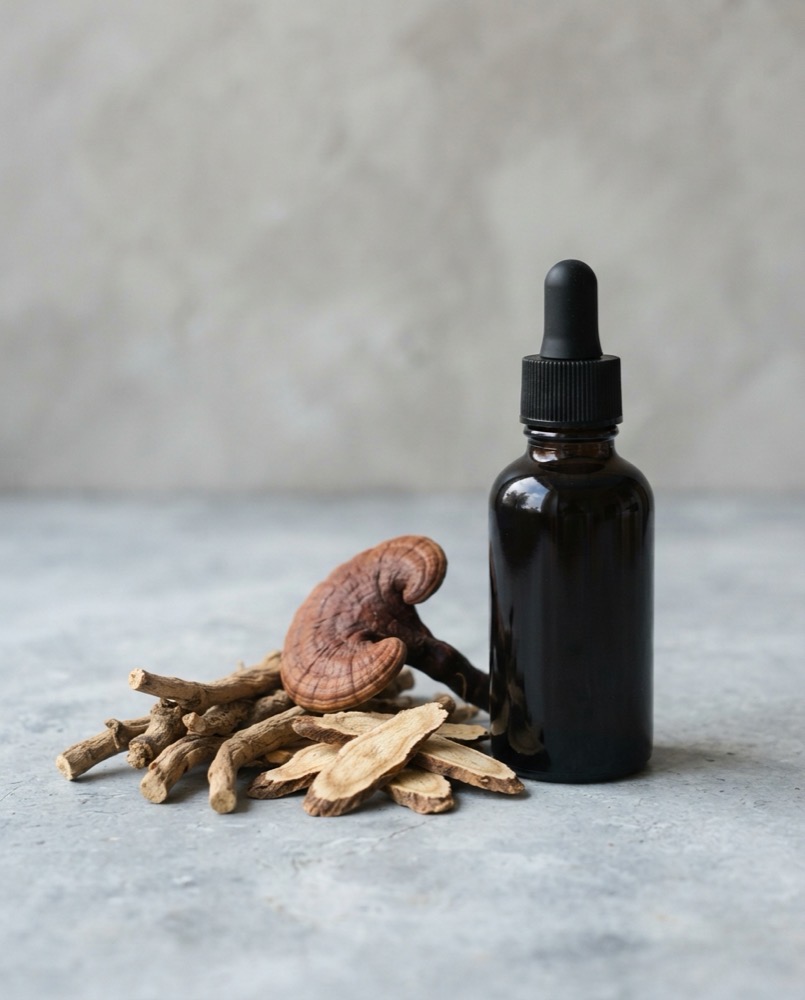
Adaptogens are plants traditionally used to help the body cope with stress – ashwagandha, ginseng, rhodiola, reishi and other medicinal mushrooms, holy basil, schisandra. The term comes from herbal medicine rather than dermatology.
The rationale for putting them in skincare rests on the link between stress and skin: cortisol drives inflammation, impairs the barrier and worsens acne, eczema and psoriasis. Reviews of adaptogen mechanisms describe effects on stress-response pathways at the cellular level.
What skin concerns do adaptogens treat?
Most adaptogens are also potent antioxidants and anti-inflammatories, which is where their topical benefit is clearest – calming redness, defending against free-radical damage, and supporting a barrier that stress has compromised.
The evidence is stronger for oral than topical use: randomised placebo-controlled work on ashwagandha shows measurable reductions in cortisol and stress. Applied to skin, treat them as a good antioxidant and soothing layer rather than a stress cure.
What ingredients are best paired with adaptogens?
They complement other antioxidants – vitamin C, vitamin E, niacinamide, green tea – and sit well alongside ceramides, hyaluronic acid and centella asiatica for barrier and calming work.
If stress is genuinely driving your skin, the routine is only part of the answer: sleep, exercise and the underlying stressor do more than any cream. Speak to a doctor before taking adaptogens orally, particularly with thyroid or autoimmune conditions or in pregnancy. Take our Skin Quiz.
What is dullness?
Healthy skin reflects light evenly, which is what reads as bright and glowing. Dull skin does the opposite – it looks flat, ashy, grey or sallow, and makeup tends to sit on top of it rather than blend in.
Dullness is not a condition in itself but a visible symptom: a build-up of dead cells, dehydration and reduced microcirculation that together stop light bouncing cleanly off the skin’s surface.
What causes dull skin?
Dead skin cells that do not shed naturally accumulate on the surface and scatter light unevenly. Dehydration flattens those cells so they no longer sit plump against one another, and overly dry skin can damage the follicles and slow the production of collagen and sebum – all of which make the complexion look duller or ashier.
Lifestyle and environment do the rest. Sun exposure, pollution, smoking, alcohol, broken sleep and stress all accelerate free-radical damage, while cell turnover naturally slows with age, so skin loses the reflectivity it had in your twenties.
What ingredients are best for dullness?
Brightening dull skin comes down to three things: gentle exfoliation, consistent hydration and antioxidant protection. Vitamin C, alpha-hydroxy acids such as glycolic and lactic acid, salicylic acid, retinol and vitamin A, niacinamide, green tea extract, coenzyme Q10 and rosehip oil all help resurface, even out tone and defend against free radicals.
Hyaluronic acid and hydrolysed collagen plump the skin so it reflects more light, and daily broad-spectrum sunscreen prevents the UV damage that dulls the complexion in the first place. Take our Skin Quiz to find the exact combination your skin needs.