What is PHA in skincare?
PHA stands for polyhydroxy acid, the newest generation of chemical exfoliants. The two you will see on labels are gluconolactone and lactobionic acid.
Their molecules are considerably larger than AHAs, so they sit on the surface and exfoliate slowly rather than penetrating quickly. That makes them the gentlest option in the acid family – studies show anti-ageing results comparable to AHAs with noticeably less irritation.
What skin concerns do PHAs treat?
PHAs suit dullness, rough texture, uneven tone and early fine lines on skin that cannot tolerate glycolic or salicylic acid – including rosacea-prone, eczema-prone and generally reactive skin.
They are also humectants, so they hydrate as they exfoliate, and gluconolactone is an antioxidant that protects against UV-induced damage in laboratory models.
What ingredients are best paired with PHAs?
Because they are mild, PHAs layer comfortably with niacinamide, hyaluronic acid, ceramides and peptides, and they are often used to introduce exfoliation alongside a retinoid without overwhelming the barrier.
Follow with a moisturiser and daily SPF as with any exfoliant. If stronger acids have left your skin stinging or flushed, swapping to a PHA is usually the sensible step down. Take our Skin Quiz.
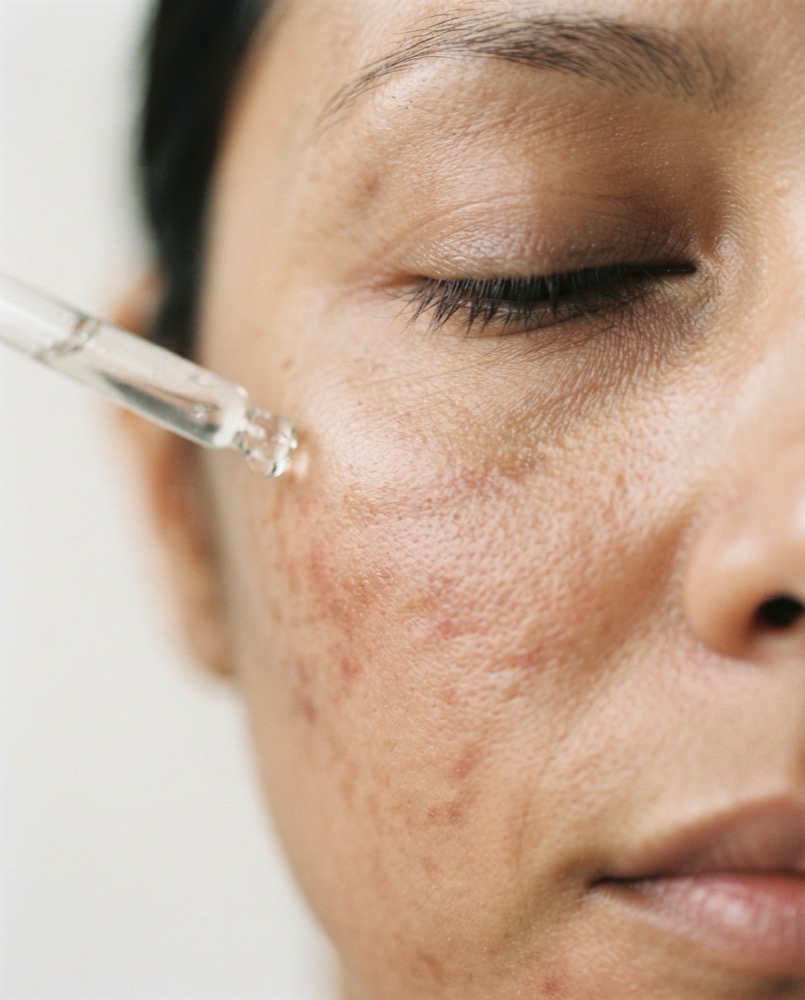
What is uneven skin tone?
Uneven skin tone describes a complexion that reads patchy rather than uniform – a mix of darker and lighter areas, lingering red or brown marks, blotchy cheeks, and a general loss of clarity.
It usually combines several things at once: hyperpigmentation from sun or inflammation, persistent redness, and surface build-up of dead cells that makes the whole face look mottled and dull.
What causes uneven skin tone?
Ultraviolet exposure is the dominant cause, stimulating melanin unevenly across the face. Post-inflammatory marks from acne, eczema or irritation add brown or red patches that can persist for months.
Hormonal pigmentation, slowed cell turnover with age, dehydration, pollution, smoking and a damaged barrier all compound it. Aggressive scrubbing or unsupervised strong actives frequently make tone more uneven, not less.
What ingredients are best for uneven skin tone?
Vitamin C and niacinamide are the reliable everyday choices – one protects and brightens, the other evens tone and strengthens the barrier. Azelaic acid is unusually useful because it addresses brown marks and redness at once.
Add gentle exfoliation with lactic or glycolic acid to clear surface build-up, retinol to accelerate turnover, and alpha arbutin or tranexamic acid for stubborn pigment. Daily broad-spectrum SPF is what makes the results stick. Take our Skin Quiz.