What is hydroxyacetophenone in skincare?
Hydroxyacetophenone – usually 4-hydroxyacetophenone on a label – is a phenolic compound used mainly as an antioxidant and a preservative booster. It has little antimicrobial power on its own, but it makes preservatives like phenoxyethanol work harder, so formulators can use less of them.
It also stabilises the formula itself, slowing the oxidation that turns oils rancid and degrades delicate actives. That combination is why it turns up in so many otherwise minimal ingredient lists.
What skin concerns does hydroxyacetophenone treat?
It is chiefly a formulation ingredient rather than a treatment, but it is not inert. As an antioxidant it contributes to the free-radical defence of a product, and it has documented soothing activity on irritated skin.
More interestingly, laboratory work shows 4-hydroxyacetophenone acts as an antipigmentation agent by inhibiting tyrosinase, the key enzyme in melanin production – a secondary benefit for uneven tone, though not a reason to buy a product on its own.
What ingredients are best paired with hydroxyacetophenone?
It is almost always formulated with phenoxyethanol, caprylyl glycol or ethylhexylglycerin, whose preservative effect it amplifies.
It is well tolerated by most people, though allergic contact dermatitis has been reported in isolated cases, including a photo-aggravated reaction to it in a sunscreen. If you get unexplained reactions to products that share few other ingredients, it is worth noting as a candidate for patch testing. Take our Skin Quiz.
What is uneven skin tone?
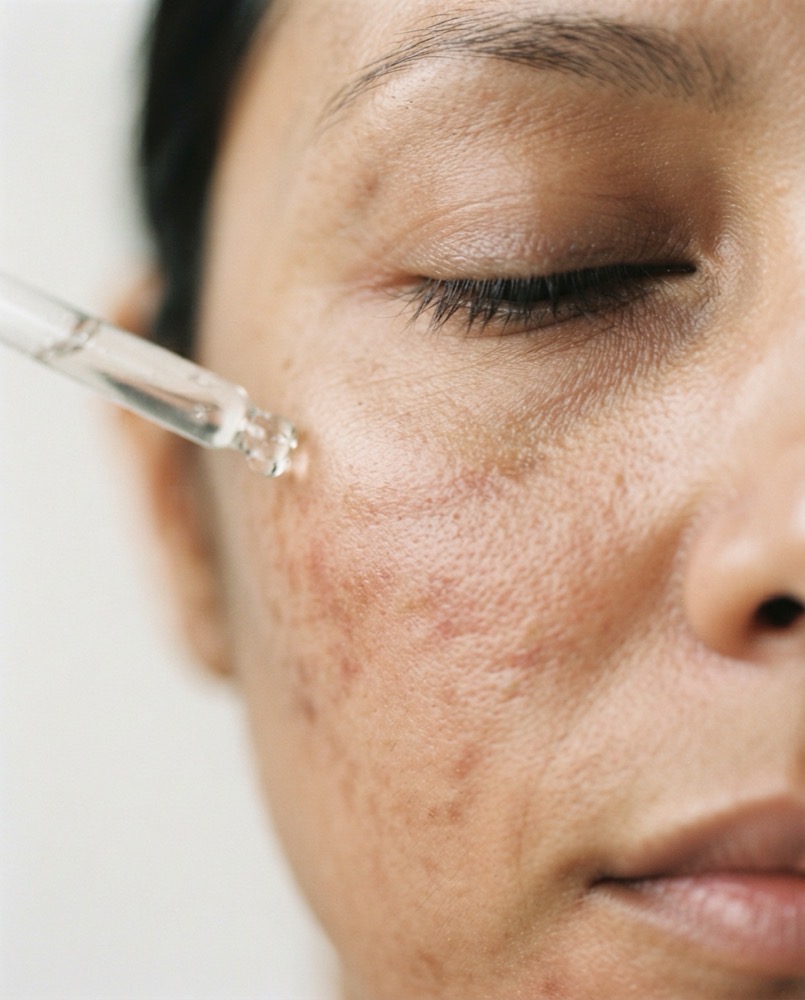
Uneven skin tone describes a complexion that reads patchy rather than uniform – a mix of darker and lighter areas, lingering red or brown marks, blotchy cheeks, and a general loss of clarity.
It usually combines several things at once: hyperpigmentation from sun or inflammation, persistent redness, and surface build-up of dead cells that makes the whole face look mottled and dull.
What causes uneven skin tone?
Ultraviolet exposure is the dominant cause, stimulating melanin unevenly across the face. Post-inflammatory marks from acne, eczema or irritation add brown or red patches that can persist for months.
Hormonal pigmentation, slowed cell turnover with age, dehydration, pollution, smoking and a damaged barrier all compound it. Aggressive scrubbing or unsupervised strong actives frequently make tone more uneven, not less.
What ingredients are best for uneven skin tone?
Vitamin C and niacinamide are the reliable everyday choices – one protects and brightens, the other evens tone and strengthens the barrier. Azelaic acid is unusually useful because it addresses brown marks and redness at once.
Add gentle exfoliation with lactic or glycolic acid to clear surface build-up, retinol to accelerate turnover, and alpha arbutin or tranexamic acid for stubborn pigment. Daily broad-spectrum SPF is what makes the results stick. Take our Skin Quiz.