

What is DHA in skincare?
DHA in skincare means dihydroxyacetone, a simple three-carbon sugar produced by fermenting glycerin. It is the active ingredient in essentially every self-tanner on the market, and has been used that way since the 1960s.
It should not be confused with docosahexaenoic acid, the omega-3 fatty acid that shares the abbreviation. Reviews of topical dihydroxyacetone cover its chemistry, performance and safety profile in sunless tanning products.
What skin concerns does DHA treat?
DHA does not treat a skin concern so much as change colour. It reacts with amino acids in the outermost dead skin cells through the Maillard reaction – the same browning chemistry as toast – producing pigments called melanoidins.
Because only surface cells are affected, the colour develops over two to four hours and fades in five to seven days as those cells shed. Crucially it offers almost no UV protection, so sunscreen is still required. Some research notes free-radical generation in treated skin, another reason to wear SPF over it.
What ingredients are best paired with DHA?
Exfoliate and moisturise dry areas – knees, elbows, ankles – before applying, since DHA grabs harder where skin is thicker and gives a patchy result otherwise.
Antioxidants such as vitamin C and E are sensible alongside it. Avoid applying it immediately after AHAs or retinoids, which speed up cell turnover and shorten the tan, and keep it away from freshly waxed or shaved skin. Take our Skin Quiz.
What is dry skin?
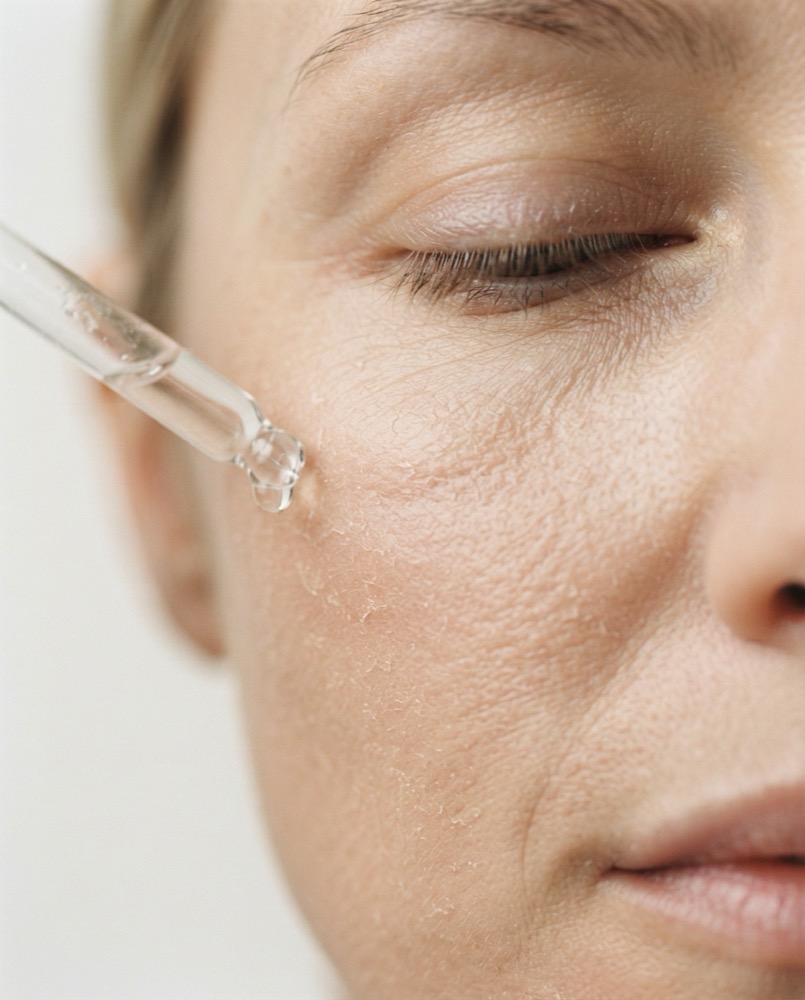
Dry skin – xerosis in clinical terms – is a skin type that lacks oil rather than water. It feels tight after cleansing, looks flaky or rough, may show fine cracking, and often reads dull because the uneven surface scatters light.
It is worth separating dry skin from dehydrated skin: dryness is a lack of lipids and is usually lifelong, while dehydration is a temporary lack of water and can happen to oily skin too. Many people have both at once.
What causes dry skin?
At the root is a compromised moisture barrier. When ceramides, cholesterol, fatty acids and natural moisturising factors run low, water evaporates out of the skin faster than it can be replaced.
Age, genetics, cold weather and low humidity, long hot showers, harsh surfactants, over-exfoliation, some medications, and conditions such as eczema and psoriasis all deplete those lipids. Consistent moisturising is the single intervention with the strongest evidence behind it.
What ingredients are best for dry skin?
Rebuild in layers. Humectants such as hyaluronic acid, glycerin, urea and panthenol draw water in; emollients such as squalane, jojoba oil and shea butter smooth the surface; and occlusives seal the whole thing in.
Ceramides, cholesterol and fatty acids are the priority, because they replace exactly what a dry barrier is missing, with niacinamide helping the skin make more of its own. Apply to damp skin, and swap foaming cleansers for cream or oil-based ones. Take our Skin Quiz to find the right combination for your skin.