What is witch hazel in skincare?
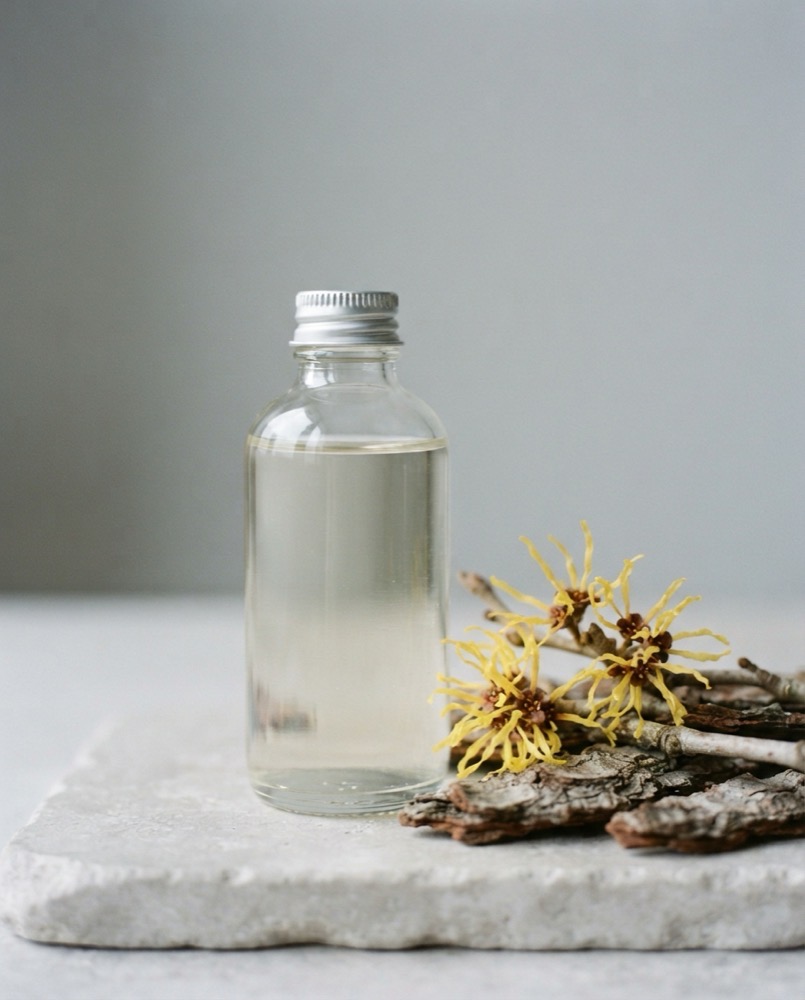
Witch hazel is an extract of the bark and leaves of Hamamelis virginiana, a North American shrub. Its activity comes from tannins – principally hamamelitannin – which bind proteins and make tissue contract, the classic astringent effect.
The critical variable is formulation. Traditional distillates are preserved with 14 to 15% alcohol, which is what gives many witch hazel toners their reputation for drying skin out. Pharmacological reviews of the plant credit it with antioxidant and anti-inflammatory activity independent of that alcohol.
What skin concerns does witch hazel treat?
It temporarily tightens the look of pores, reduces surface oil and calms minor inflammation, which is why it appears in products for oily and acne-prone skin. Extracts show documented anti-inflammatory and anti-acne effects.
It also soothes insect bites, minor grazes and razor burn. Used daily in an alcohol-heavy form, however, it strips the barrier and can push skin into producing more oil, not less.
What ingredients are best paired with witch hazel?
Choose an alcohol-free formulation and follow it with hydration – hyaluronic acid, glycerin, niacinamide – plus ceramides to keep the barrier intact.
For the concerns it is usually bought for, salicylic acid and niacinamide do more with less collateral dryness. Treat witch hazel as an occasional soothing step rather than a daily toner. Take our Skin Quiz.
What are sun spots?
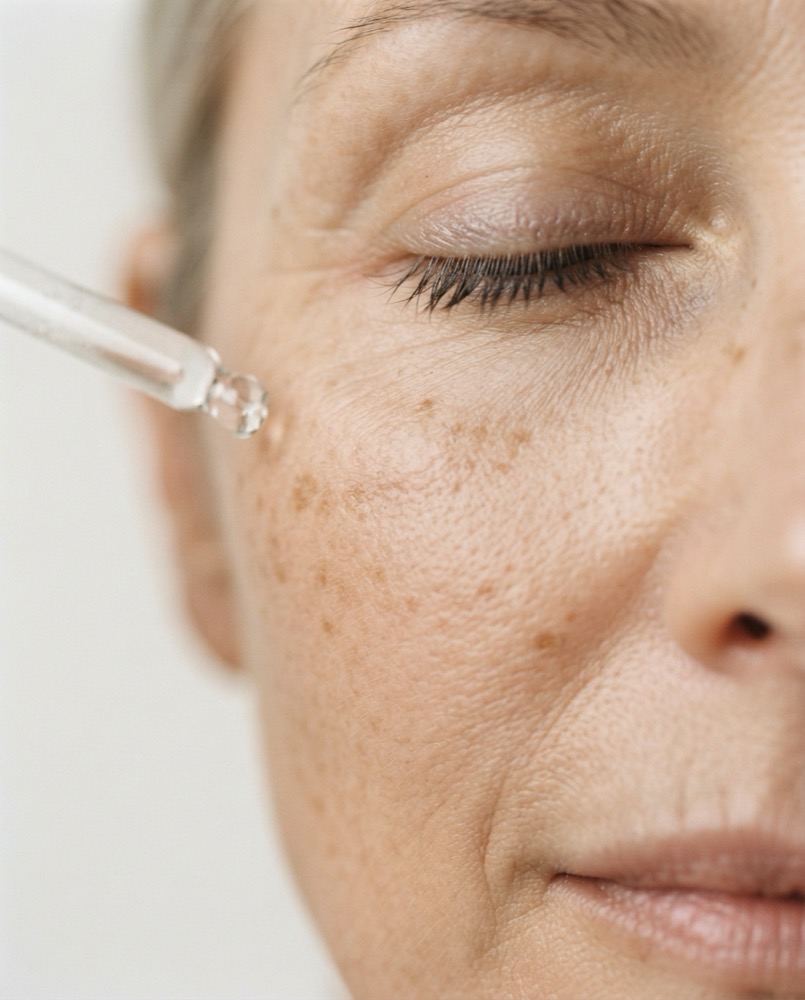
Sun spots are flat patches of concentrated pigment that form where skin has taken the most ultraviolet exposure – cheeks, nose, forehead, hands, shoulders and chest. Dermatologists call them solar lentigines; they are the same thing as age spots.
They are harmless, but they are a visible marker of accumulated photodamage, and they usually arrive alongside other signs of it: fine lines, loss of firmness and an uneven overall tone.
What causes sun spots?
UV radiation prompts melanocytes to produce extra melanin as a defence. With repeated exposure that response becomes localised and fixed, leaving discrete patches instead of an even tan that fades.
Tanning beds, sunburns in childhood, fair skin and outdoor time without protection all increase the count. Incidental exposure – driving, walking, sitting near a window – adds up more than most people expect.
What ingredients are best for sun spots?
Retinoids to accelerate turnover, vitamin C to protect and brighten, and pigment inhibitors such as alpha arbutin, kojic acid, azelaic acid, tranexamic acid and liquorice root are the core toolkit.
Gentle AHAs help shift surface pigment, and niacinamide slows the transfer of melanin into skin cells. None of it holds without daily broad-spectrum SPF and reapplication. Take our Skin Quiz.