What is vitamin E in skincare?
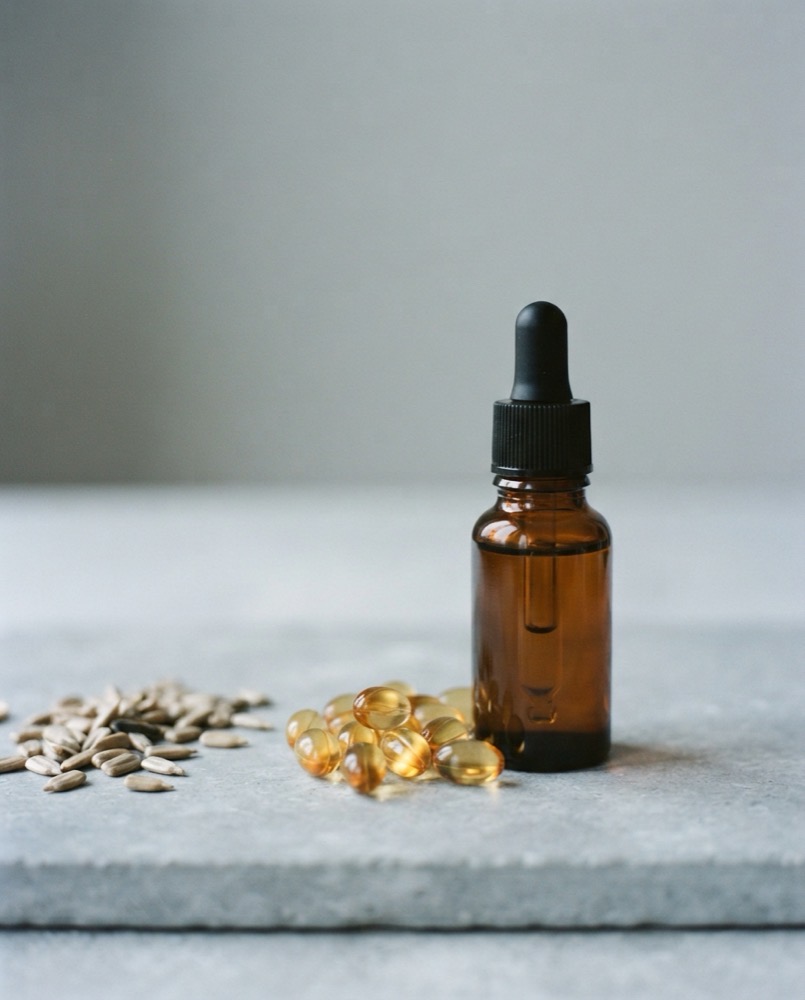
Vitamin E is a family of eight fat-soluble antioxidants – four tocopherols and four tocotrienols. In cosmetics it usually appears as alpha-tocopherol or its more stable ester, tocopheryl acetate.
Because it is fat-soluble, vitamin E concentrates in the skin’s lipid layers and in sebum, where it intercepts free radicals before they can damage cell membranes. It is one of the most established antioxidants in dermatology.
What skin concerns does vitamin E treat?
It protects against oxidative damage from UV and pollution, supports the moisture barrier, and softens dry or roughened skin as an emollient. It also stabilises other ingredients in a formula, extending their shelf life.
Evidence for fading scars is much weaker than folklore suggests, and pure vitamin E oil applied neat causes contact dermatitis in a minority of people. It performs best as part of a formulation rather than straight from a capsule.
What ingredients are best paired with vitamin E?
Vitamin C is the classic partner: together with ferulic acid they measurably increase photoprotection beyond what either achieves alone, which is why that trio anchors so many antioxidant serums.
It also works alongside squalane, ceramides and niacinamide for barrier repair. Oily and acne-prone skin should use it in a light formulation rather than as a heavy oil. Take our Skin Quiz.
What are sun spots?
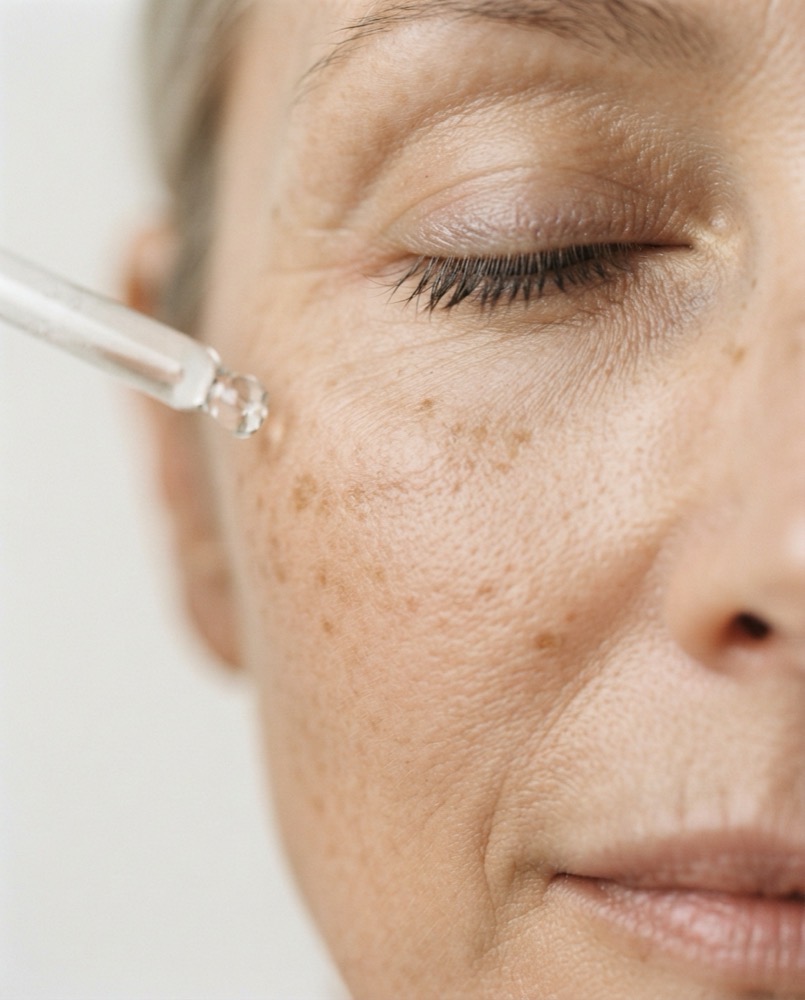
Sun spots are flat patches of concentrated pigment that form where skin has taken the most ultraviolet exposure – cheeks, nose, forehead, hands, shoulders and chest. Dermatologists call them solar lentigines; they are the same thing as age spots.
They are harmless, but they are a visible marker of accumulated photodamage, and they usually arrive alongside other signs of it: fine lines, loss of firmness and an uneven overall tone.
What causes sun spots?
UV radiation prompts melanocytes to produce extra melanin as a defence. With repeated exposure that response becomes localised and fixed, leaving discrete patches instead of an even tan that fades.
Tanning beds, sunburns in childhood, fair skin and outdoor time without protection all increase the count. Incidental exposure – driving, walking, sitting near a window – adds up more than most people expect.
What ingredients are best for sun spots?
Retinoids to accelerate turnover, vitamin C to protect and brighten, and pigment inhibitors such as alpha arbutin, kojic acid, azelaic acid, tranexamic acid and liquorice root are the core toolkit.
Gentle AHAs help shift surface pigment, and niacinamide slows the transfer of melanin into skin cells. None of it holds without daily broad-spectrum SPF and reapplication. Take our Skin Quiz.