

What is vitamin E in skincare?
Vitamin E is a family of eight fat-soluble antioxidants – four tocopherols and four tocotrienols. In cosmetics it usually appears as alpha-tocopherol or its more stable ester, tocopheryl acetate.
Because it is fat-soluble, vitamin E concentrates in the skin’s lipid layers and in sebum, where it intercepts free radicals before they can damage cell membranes. It is one of the most established antioxidants in dermatology.
What skin concerns does vitamin E treat?
It protects against oxidative damage from UV and pollution, supports the moisture barrier, and softens dry or roughened skin as an emollient. It also stabilises other ingredients in a formula, extending their shelf life.
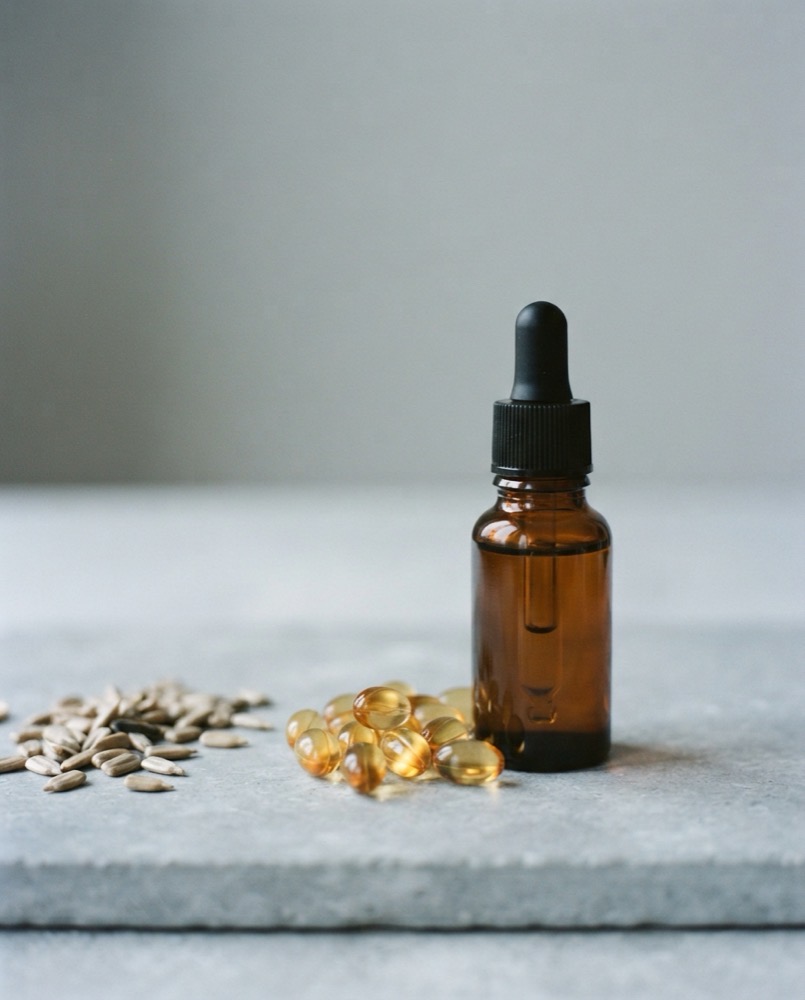
Evidence for fading scars is much weaker than folklore suggests, and pure vitamin E oil applied neat causes contact dermatitis in a minority of people. It performs best as part of a formulation rather than straight from a capsule.
What ingredients are best paired with vitamin E?
Vitamin C is the classic partner: together with ferulic acid they measurably increase photoprotection beyond what either achieves alone, which is why that trio anchors so many antioxidant serums.
It also works alongside squalane, ceramides and niacinamide for barrier repair. Oily and acne-prone skin should use it in a light formulation rather than as a heavy oil. Take our Skin Quiz.
What is oily skin?
Oily skin is a skin type in which the sebaceous glands produce more sebum than the skin needs. It shows up as shine through the T-zone within hours of cleansing, visibly enlarged pores, makeup that slides or separates, and a tendency towards blackheads and congestion.
Sebum itself is not the enemy – it carries vitamin E to the surface, keeps the barrier supple and helps oily skin hold its structure, which is why it often shows fine lines later than dry skin does.
What causes oily skin?
Genetics and androgen activity are the primary drivers of how much sebum your glands produce. Heat and humidity increase output measurably, and hormonal fluctuations across the monthly cycle, pregnancy or puberty shift it again.
Stress, a diet heavy in refined carbohydrates, and – counter-intuitively – over-cleansing with stripping foams or alcohol-based toners all push oil production up, because skin compensates for a damaged barrier by making more.
What ingredients are best for oily skin?
Look for salicylic acid (a BHA that is oil-soluble, so it clears inside the pore), niacinamide and zinc to regulate sebum, clay such as bentonite or kaolin for weekly absorption, and retinoids or azelaic acid to normalise how pores shed.
Do not skip hydration: lightweight humectants like hyaluronic acid and glycerin, plus non-comedogenic squalane or jojoba oil, keep the barrier intact so the skin stops over-compensating. Skip heavy occlusive balms and high-alcohol toners. Take our Skin Quiz to get the balance right for your skin.