

What is vitamin A in skincare?
Vitamin A is the parent of the entire retinoid family. In skincare it appears in several forms of increasing strength: retinyl esters, retinol, retinaldehyde, and prescription retinoic acid (tretinoin).
Every form except retinoic acid must be converted by the skin before it can act – each conversion step costs potency, which is why retinyl palmitate is mild and tretinoin is powerful. Vitamin A regulates how skin cells mature, turn over and produce collagen.
What skin concerns does vitamin A treat?
It is the most versatile active in dermatology: fine lines and wrinkles, loss of firmness, uneven tone and pigmentation, enlarged pores, rough texture, and acne at every severity.
Because it works at the level of cell behaviour rather than the surface, results are gradual and cumulative – expect twelve weeks before meaningful change, and continued improvement for a year or more.
What ingredients are best paired with vitamin A?
Pair it with hyaluronic acid, ceramides, niacinamide, squalane and panthenol to absorb the dryness and flaking of the adjustment period. Introduce it two nights a week and build up.
Use it at night only, and wear broad-spectrum SPF daily – vitamin A increases photosensitivity and is degraded by light. Avoid combining it with AHAs, BHAs or benzoyl peroxide in the same step, and avoid retinoids entirely during pregnancy. Take our Skin Quiz.
What is pigmentation?
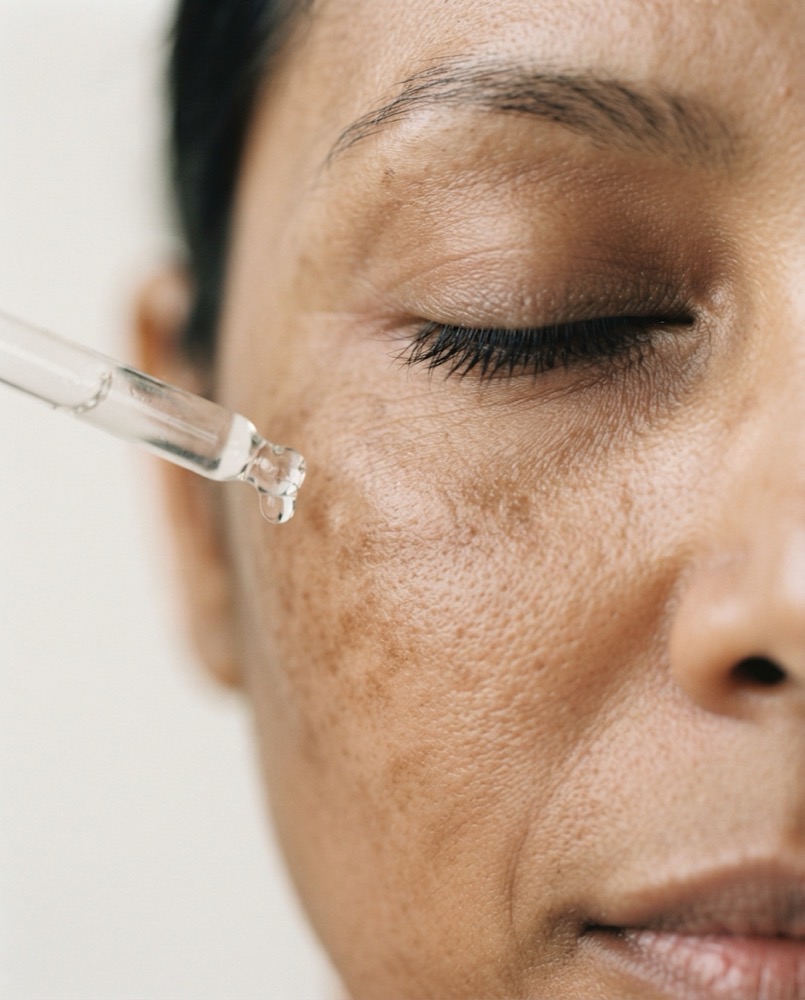
Pigmentation refers to any change in the colour of the skin caused by melanin. Hyperpigmentation – the common form – means patches darker than your natural tone, including sun spots, melasma, freckles and the marks left behind after acne or injury.
Melanin is produced by melanocytes in the lower epidermis and handed to surrounding skin cells. When that process is over-stimulated or unevenly distributed, the result is a visible patch rather than an even tone.
What causes pigmentation?
Ultraviolet exposure is the single largest trigger, because UV directly activates melanin production as a protective response. Inflammation is the second: acne, eczema, friction, waxing, burns or harsh procedures can all leave post-inflammatory hyperpigmentation, which is more common and longer-lasting in deeper skin tones.
Hormonal change, certain medications, heat and genetics complete the picture. Without daily sun protection, treated pigment reliably returns.
What ingredients are best for pigmentation?
The most effective topicals work at different points of melanin production: vitamin C and niacinamide, azelaic acid, tranexamic acid, alpha arbutin, kojic acid and liquorice root extract.
Retinoids and gentle AHAs speed up turnover so pigmented cells clear faster. But broad-spectrum SPF worn daily is the ingredient that decides whether any of it holds – without it, results reverse within weeks. Take our Skin Quiz.