

What is sugar in skincare?
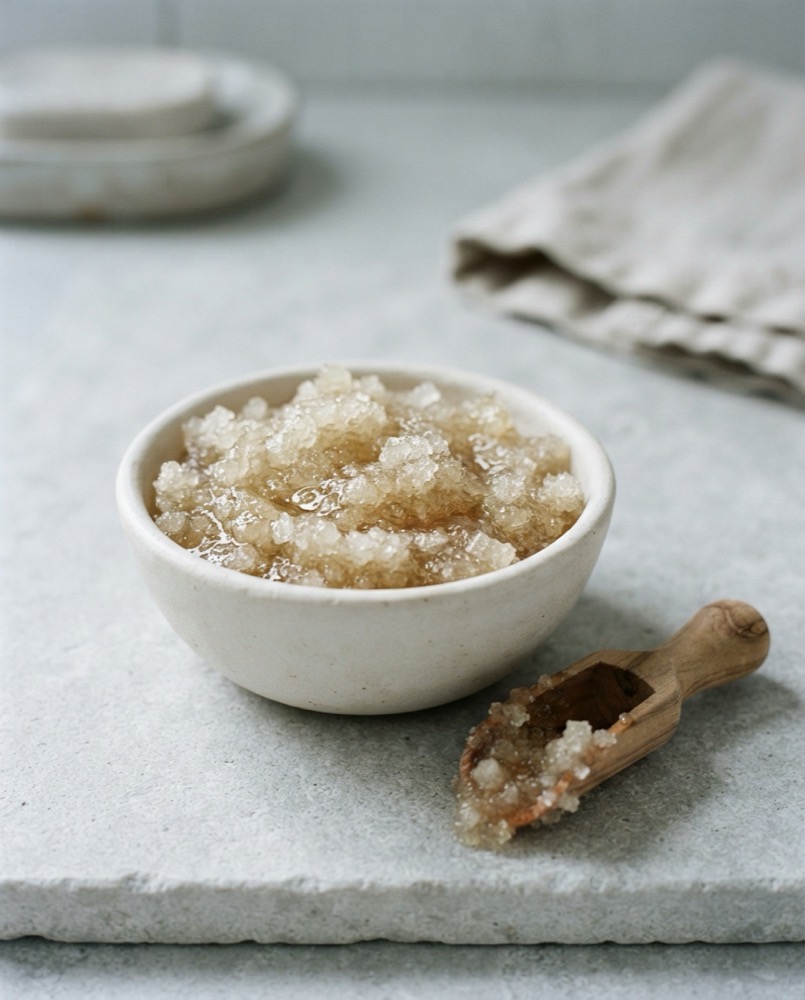
Sugar appears in skincare in two quite different roles. As granulated sucrose it is the base of countless body scrubs; as a chemical precursor it is where glycolic acid – the most studied alpha-hydroxy acid – originally comes from, extracted from sugar cane.
Sugar is also a natural humectant, which is why a sugar scrub leaves skin feeling softer than a salt one, and why honey and molasses behave the way they do on skin.
What skin concerns does sugar treat?
As a body scrub it lifts dead cells and smooths rough patches on elbows, knees and legs. Its crystals are rounder and dissolve faster than salt, so it is the gentler of the two physical exfoliants.
For the face, the derived acid is what matters. Glycolic acid resurfaces, brightens, fades pigmentation and stimulates collagen – none of which a sugar scrub does. Scrubbing facial skin with crystals creates micro-tears and inflammation instead.
What ingredients are best paired with sugar?
In a body scrub, combine it with an oil – coconut, almond, jojoba – which cushions the abrasion and moisturises as you rinse. Use it before shaving, not after, and never on broken or sunburnt skin.
For facial exfoliation, use a formulated AHA: glycolic acid for resilient skin, lactic acid for dry or sensitive skin, or a PHA if acids usually sting. All deliver what a scrub promises, without the mechanical damage. Take our Skin Quiz.
What is oily skin?
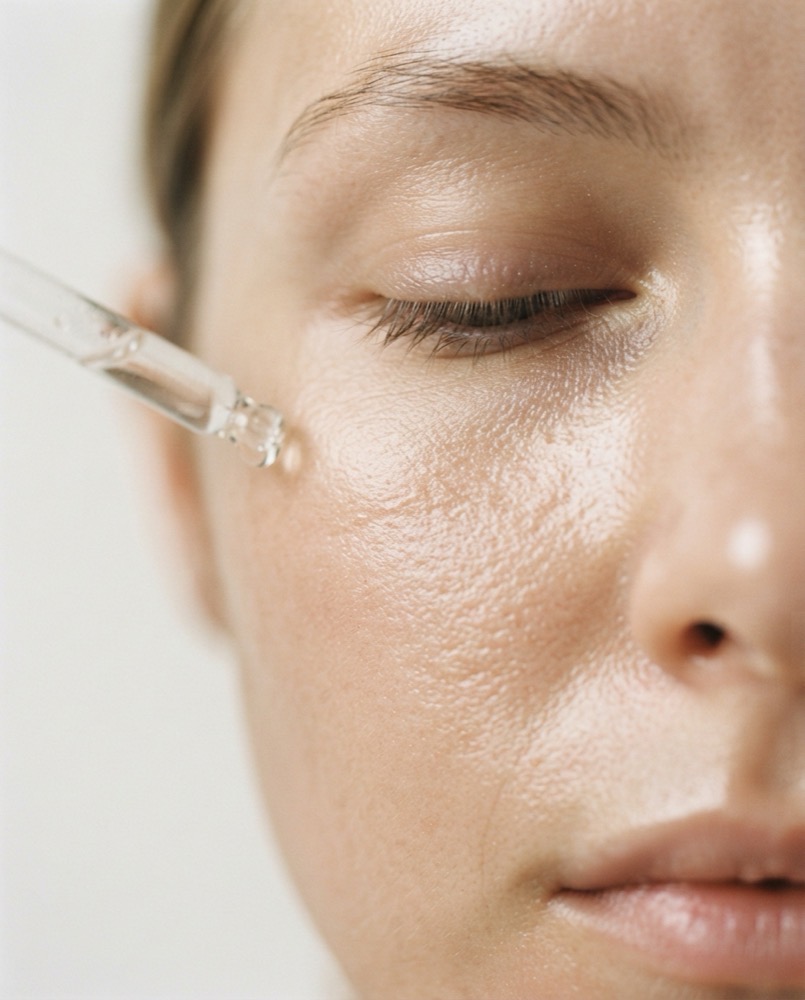
Oily skin is a skin type in which the sebaceous glands produce more sebum than the skin needs. It shows up as shine through the T-zone within hours of cleansing, visibly enlarged pores, makeup that slides or separates, and a tendency towards blackheads and congestion.
Sebum itself is not the enemy – it carries vitamin E to the surface, keeps the barrier supple and helps oily skin hold its structure, which is why it often shows fine lines later than dry skin does.
What causes oily skin?
Genetics and androgen activity are the primary drivers of how much sebum your glands produce. Heat and humidity increase output measurably, and hormonal fluctuations across the monthly cycle, pregnancy or puberty shift it again.
Stress, a diet heavy in refined carbohydrates, and – counter-intuitively – over-cleansing with stripping foams or alcohol-based toners all push oil production up, because skin compensates for a damaged barrier by making more.
What ingredients are best for oily skin?
Look for salicylic acid (a BHA that is oil-soluble, so it clears inside the pore), niacinamide and zinc to regulate sebum, clay such as bentonite or kaolin for weekly absorption, and retinoids or azelaic acid to normalise how pores shed.
Do not skip hydration: lightweight humectants like hyaluronic acid and glycerin, plus non-comedogenic squalane or jojoba oil, keep the barrier intact so the skin stops over-compensating. Skip heavy occlusive balms and high-alcohol toners. Take our Skin Quiz to get the balance right for your skin.