

What is sea salt in skincare?
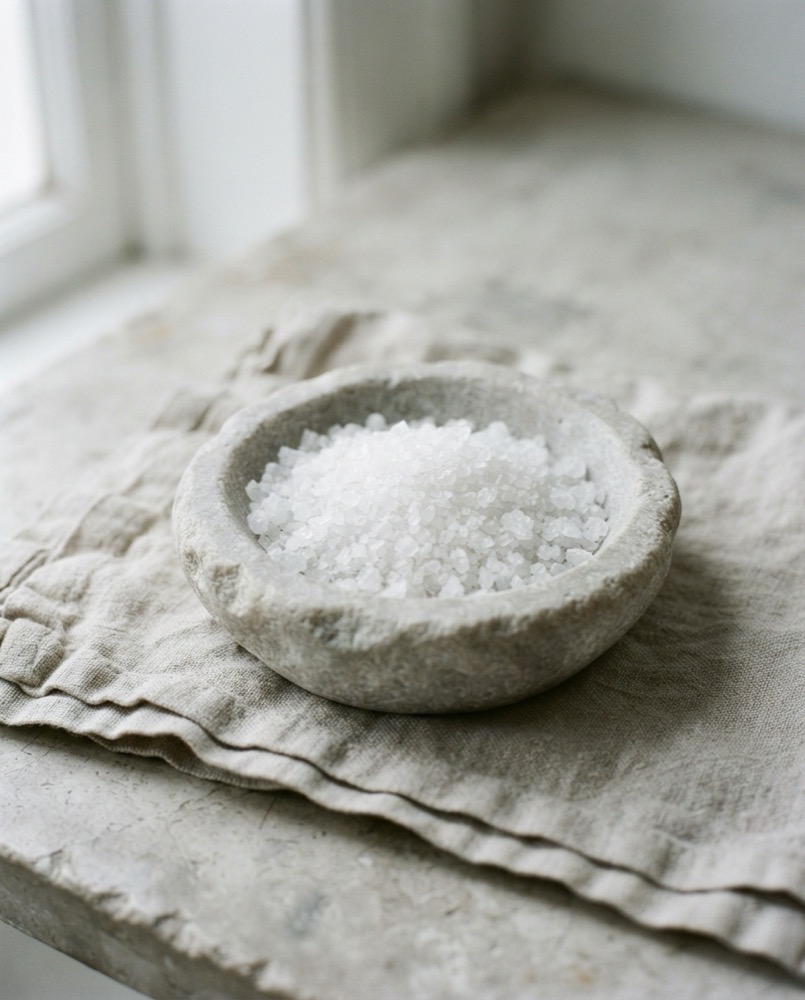
Sea salt is produced by evaporating seawater, which leaves sodium chloride along with trace minerals such as magnesium, potassium, calcium and zinc. It is coarser and less processed than table salt, and mineral content varies by source.
Dead Sea salt and Epsom salt are different products with different compositions – Epsom salt is magnesium sulphate, not a sodium salt at all – so claims made for one do not transfer to the others.
What skin concerns does sea salt treat?
Dissolved in a bath or used as a soak, salt water can ease itching and scaling in conditions such as psoriasis and eczema, and mineral-rich Dead Sea salt baths have been studied for barrier and inflammation benefits.
As a body scrub it removes dead cells effectively. On the face it is a poor choice: the crystals are sharp and irregular, they create micro-tears that let bacteria in, and salt draws water out of the skin, worsening dryness.
What ingredients are best paired with sea salt?
In body scrubs it is blended with oils – jojoba, almond, coconut – which cushion the abrasion and replace the moisture the salt pulls out. Always follow a salt scrub or soak with a moisturiser.
For facial exfoliation, lactic acid, glycolic acid or salicylic acid do the job without the mechanical damage. Never use a salt scrub on broken, sunburnt or freshly shaved skin. Take our Skin Quiz.
What is pigmentation?
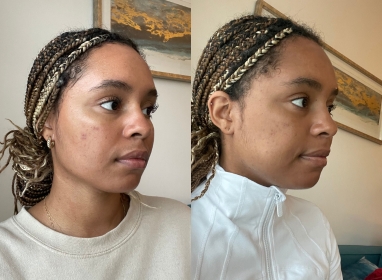
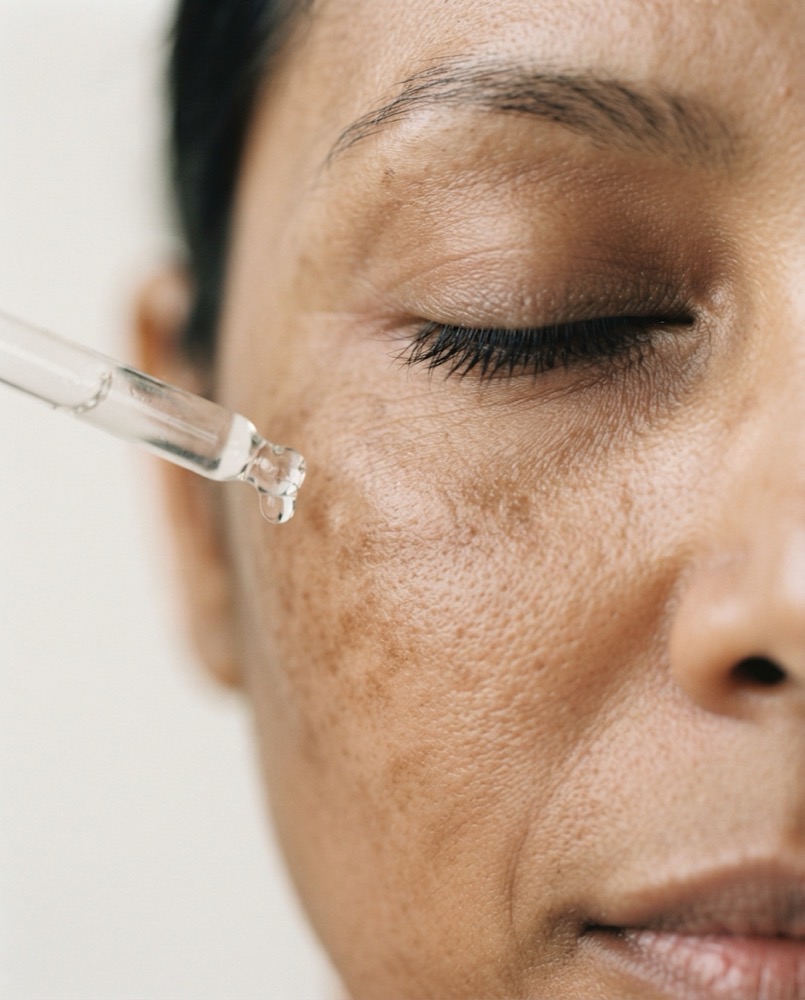
Pigmentation refers to any change in the colour of the skin caused by melanin. Hyperpigmentation – the common form – means patches darker than your natural tone, including sun spots, melasma, freckles and the marks left behind after acne or injury.
Melanin is produced by melanocytes in the lower epidermis and handed to surrounding skin cells. When that process is over-stimulated or unevenly distributed, the result is a visible patch rather than an even tone.
What causes pigmentation?
Ultraviolet exposure is the single largest trigger, because UV directly activates melanin production as a protective response. Inflammation is the second: acne, eczema, friction, waxing, burns or harsh procedures can all leave post-inflammatory hyperpigmentation, which is more common and longer-lasting in deeper skin tones.
Hormonal change, certain medications, heat and genetics complete the picture. Without daily sun protection, treated pigment reliably returns.
What ingredients are best for pigmentation?
The most effective topicals work at different points of melanin production: vitamin C and niacinamide, azelaic acid, tranexamic acid, alpha arbutin, kojic acid and liquorice root extract.
Retinoids and gentle AHAs speed up turnover so pigmented cells clear faster. But broad-spectrum SPF worn daily is the ingredient that decides whether any of it holds – without it, results reverse within weeks. Take our Skin Quiz.