

What is rosehip oil in skincare?
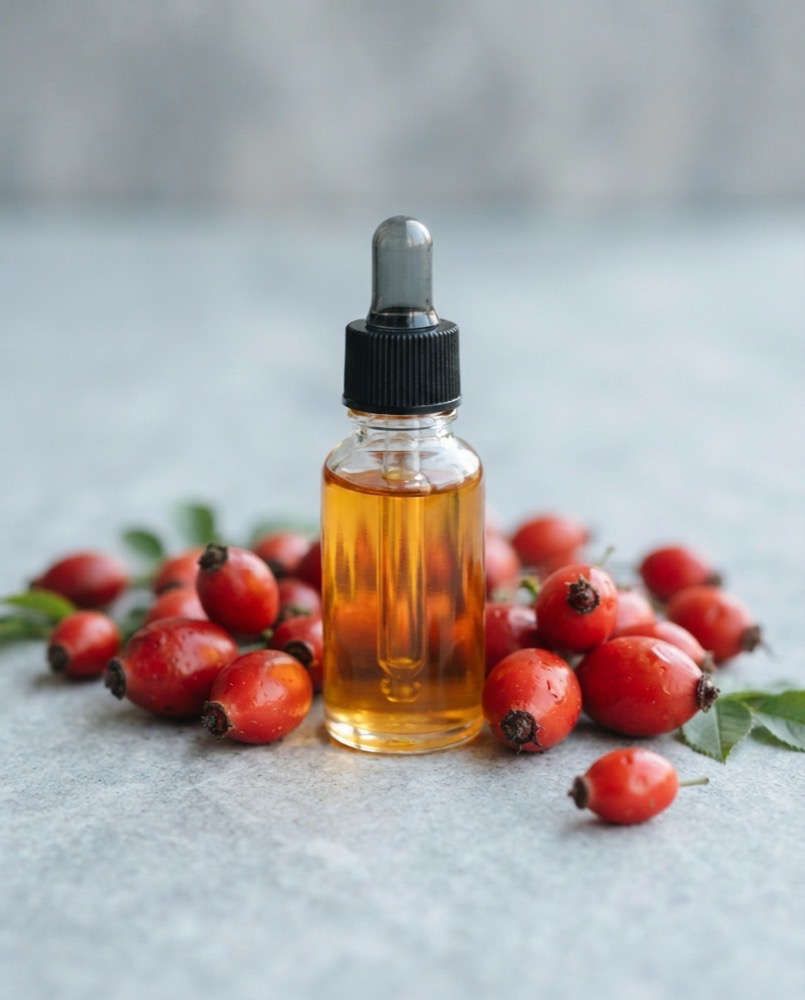
Rosehip oil is cold-pressed from the seeds and fruit of Rosa canina or Rosa rubiginosa – the hip left behind after a rose has flowered. It should not be confused with rose oil, which is distilled from petals and is a fragrance ingredient.
It is rich in linoleic and linolenic acid, vitamin E, and naturally occurring trans-retinoic acid in trace amounts. It has a light, dry feel and a faint earthy scent, and reviews of rosehip-based dermatological products document antioxidant, anti-inflammatory and regenerative activity.
What skin concerns does rosehip oil treat?
It suits dry, dehydrated and mature skin, and its essential fatty acids help calm eczema and general irritation. The vitamin A compounds give it a mild resurfacing effect on tone and texture without retinoid-level irritation.
Its best-documented use is repair: experimental work shows rosehip oil promotes excisional wound healing, which underpins its popularity for scars, stretch marks and post-acne marks.
What ingredients are best paired with rosehip oil?
Layer it over hyaluronic acid or a hydrating serum, and alongside ceramides and squalane for a complete barrier routine. It pairs well with vitamin C for brightening.
Because it already contains vitamin A compounds, introduce it slowly if you are also using a retinoid. Its high linoleic content makes it a better choice for oily skin than most oils, but it oxidises quickly – buy small, opaque bottles and refrigerate. Take our Skin Quiz.
What are sun spots?
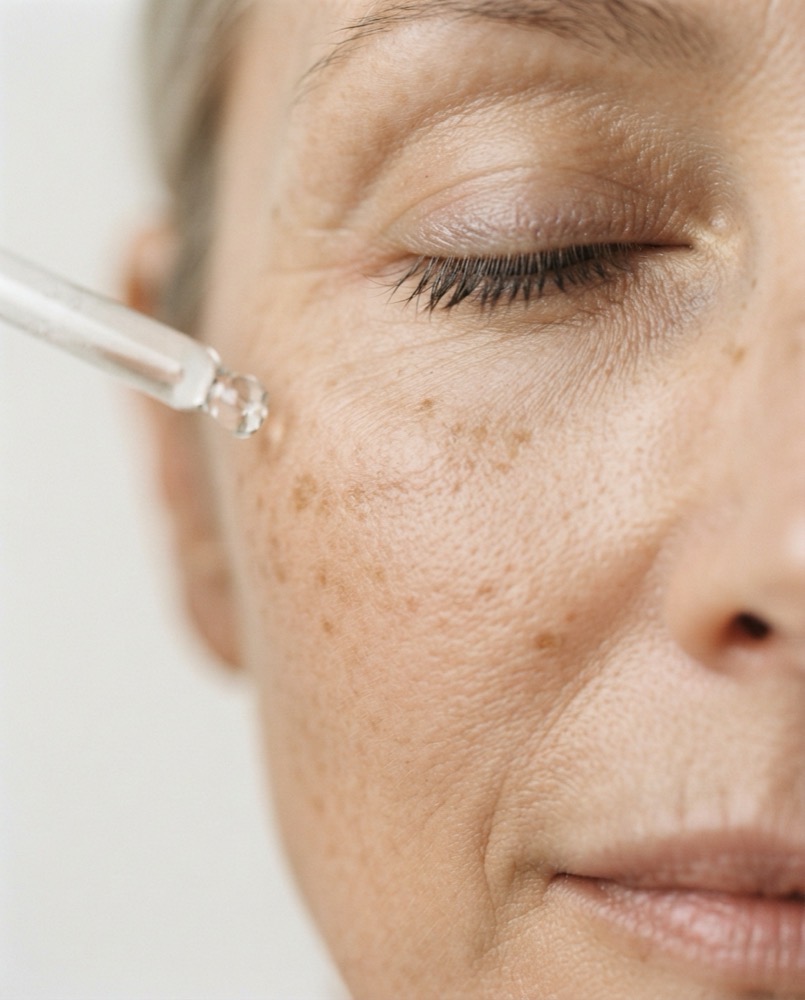
Sun spots are flat patches of concentrated pigment that form where skin has taken the most ultraviolet exposure – cheeks, nose, forehead, hands, shoulders and chest. Dermatologists call them solar lentigines; they are the same thing as age spots.
They are harmless, but they are a visible marker of accumulated photodamage, and they usually arrive alongside other signs of it: fine lines, loss of firmness and an uneven overall tone.
What causes sun spots?
UV radiation prompts melanocytes to produce extra melanin as a defence. With repeated exposure that response becomes localised and fixed, leaving discrete patches instead of an even tan that fades.
Tanning beds, sunburns in childhood, fair skin and outdoor time without protection all increase the count. Incidental exposure – driving, walking, sitting near a window – adds up more than most people expect.
What ingredients are best for sun spots?
Retinoids to accelerate turnover, vitamin C to protect and brighten, and pigment inhibitors such as alpha arbutin, kojic acid, azelaic acid, tranexamic acid and liquorice root are the core toolkit.
Gentle AHAs help shift surface pigment, and niacinamide slows the transfer of melanin into skin cells. None of it holds without daily broad-spectrum SPF and reapplication. Take our Skin Quiz.