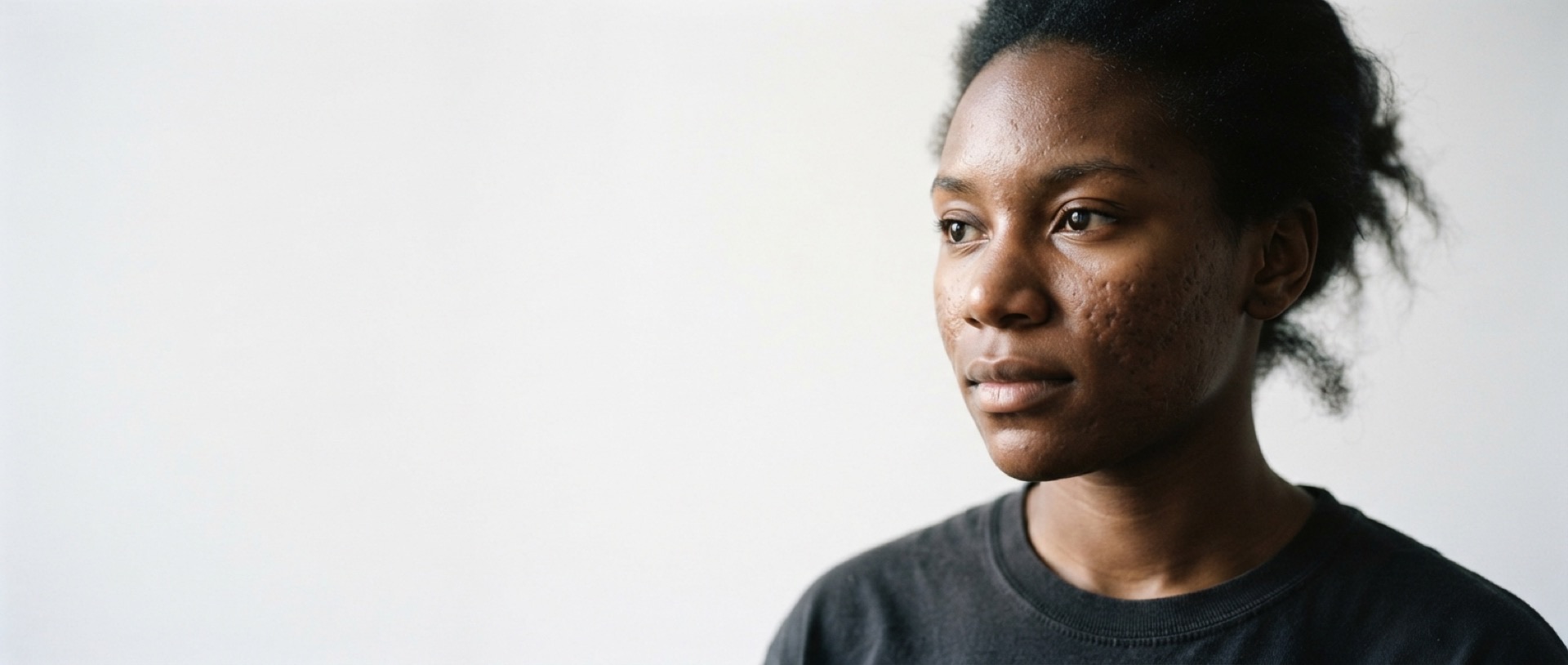
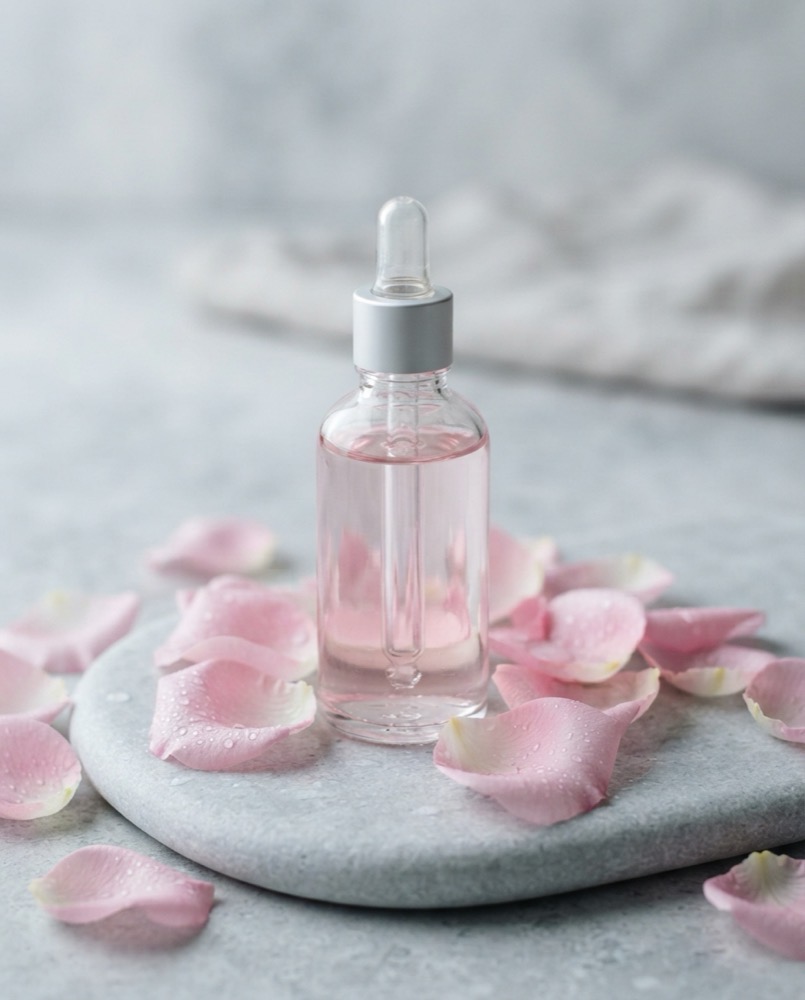
What is rose water in skincare?
Rose water is the hydrosol left over when rose petals – usually Rosa damascena – are steam-distilled. It is the aromatic water that separates from rose essential oil, and it carries a small fraction of the plant’s water-soluble compounds.
The practice originated in Persia and rose water has been in cosmetic use for well over a thousand years. It should not be confused with rose oil, which is far more concentrated, or with fragranced rose-scented water, which contains no plant material at all.
What skin concerns does rose water treat?
It calms redness and irritation and gives a light, refreshing hydration, which suits sensitive, reactive and post-procedure skin. Extracts of Rosa damascena petal have documented skin anti-inflammatory activity, and its polyphenols contribute antioxidant defence.
It has mild antibacterial properties – a study of rose hydrosol found an effect on skin flora after hand-rubbing. Expect comfort and a pleasant sensory step rather than a measurable change in tone or texture.
What ingredients are best paired with rose water?
Use it as a hydrating base layer and follow with something that holds the water in – hyaluronic acid or glycerin, then ceramides or squalane. On its own it evaporates and leaves skin no better off.
It layers well with niacinamide, centella asiatica and aloe for calming routines. Check the label says rose hydrosol or distillate rather than water plus fragrance, and patch test, since a small number of people are allergic. Take our Skin Quiz.
What are age spots?
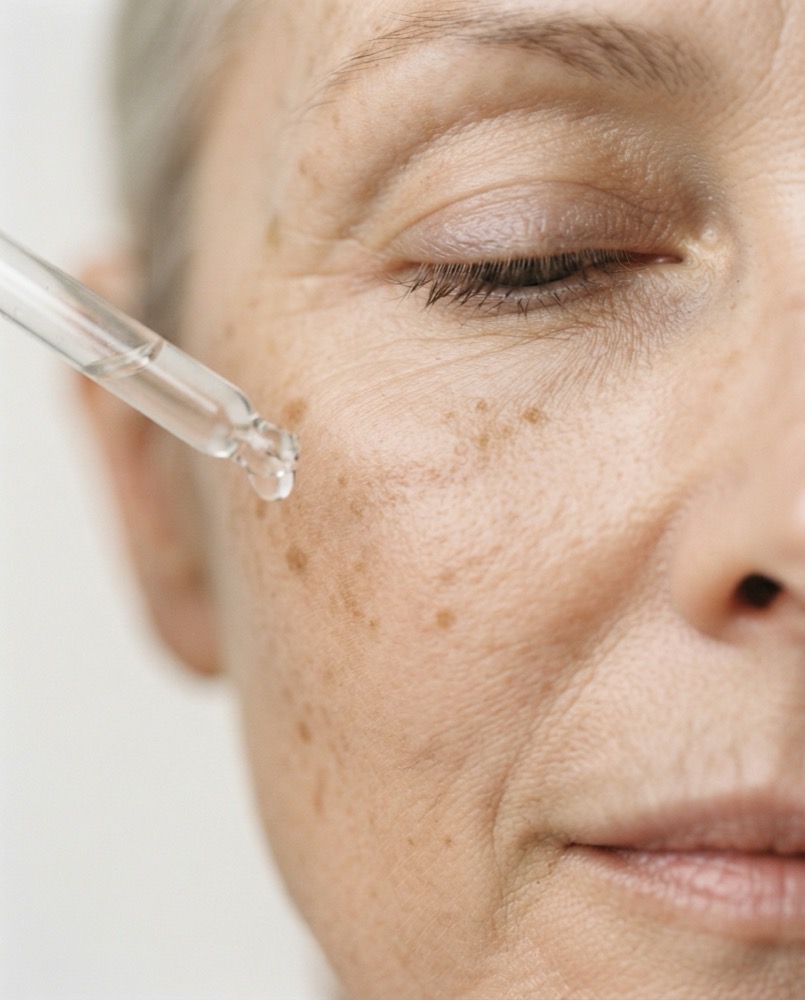
Age spots – known clinically as solar lentigines, and sometimes as liver spots – are flat, well-defined brown or tan patches that appear on skin with the most cumulative sun exposure: the face, backs of the hands, forearms, shoulders and upper chest.
Despite the name, they are not caused by age itself. They are a record of ultraviolet exposure, which is why they are common from the forties onward and why they cluster on areas that rarely get sunscreen.
What causes age spots?
Long-term UV exposure drives melanocytes to over-produce melanin in concentrated spots, and the surrounding keratinocytes stop clearing that pigment efficiently as skin ages.
Fair skin, a history of sunburns, tanning beds and outdoor work all raise the risk. Any new spot that changes shape, colour or size, bleeds or has an irregular border should be checked by a doctor rather than treated cosmetically.
What ingredients are best for age spots?
Topical treatment works but needs patience – expect three to six months. Retinoids speed turnover so pigmented cells shed faster, vitamin C and niacinamide brighten and protect, and alpha arbutin, kojic acid, azelaic acid and liquorice root inhibit new pigment.
Glycolic or lactic acid helps lift existing pigment from the surface. Daily broad-spectrum SPF, including on hands and chest, is what prevents new spots forming. Take our Skin Quiz.