What is retinoic acid in skincare?
Retinoic acid is the form of vitamin A that skin cells can actually use. Every other retinoid – retinyl palmitate, retinol, retinaldehyde – is a precursor that the skin must convert into retinoic acid through one or more enzymatic steps before anything happens.
Applied topically as tretinoin it is a prescription medicine, because it bypasses conversion entirely and binds straight to retinoic acid receptors in the cell nucleus.
What skin concerns does retinoic acid treat?
By binding those receptors it changes gene expression: keratinocytes mature and shed normally, sebaceous activity drops, melanin distribution evens out, and dermal fibroblasts produce more collagen.
That translates to measurable improvement in acne, fine lines, wrinkles, rough texture, enlarged pores and mottled pigmentation – the widest evidence base of any topical active.
What ingredients are best paired with retinoic acid?
Because it is the most potent form, barrier support matters most: ceramides, hyaluronic acid, niacinamide, panthenol and squalane. Build up slowly rather than pushing through irritation.
Keep it to night use, apply broad-spectrum SPF every morning, and avoid layering with AHAs, BHAs or benzoyl peroxide in the same step. It is contraindicated in pregnancy. If your skin cannot tolerate it, retinaldehyde or a well-formulated retinol is the sensible step down. Take our Skin Quiz.
What are sun spots?
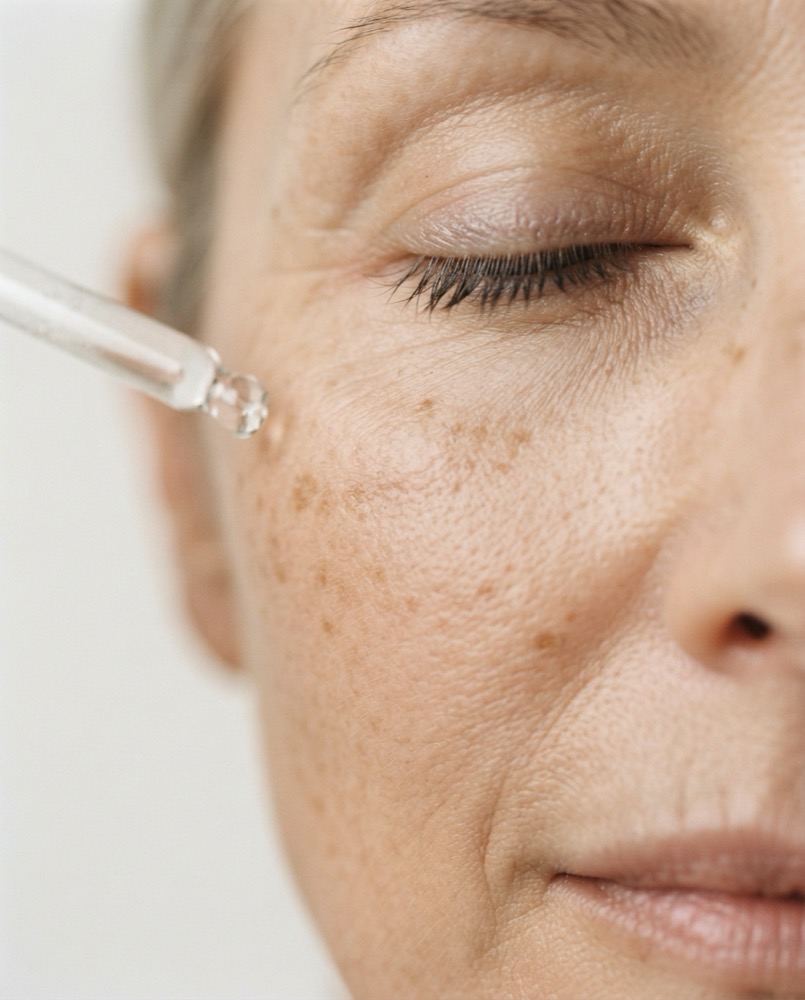
Sun spots are flat patches of concentrated pigment that form where skin has taken the most ultraviolet exposure – cheeks, nose, forehead, hands, shoulders and chest. Dermatologists call them solar lentigines; they are the same thing as age spots.
They are harmless, but they are a visible marker of accumulated photodamage, and they usually arrive alongside other signs of it: fine lines, loss of firmness and an uneven overall tone.
What causes sun spots?
UV radiation prompts melanocytes to produce extra melanin as a defence. With repeated exposure that response becomes localised and fixed, leaving discrete patches instead of an even tan that fades.
Tanning beds, sunburns in childhood, fair skin and outdoor time without protection all increase the count. Incidental exposure – driving, walking, sitting near a window – adds up more than most people expect.
What ingredients are best for sun spots?
Retinoids to accelerate turnover, vitamin C to protect and brighten, and pigment inhibitors such as alpha arbutin, kojic acid, azelaic acid, tranexamic acid and liquorice root are the core toolkit.
Gentle AHAs help shift surface pigment, and niacinamide slows the transfer of melanin into skin cells. None of it holds without daily broad-spectrum SPF and reapplication. Take our Skin Quiz.