

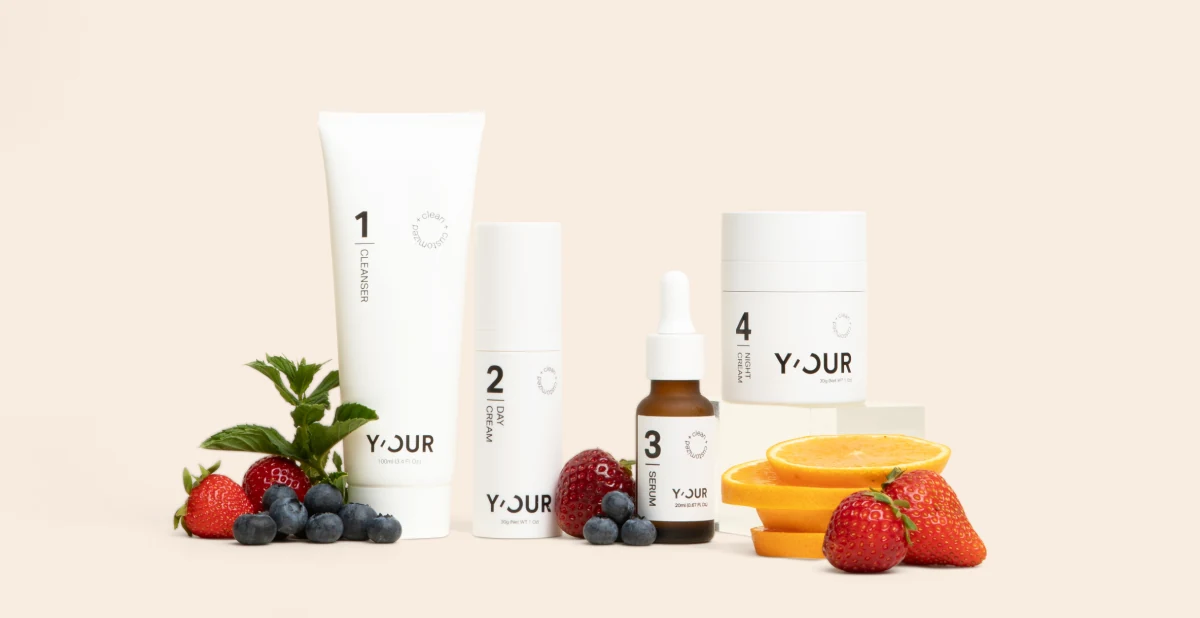
What is orange in skincare?
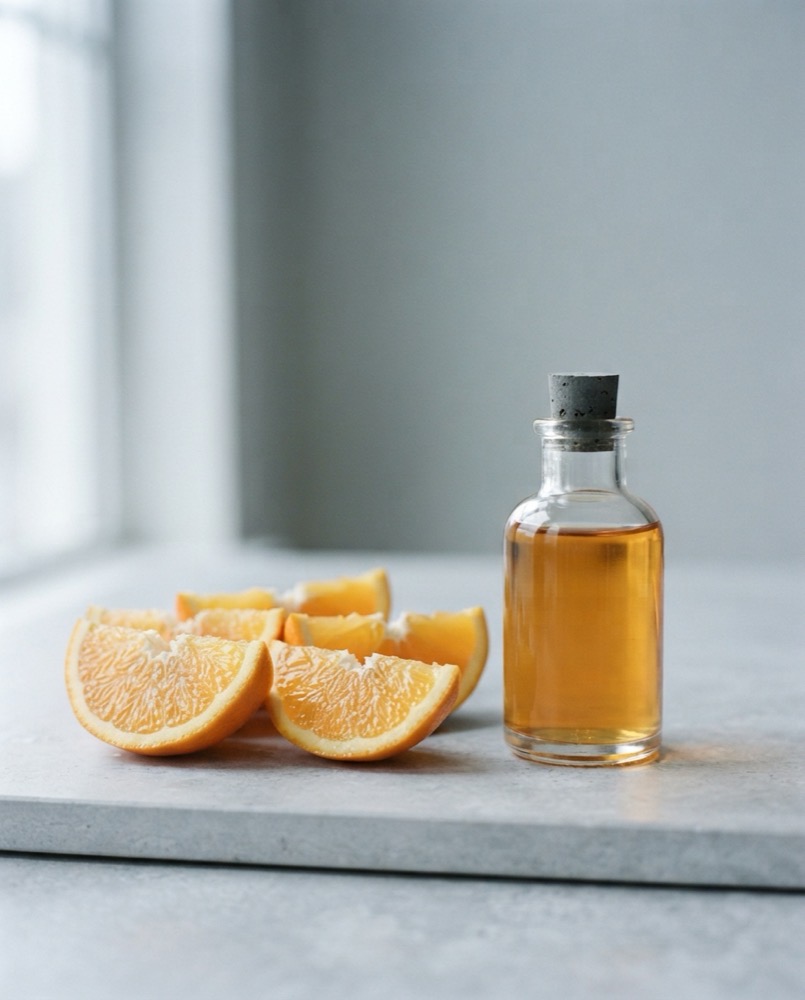
Orange reaches skincare in several forms: cold-pressed peel oil, sweet orange essential oil, fruit extract, and orange blossom water. They are not interchangeable – the peel oil is potent and fragrant, the extract mild, the hydrosol mostly water.
The fruit is a well-known source of vitamin C, and the peel contains limonene along with flavonoids such as hesperidin. The peel oil also contains furocoumarins, which matters for safety.
What skin concerns does orange treat?
Orange extracts contribute antioxidant activity and a mild brightening effect, and orange blossom water is a gentle, pleasant-smelling toner for normal skin. Sweet orange oil is used mainly for fragrance.
Two limitations are worth knowing. The vitamin C in fruit extract is nothing like a formulated vitamin C serum in concentration or stability. And cold-pressed citrus peel oil is phototoxic – blistering reactions to orange and sunlight are documented, so it does not belong in a daytime leave-on product.
What ingredients are best paired with orange?
If you want the fragrance and a light antioxidant contribution, look for orange extract or hydrosol in a rinse-off or night-time product, alongside glycerin, aloe and niacinamide.
For the brightening and antioxidant benefits people actually want, formulated vitamin C with vitamin E and ferulic acid does the job at a known strength with no phototoxicity. Avoid citrus essential oils entirely if your skin is sensitive or rosacea-prone. Take our Skin Quiz.
What is uneven skin tone?
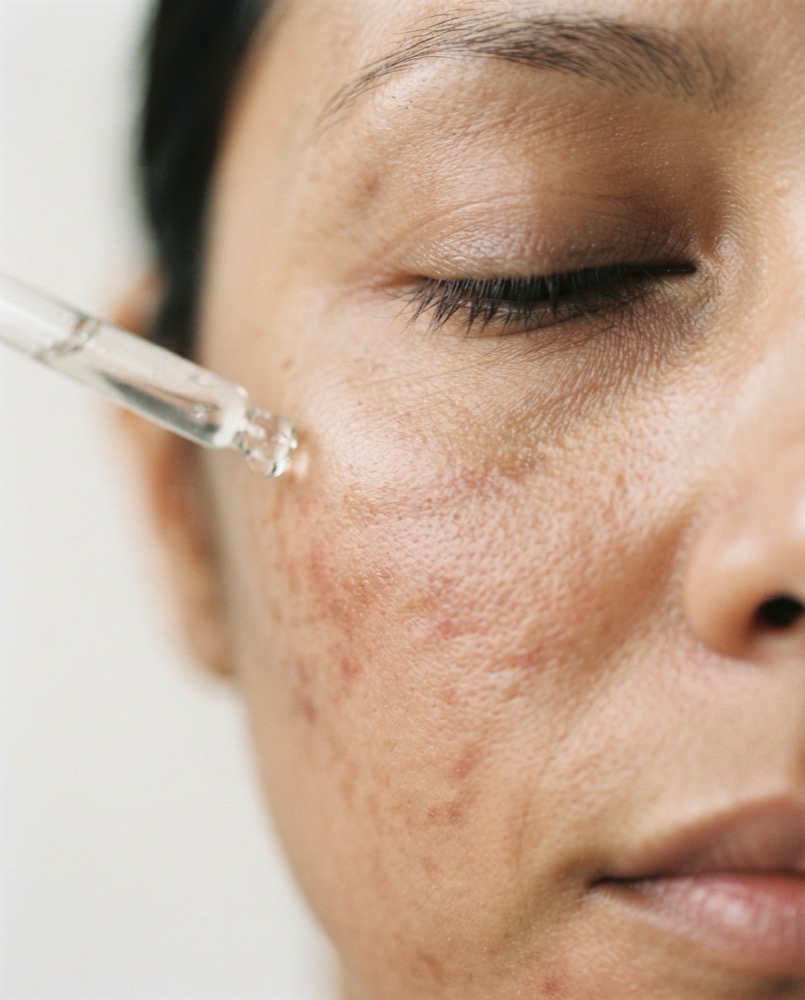
Uneven skin tone describes a complexion that reads patchy rather than uniform – a mix of darker and lighter areas, lingering red or brown marks, blotchy cheeks, and a general loss of clarity.
It usually combines several things at once: hyperpigmentation from sun or inflammation, persistent redness, and surface build-up of dead cells that makes the whole face look mottled and dull.
What causes uneven skin tone?
Ultraviolet exposure is the dominant cause, stimulating melanin unevenly across the face. Post-inflammatory marks from acne, eczema or irritation add brown or red patches that can persist for months.
Hormonal pigmentation, slowed cell turnover with age, dehydration, pollution, smoking and a damaged barrier all compound it. Aggressive scrubbing or unsupervised strong actives frequently make tone more uneven, not less.
What ingredients are best for uneven skin tone?
Vitamin C and niacinamide are the reliable everyday choices – one protects and brightens, the other evens tone and strengthens the barrier. Azelaic acid is unusually useful because it addresses brown marks and redness at once.
Add gentle exfoliation with lactic or glycolic acid to clear surface build-up, retinol to accelerate turnover, and alpha arbutin or tranexamic acid for stubborn pigment. Daily broad-spectrum SPF is what makes the results stick. Take our Skin Quiz.