What is orange in skincare?
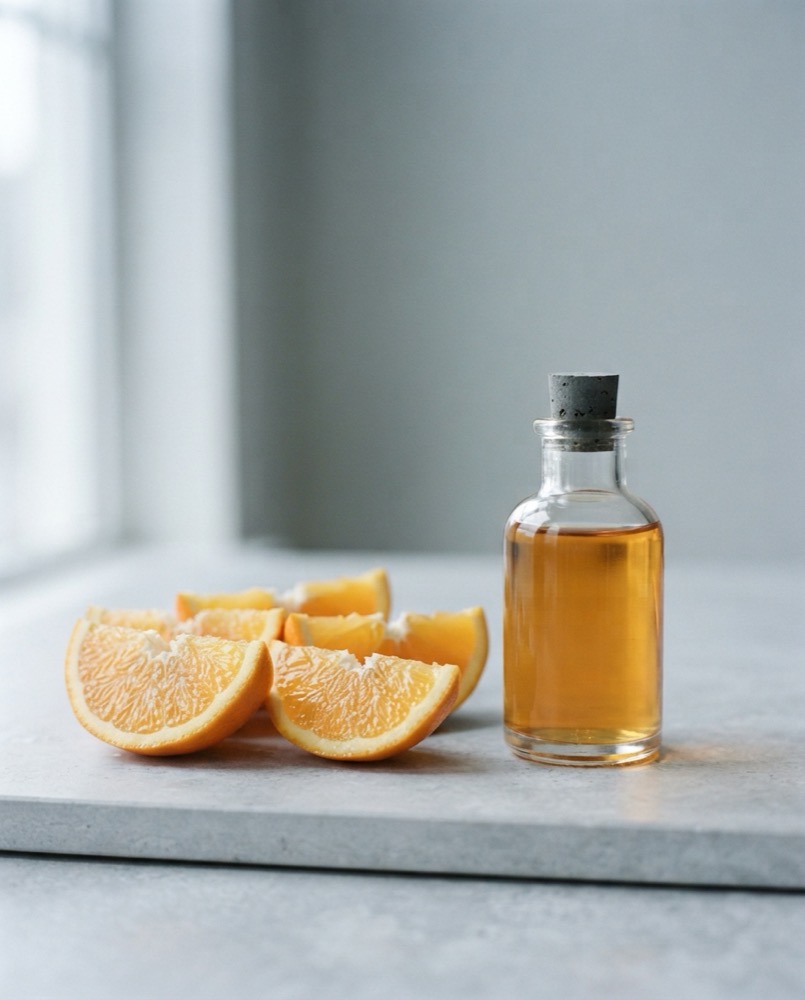
Orange reaches skincare in several forms: cold-pressed peel oil, sweet orange essential oil, fruit extract, and orange blossom water. They are not interchangeable – the peel oil is potent and fragrant, the extract mild, the hydrosol mostly water.
The fruit is a well-known source of vitamin C, and the peel contains limonene along with flavonoids such as hesperidin. The peel oil also contains furocoumarins, which matters for safety.
What skin concerns does orange treat?
Orange extracts contribute antioxidant activity and a mild brightening effect, and orange blossom water is a gentle, pleasant-smelling toner for normal skin. Sweet orange oil is used mainly for fragrance.
Two limitations are worth knowing. The vitamin C in fruit extract is nothing like a formulated vitamin C serum in concentration or stability. And cold-pressed citrus peel oil is phototoxic – blistering reactions to orange and sunlight are documented, so it does not belong in a daytime leave-on product.
What ingredients are best paired with orange?
If you want the fragrance and a light antioxidant contribution, look for orange extract or hydrosol in a rinse-off or night-time product, alongside glycerin, aloe and niacinamide.
For the brightening and antioxidant benefits people actually want, formulated vitamin C with vitamin E and ferulic acid does the job at a known strength with no phototoxicity. Avoid citrus essential oils entirely if your skin is sensitive or rosacea-prone. Take our Skin Quiz.
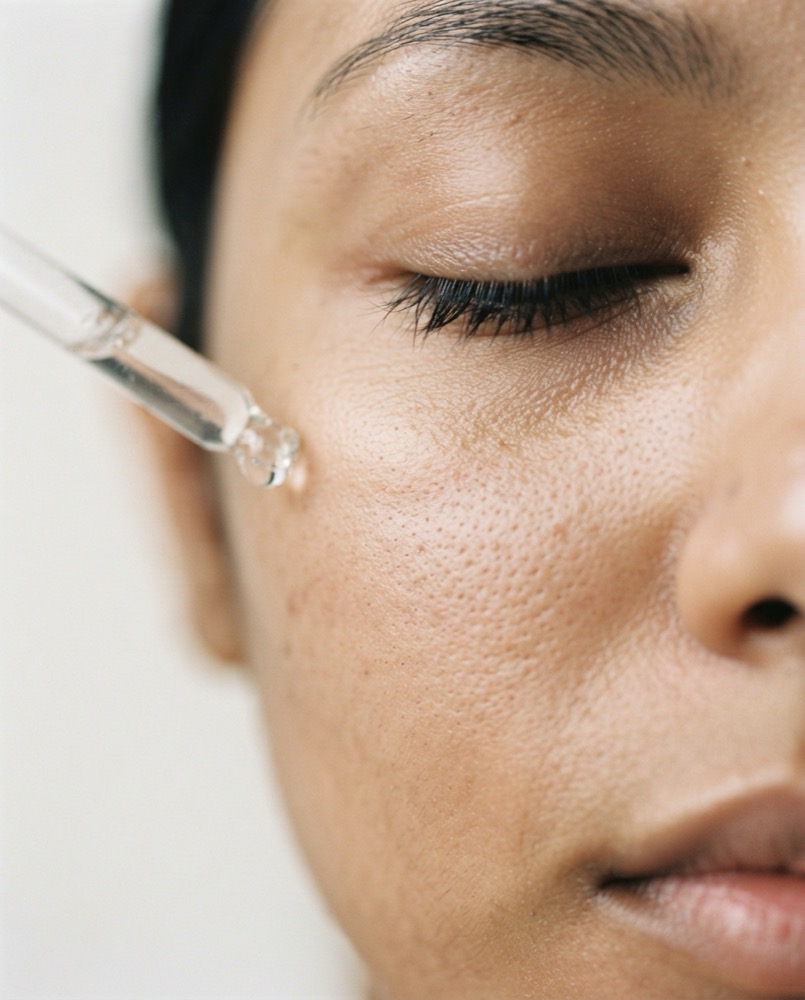
What are clogged pores?
A clogged pore is a hair follicle blocked by a mix of sebum, dead skin cells and debris. Left open to the air the plug oxidises and darkens into a blackhead; sealed over by skin it becomes a whitehead or closed comedone.
Clogged pores are the starting point of nearly all acne – the microcomedone forms first, and inflammation follows only if bacteria and immune response get involved.
What causes clogged pores?
Excess sebum and abnormal keratinisation are the two mechanics. When the follicle lining sheds cells faster than they can clear, they bind with oil and form a plug.
Comedogenic products (heavy oils, some silicones and waxes), thick makeup worn for long stretches, humidity, sweat left on the skin, hormonal shifts and insufficient cleansing all contribute. So does over-cleansing, which damages the barrier and drives oil production up.
What ingredients are best for clogged pores?
Salicylic acid is the first choice because it is oil-soluble and works inside the pore rather than just on the surface. Glycolic and lactic acid clear the surface layer, and clay masks absorb excess oil weekly.
Retinoids are the most effective long-term fix, because they change how the follicle sheds in the first place. Add niacinamide to regulate sebum and keep the barrier intact, and switch to non-comedogenic, lightweight hydrators. Take our Skin Quiz to find products that will not re-clog you.