

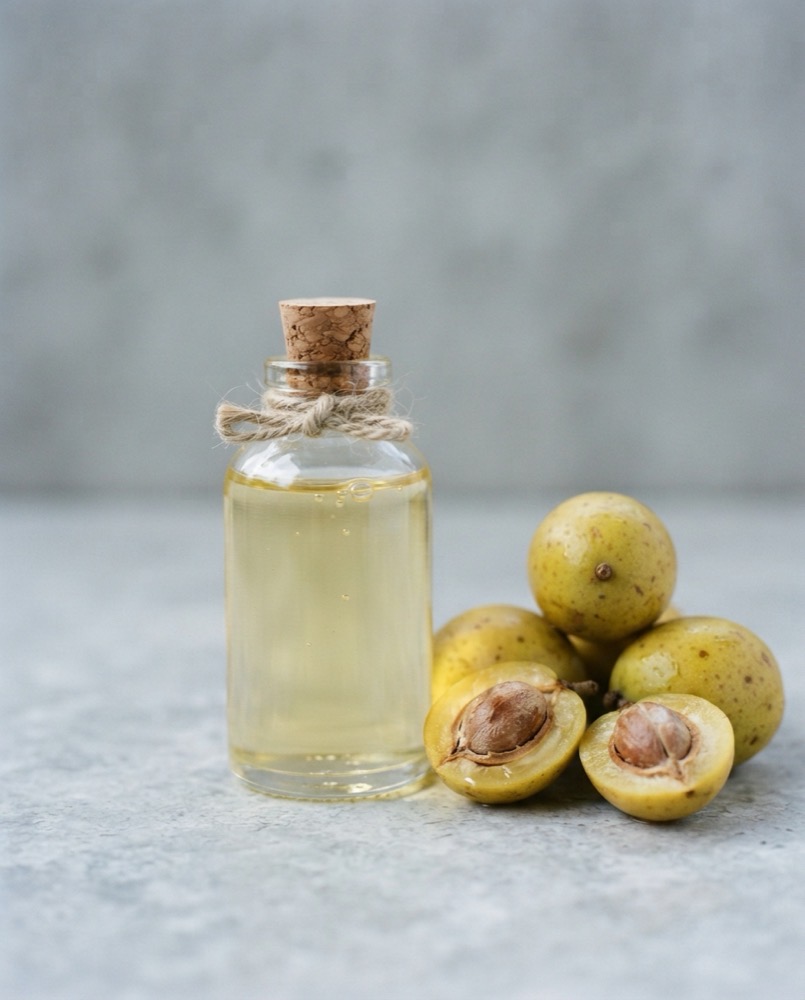
What is marula oil in skincare?
Marula oil is cold-pressed from the kernels of the marula fruit, native to southern Africa. It is a light, fast-absorbing oil that is very high in oleic acid – often 70 to 80% – with vitamin E, phenolic antioxidants and amino acids.
Despite being oleic-dominant it has an unusually light skin feel, and its high antioxidant content makes it exceptionally resistant to oxidation compared with most plant oils.
What skin concerns does marula oil treat?
It hydrates and softens dry, dehydrated and mature skin, improves suppleness, and reduces the tightness that comes with a depleted barrier. Its antioxidants support skin against environmental and inflammatory stress.
It is often used on the face, body, cuticles and hair ends, and is popular for stretch marks. Because it is high in oleic acid it is better suited to normal, dry and mature skin than to congested, oily skin.
What ingredients are best paired with marula oil?
Apply it over a hydrating serum – hyaluronic acid, glycerin or niacinamide – so it seals moisture in, and combine it with ceramides for barrier repair.
It also works well as a final step over a retinoid to reduce flaking. Its stability means it keeps longer than lighter oils like grapeseed or rosehip without refrigeration. Take our Skin Quiz.
What are dark spots?
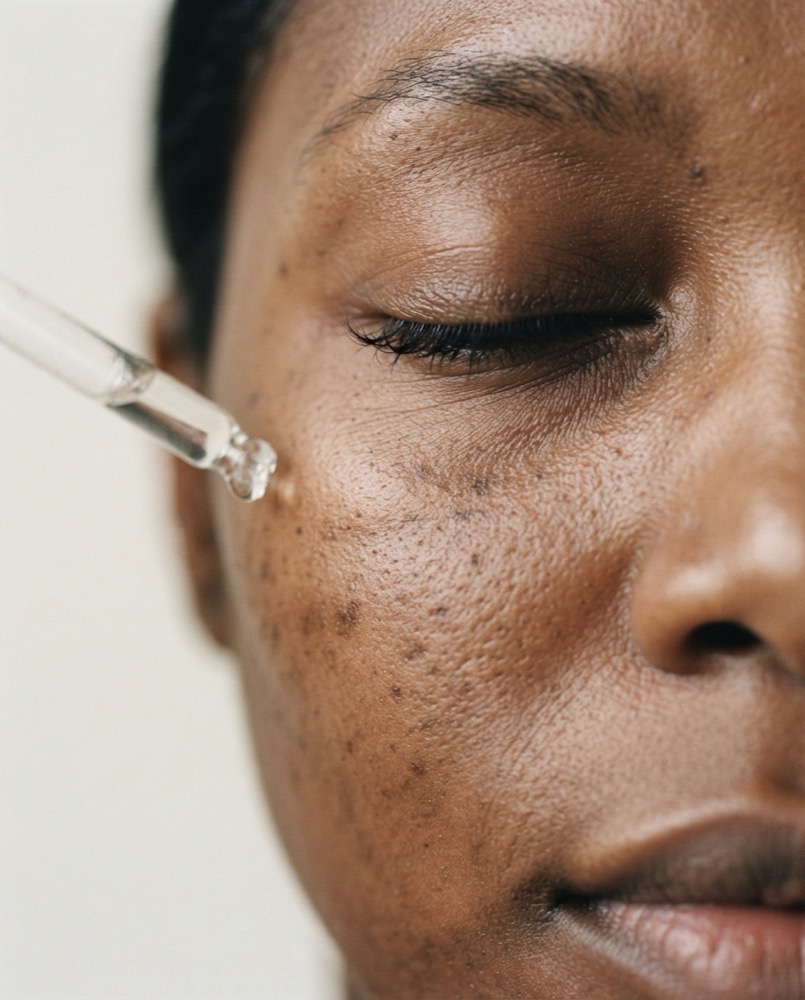
Dark spots are localised patches where the skin has produced more melanin than the surrounding area. The umbrella term covers sun spots, post-acne marks, melasma patches and freckles – different causes, same visible result.
They are flat rather than raised, vary from light tan to deep brown, and are most noticeable on the face, hands and chest. In deeper skin tones they tend to be darker and to last considerably longer.
What causes dark spots?
Two mechanisms dominate. Ultraviolet exposure triggers protective melanin production, and inflammation – from acne, ingrown hairs, eczema, friction, burns or harsh treatments – leaves post-inflammatory hyperpigmentation behind as it heals.
Hormonal change, some medications and heat add to it. Picking at spots is one of the most avoidable causes: the extra inflammation reliably makes the mark darker and longer-lived than the original blemish.
What ingredients are best for dark spots?
Vitamin C, niacinamide and azelaic acid are the everyday workhorses. For stubborn pigment, alpha arbutin, tranexamic acid, kojic acid and liquorice root extract interrupt melanin production directly.
Retinoids and gentle AHAs clear pigmented cells faster from the surface. Give any routine twelve weeks before judging it, and wear broad-spectrum SPF daily or the spots will simply redarken. Take our Skin Quiz.