

What is tretinoin in skincare?
Tretinoin is all-trans retinoic acid – the biologically active form of vitamin A, and the only one that binds directly to retinoic acid receptors without needing conversion by the skin. It is available on prescription rather than over the counter.
It was the first topical treatment proven to reverse signs of photoageing, and remains the benchmark against which every other anti-ageing active is measured. Common strengths are 0.025%, 0.05% and 0.1%.
What skin concerns does tretinoin treat?
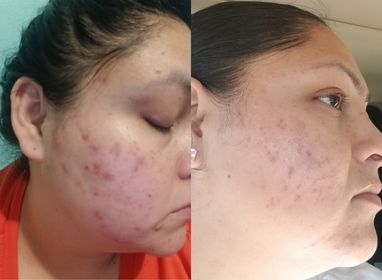
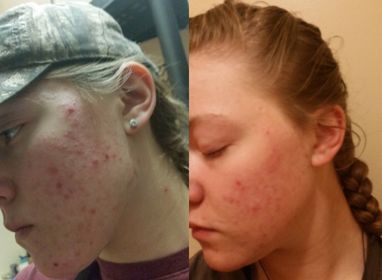
It treats acne at every severity by normalising how follicles shed, and it is extensively documented for photoageing – fine lines, wrinkles, roughness, sallowness and mottled pigmentation.
A vehicle-controlled comparison found 0.025% delivered improvement similar to 0.1% with markedly less irritation, so higher strength is not automatically better.
What ingredients are best paired with tretinoin?
Support the barrier hard: ceramides, hyaluronic acid, niacinamide, panthenol and squalane make the retinisation period far more tolerable. Applying moisturiser before tretinoin (the sandwich method) reduces irritation without eliminating benefit.
Use at night, start two or three times a week, and never skip morning SPF. Do not combine with AHAs, BHAs or benzoyl peroxide in the same application, and do not use it if you are pregnant or trying to conceive. Take our Skin Quiz.
What is hormonal acne?
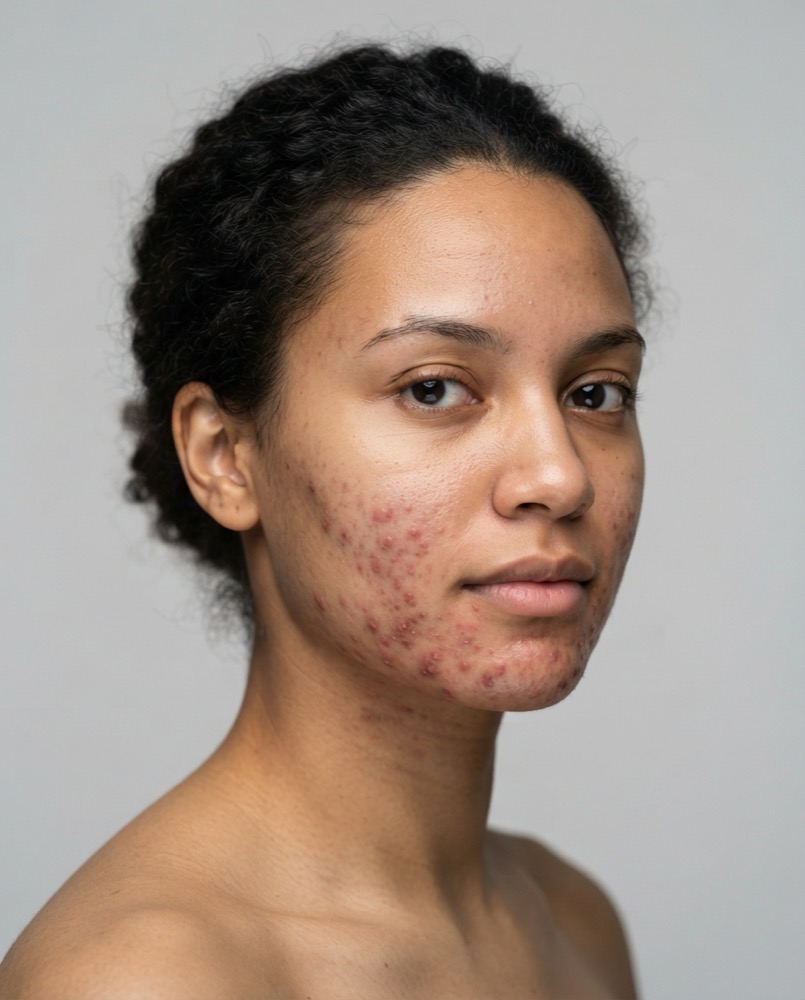
Hormonal acne is acne whose timing and pattern track with hormonal activity rather than with cleansing habits or diet alone. It typically appears along the lower face – jawline, chin and upper neck – as deep, tender papules and cysts that flare on a predictable cycle.
It is most recognisable in adult women, where breakouts often arrive in the week before menstruation and settle again afterwards.
What causes hormonal acne?
Androgens – testosterone and DHT in particular – bind to receptors on the sebaceous gland and increase sebum production. When androgen activity rises or oestrogen falls, oil output climbs and follicles clog more readily.
Menstrual cycles, starting or stopping contraception, pregnancy, perimenopause and PCOS are the usual contexts. Stress raises cortisol, which amplifies the same pathway. Persistent hormonal acne with irregular cycles or excess hair growth is worth investigating medically.
What ingredients are best for hormonal acne?
Retinoids are the most effective topical, because they stop the plug forming regardless of how much oil is being produced. Azelaic acid reduces inflammation and the marks that follow, and niacinamide helps regulate sebum.
Salicylic acid keeps pores clear between flares, and benzoyl peroxide targets bacteria in inflamed lesions. Because hormonal acne is driven from the inside, topicals manage rather than cure it – consistency across the whole cycle beats spot-treating during a flare. Take our Skin Quiz.