

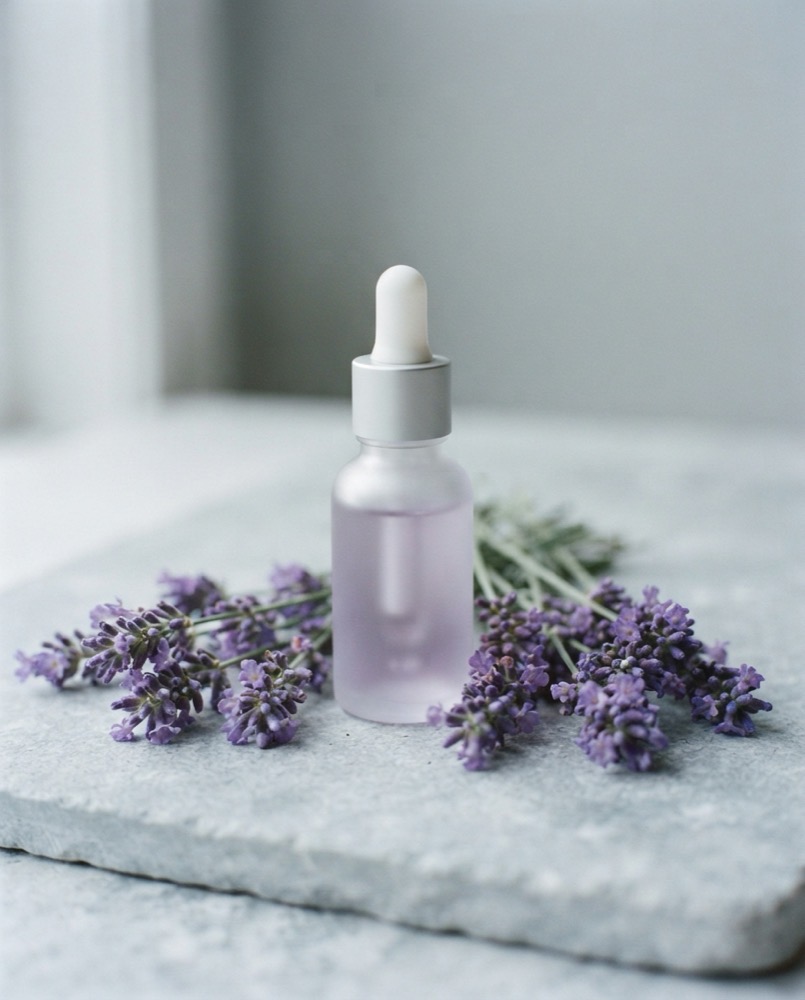
What is lavender in skincare?
Lavender oil is steam-distilled from the flowering spikes of Lavandula angustifolia. Its main constituents are linalool and linalyl acetate, which give it both its scent and its biological activity.
It is one of the most widely used essential oils in cosmetics, valued for fragrance as much as for function. Its anti-inflammatory and antimicrobial properties are real, but so is its potential to sensitise skin.
What skin concerns does lavender treat?
It calms minor irritation, insect bites and small wounds, and has been shown to support wound healing and collagen synthesis in experimental models. Its antibacterial action gives it a modest role in mild acne.
Its most reliable benefit is arguably indirect: lavender’s effect on stress and sleep quality matters for skin, since cortisol drives inflammation and breakouts. As a topical active on the face, however, it is one of the weaker options.
What ingredients are best paired with lavender?
Always dilute it in a carrier oil – jojoba, squalane or sweet almond – to around 1%. Pair it with calming ingredients such as chamomile, centella asiatica and colloidal oatmeal.
Be cautious: linalool oxidises on exposure to air into a known contact allergen, and lavender is a common cause of fragrance sensitivity. If your skin is reactive or you are treating rosacea, a fragrance-free calming ingredient is the safer choice. Take our Skin Quiz.
What is rosacea?
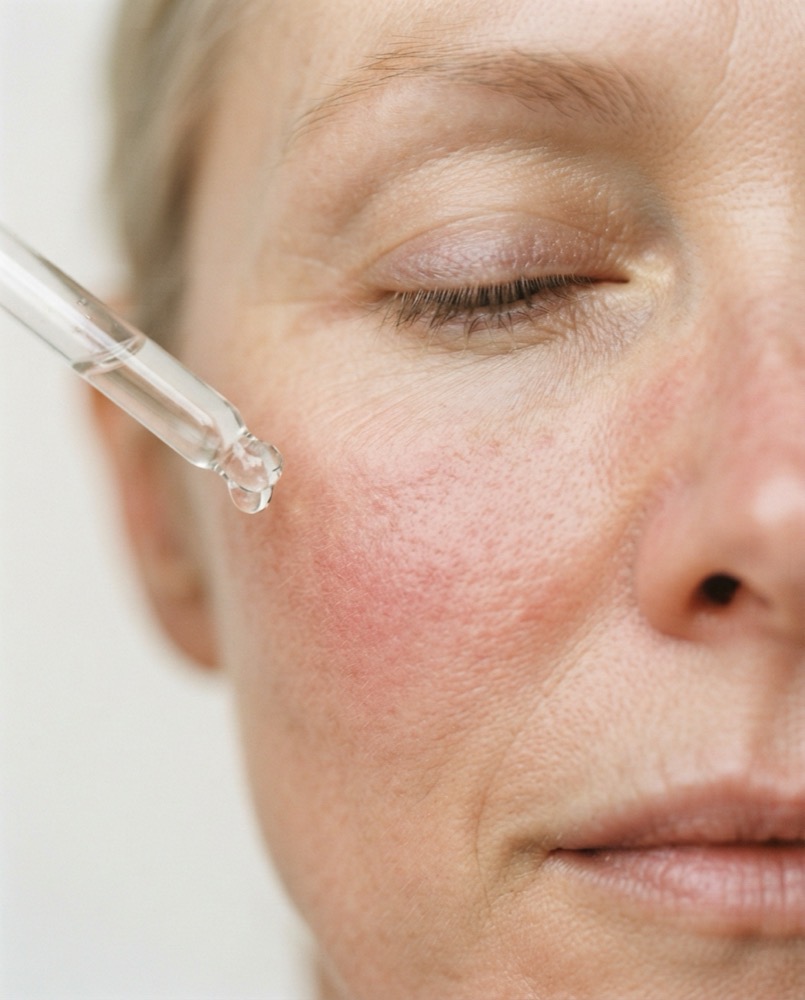
Rosacea is a chronic inflammatory skin condition that affects the central face – cheeks, nose, chin and forehead. It presents as persistent redness, visible broken capillaries, flushing that comes and goes, and in some subtypes acne-like papules and pustules.
Unlike acne, rosacea involves no comedones. It is driven by a combination of vascular hyper-reactivity, neurogenic inflammation and an overactive innate immune response, often with an impaired skin barrier alongside.
What causes rosacea?
There is no single cause. Genetic predisposition, an exaggerated immune response involving cathelicidin, overgrowth of Demodex mites, and dysfunction of the facial blood vessels all appear to contribute.
Flares are triggered by heat, sun exposure, alcohol, spicy food, hot drinks, exercise, stress, wind and cold, and by harsh skincare. Identifying and avoiding your own trigger set does as much as any product.
What ingredients are best for rosacea?
Azelaic acid and niacinamide are the standout actives – both reduce redness and inflammation without provoking the barrier. Sulphur, green tea extract, liquorice root and centella asiatica also calm reactive skin.
Build everything else around barrier repair: ceramides, glycerin, squalane and panthenol, with a gentle non-foaming cleanser and a mineral SPF every day. Avoid alcohol-heavy toners, fragrance, menthol, physical scrubs and high-strength acids. Take our Skin Quiz to build a routine your skin will tolerate.