

What is jojoba oil in skincare?
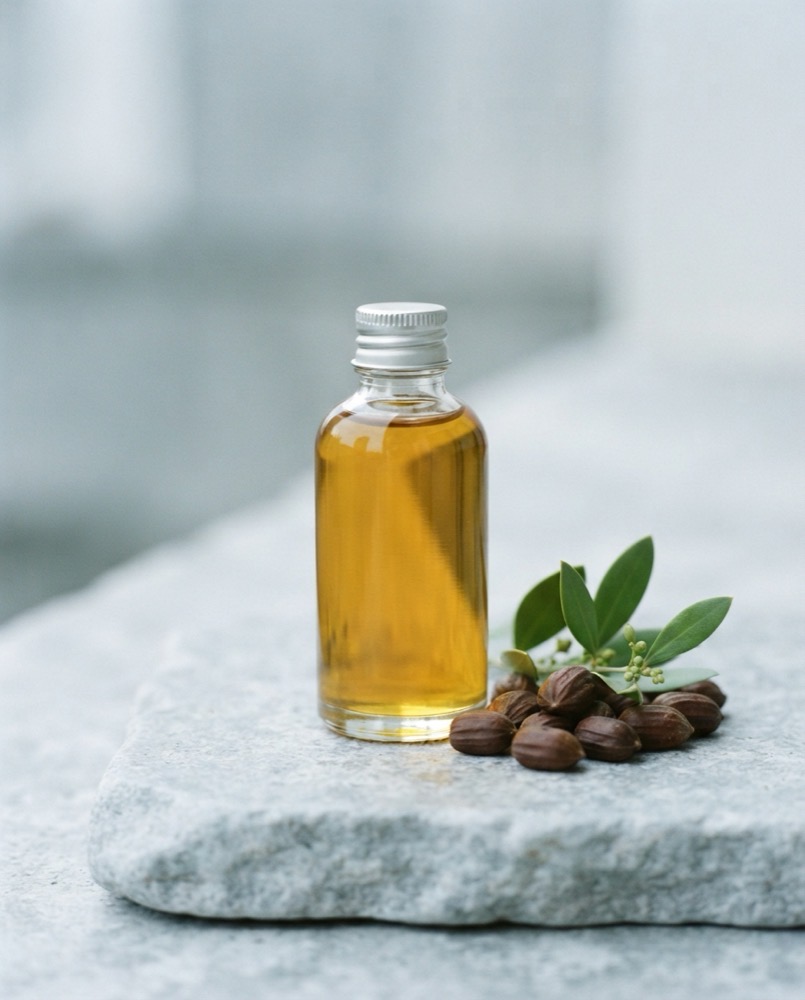
Jojoba oil is pressed from the seeds of the Simmondsia chinensis shrub, native to the deserts of the American southwest. Technically it is not an oil at all but a liquid wax ester – and that distinction is the whole point.
Human sebum is roughly a quarter wax esters, so jojoba’s structure is unusually close to what skin produces naturally. That is why it absorbs cleanly and rarely feels greasy. It is also exceptionally stable and resists going rancid.
What skin concerns does jojoba oil treat?
It suits almost every skin type. On dry skin it softens and seals; on oily skin its similarity to sebum can help signal that less oil is needed; and it is non-comedogenic enough for acne-prone skin to tolerate.
It has documented anti-inflammatory activity, useful for eczema, psoriasis and general irritation, and laboratory work on human skin shows topical jojoba wax increases pro-collagen III and hyaluronic acid synthesis while lowering inflammatory markers.
What ingredients are best paired with jojoba oil?
Use it as the sealing step over humectants such as hyaluronic acid and glycerin, and alongside ceramides and squalane for barrier repair.
It also works as a carrier for essential oils and as a buffer for retinoids, taking the edge off dryness without blocking absorption. It is one of the few plant oils that dissolves hardened sebum, so it doubles as a gentle first-step cleansing oil. Take our Skin Quiz.
What are wrinkles?
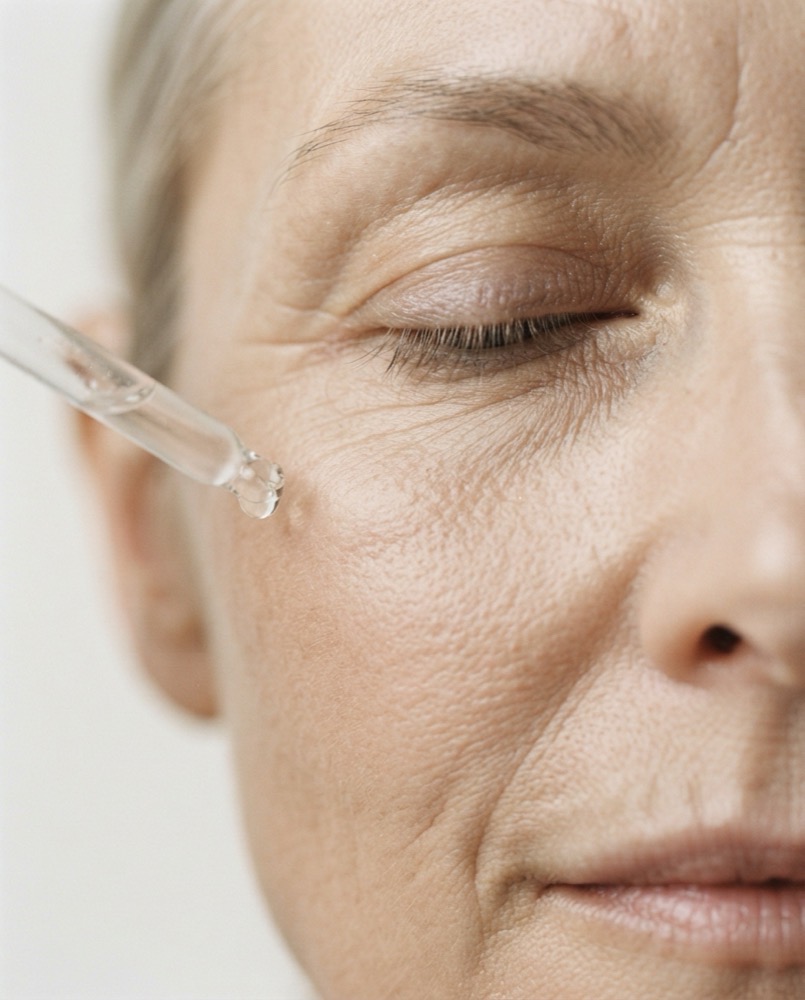
Wrinkles are permanent folds and creases in the skin. They begin as dynamic lines that appear only with expression, then set into static lines visible at rest once the underlying support structure can no longer push them back out.
They form first where skin is thin and movement is constant: crow’s feet, forehead lines, frown lines between the brows, and nasolabial folds. Deeper folds also reflect loss of fat and bone volume, not just skin change.
What causes wrinkles?
Internally, collagen and elastin production declines steadily from the mid-twenties and the dermal matrix thins, so skin loses the scaffolding that keeps it smooth.
Externally, ultraviolet radiation does most of the damage – it activates enzymes that break down collagen and degrades elastic fibres. Smoking, pollution, sugar-driven glycation, poor sleep, sleeping position and repeated facial movement all accelerate the process.
What ingredients are best for wrinkles?
Retinoids have the deepest evidence base for stimulating collagen and measurably reducing wrinkle depth over six to twelve months. Vitamin C supports synthesis while neutralising the free radicals that break it down, and peptides signal repair.
Round it out with hyaluronic acid and ceramides for hydration and barrier strength, niacinamide for elasticity and tone, and AHAs for surface renewal. Daily broad-spectrum SPF is the most effective anti-wrinkle product there is. Take our Skin Quiz.