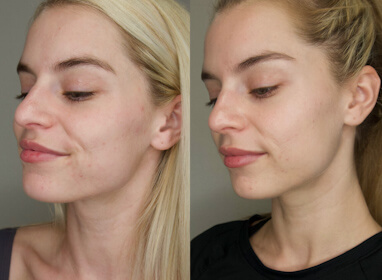
What is jojoba oil in skincare?
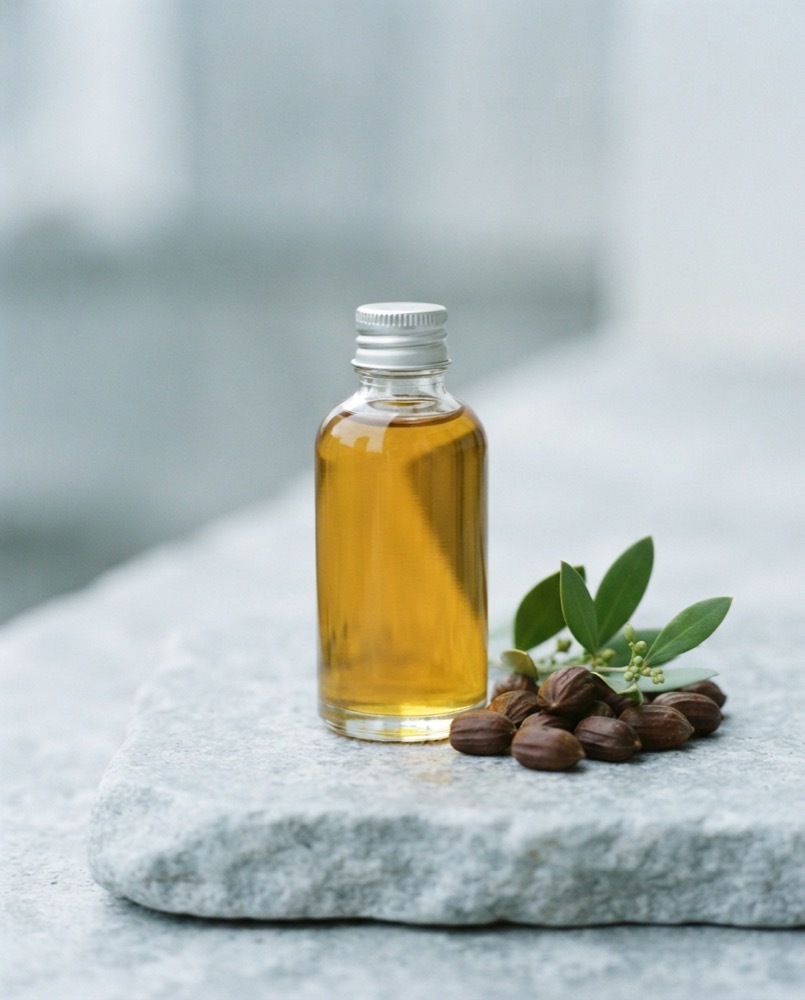
Jojoba oil is pressed from the seeds of the Simmondsia chinensis shrub, native to the deserts of the American southwest. Technically it is not an oil at all but a liquid wax ester – and that distinction is the whole point.
Human sebum is roughly a quarter wax esters, so jojoba’s structure is unusually close to what skin produces naturally. That is why it absorbs cleanly and rarely feels greasy. It is also exceptionally stable and resists going rancid.
What skin concerns does jojoba oil treat?
It suits almost every skin type. On dry skin it softens and seals; on oily skin its similarity to sebum can help signal that less oil is needed; and it is non-comedogenic enough for acne-prone skin to tolerate.
It has documented anti-inflammatory activity, useful for eczema, psoriasis and general irritation, and laboratory work on human skin shows topical jojoba wax increases pro-collagen III and hyaluronic acid synthesis while lowering inflammatory markers.
What ingredients are best paired with jojoba oil?
Use it as the sealing step over humectants such as hyaluronic acid and glycerin, and alongside ceramides and squalane for barrier repair.
It also works as a carrier for essential oils and as a buffer for retinoids, taking the edge off dryness without blocking absorption. It is one of the few plant oils that dissolves hardened sebum, so it doubles as a gentle first-step cleansing oil. Take our Skin Quiz.
What is redness?
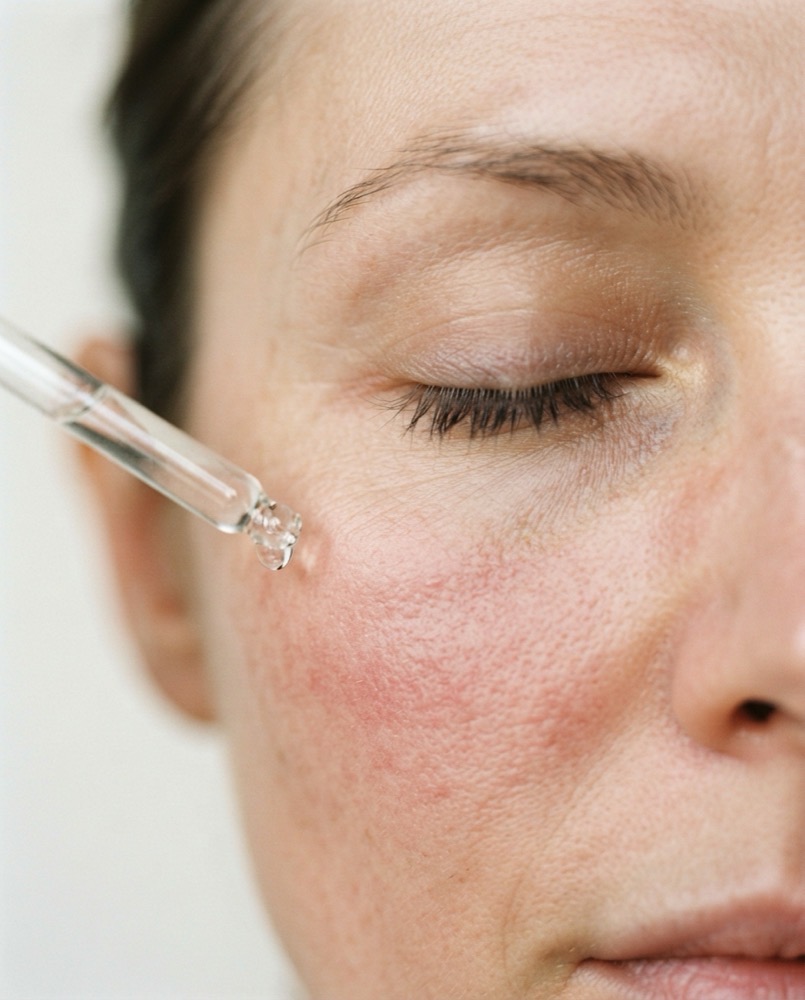
Facial redness is visible dilation of the small blood vessels near the skin’s surface. It ranges from transient flushing that comes and goes, to persistent erythema across the cheeks and nose, to fixed thread veins that stay visible all the time.
Redness is a symptom rather than a diagnosis. It can signal rosacea, irritation, an over-exfoliated barrier, eczema, an allergic reaction or simply reactive skin that responds strongly to heat and stress.
What causes redness?
Most persistent redness traces back to a compromised barrier and heightened nerve sensitivity. When the barrier thins, irritants penetrate more easily and the skin mounts an inflammatory response to things it would normally tolerate.
Common aggravators: over-exfoliation, high-strength actives used too often, fragrance and essential oils, hot water, alcohol, spicy food, sudden temperature change, sun exposure and stress. Trying to treat redness with more actives usually deepens it.
What ingredients are best for redness?
Prioritise calming and rebuilding over correcting. Niacinamide, azelaic acid, centella asiatica, green tea extract, liquorice root, allantoin, bisabolol and colloidal oatmeal all reduce visible inflammation.
Then repair the barrier with ceramides, cholesterol, fatty acids, glycerin, panthenol and squalane, and protect it with a gentle mineral SPF. Strip the routine back to cleanser, moisturiser and sunscreen for a few weeks before reintroducing anything active. Take our Skin Quiz.