What is jojoba oil in skincare?
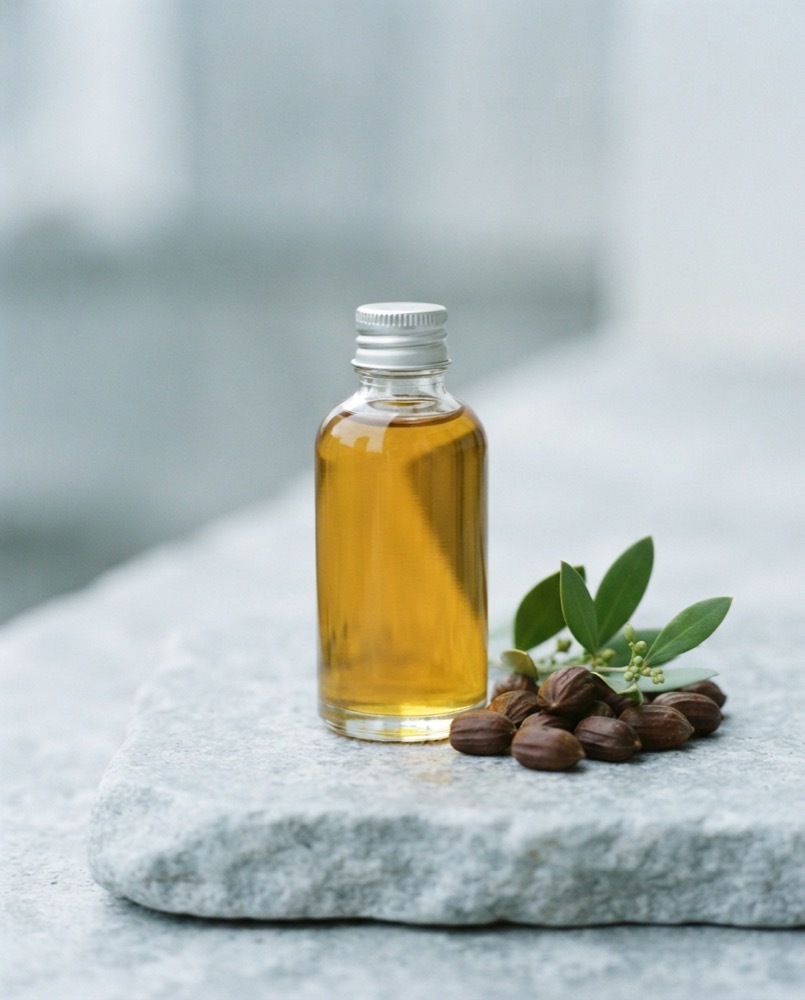
Jojoba oil is pressed from the seeds of the Simmondsia chinensis shrub, native to the deserts of the American southwest. Technically it is not an oil at all but a liquid wax ester – and that distinction is the whole point.
Human sebum is roughly a quarter wax esters, so jojoba’s structure is unusually close to what skin produces naturally. That is why it absorbs cleanly and rarely feels greasy. It is also exceptionally stable and resists going rancid.
What skin concerns does jojoba oil treat?
It suits almost every skin type. On dry skin it softens and seals; on oily skin its similarity to sebum can help signal that less oil is needed; and it is non-comedogenic enough for acne-prone skin to tolerate.
It has documented anti-inflammatory activity, useful for eczema, psoriasis and general irritation, and laboratory work on human skin shows topical jojoba wax increases pro-collagen III and hyaluronic acid synthesis while lowering inflammatory markers.
What ingredients are best paired with jojoba oil?
Use it as the sealing step over humectants such as hyaluronic acid and glycerin, and alongside ceramides and squalane for barrier repair.
It also works as a carrier for essential oils and as a buffer for retinoids, taking the edge off dryness without blocking absorption. It is one of the few plant oils that dissolves hardened sebum, so it doubles as a gentle first-step cleansing oil. Take our Skin Quiz.
What are fine lines?
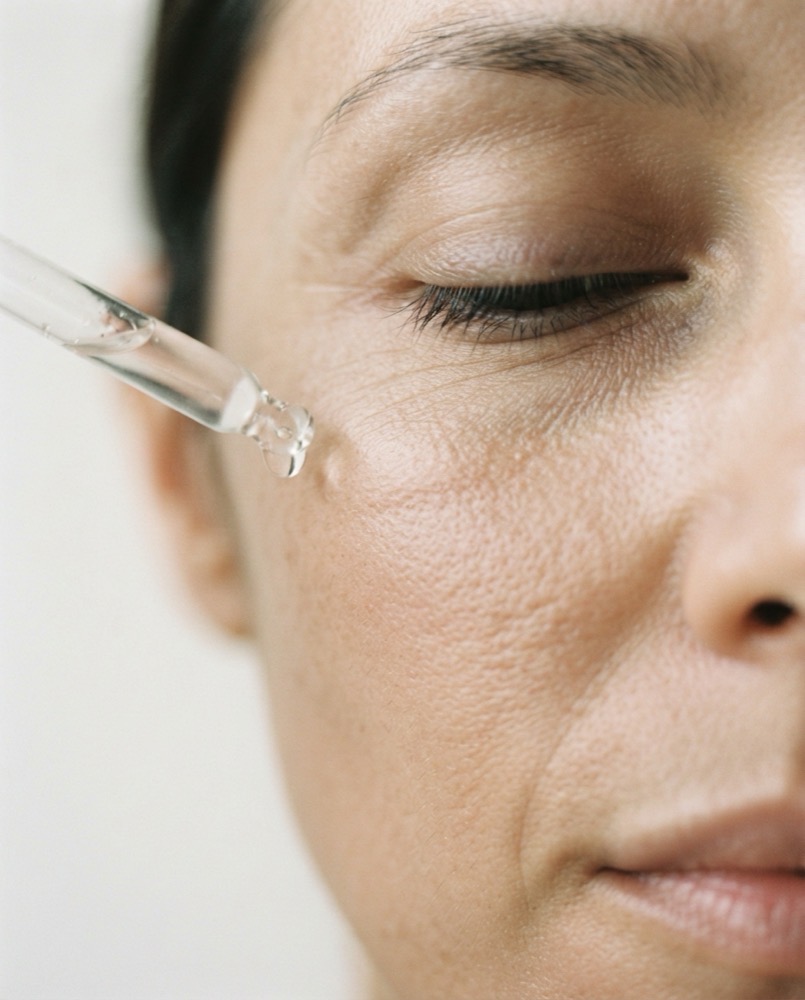
Fine lines are the earliest visible sign of skin ageing: shallow creases that appear where skin is thinnest and most expressive – around the eyes, across the forehead, and at the corners of the mouth.
They differ from established wrinkles in that they are often still dynamic, showing mainly when you smile or squint, and are frequently worsened by dehydration. That makes them the most responsive stage to treat.
What causes fine lines?
Intrinsic ageing does part of the work: collagen production falls by roughly one per cent a year from the mid-twenties, elastin degrades, and the dermal matrix thins so skin no longer springs back.
The larger share is external. Ultraviolet exposure accounts for the majority of visible facial ageing, and pollution, smoking, poor sleep, sugar-driven glycation and repeated facial movement all accelerate it. Dehydration makes existing lines look deeper than they are.
What ingredients are best for fine lines?
Retinol and prescription retinoids have the strongest evidence for stimulating collagen and smoothing texture. Vitamin C protects against free-radical damage while supporting collagen synthesis, and peptides signal the skin to rebuild.
Pair those with hyaluronic acid and ceramides for immediate plumping and barrier support, niacinamide for tone, gentle AHAs for surface renewal, and coenzyme Q10 as an antioxidant. Daily broad-spectrum SPF protects everything else you are doing. Take our Skin Quiz.