What is jojoba oil in skincare?
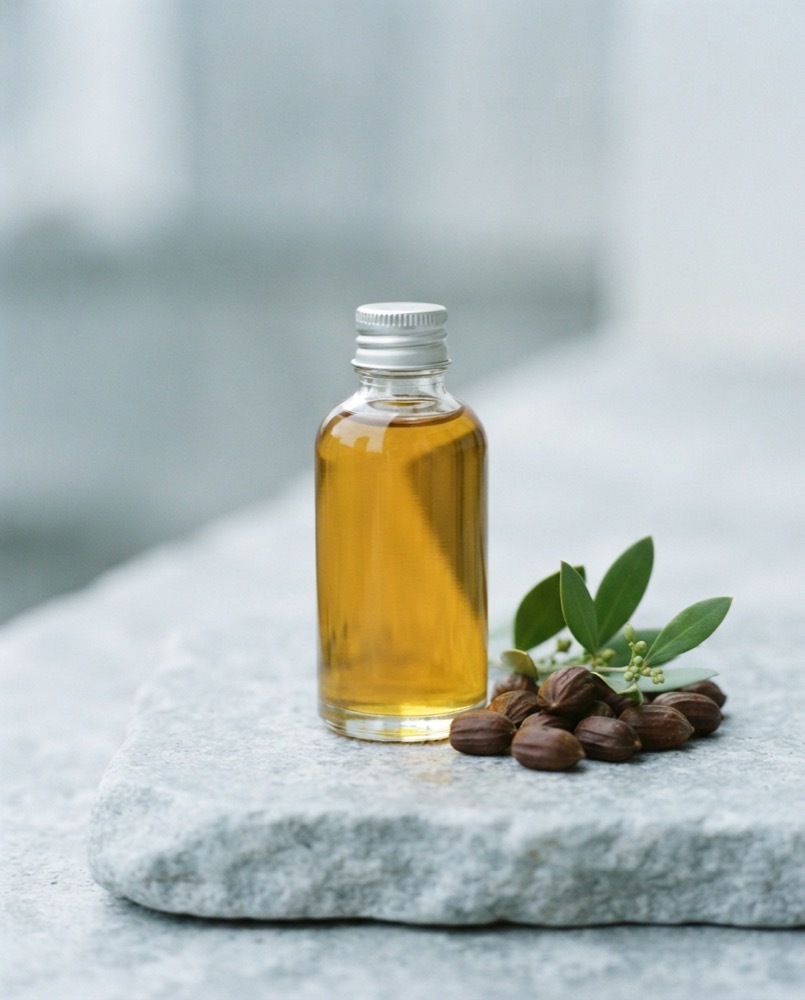
Jojoba oil is pressed from the seeds of the Simmondsia chinensis shrub, native to the deserts of the American southwest. Technically it is not an oil at all but a liquid wax ester – and that distinction is the whole point.
Human sebum is roughly a quarter wax esters, so jojoba’s structure is unusually close to what skin produces naturally. That is why it absorbs cleanly and rarely feels greasy. It is also exceptionally stable and resists going rancid.
What skin concerns does jojoba oil treat?
It suits almost every skin type. On dry skin it softens and seals; on oily skin its similarity to sebum can help signal that less oil is needed; and it is non-comedogenic enough for acne-prone skin to tolerate.
It has documented anti-inflammatory activity, useful for eczema, psoriasis and general irritation, and laboratory work on human skin shows topical jojoba wax increases pro-collagen III and hyaluronic acid synthesis while lowering inflammatory markers.
What ingredients are best paired with jojoba oil?
Use it as the sealing step over humectants such as hyaluronic acid and glycerin, and alongside ceramides and squalane for barrier repair.
It also works as a carrier for essential oils and as a buffer for retinoids, taking the edge off dryness without blocking absorption. It is one of the few plant oils that dissolves hardened sebum, so it doubles as a gentle first-step cleansing oil. Take our Skin Quiz.
What is acne?
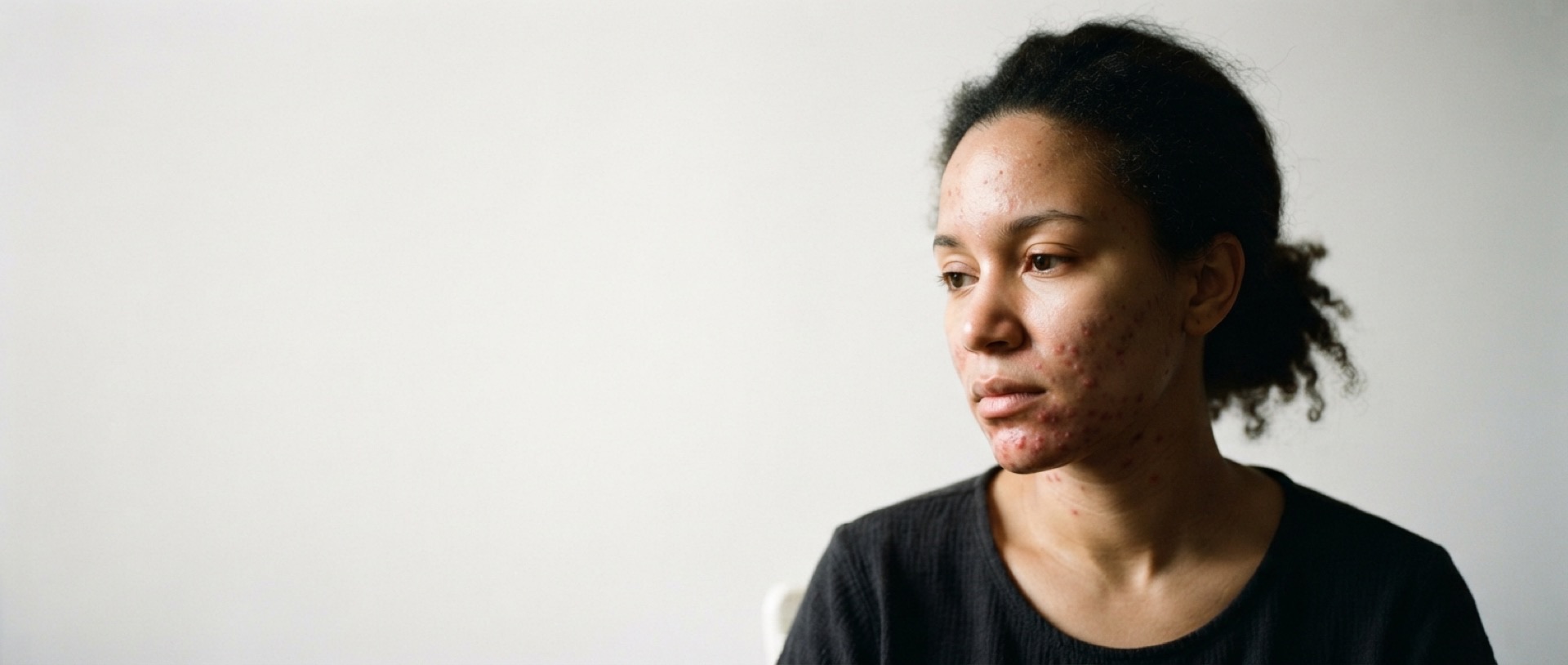
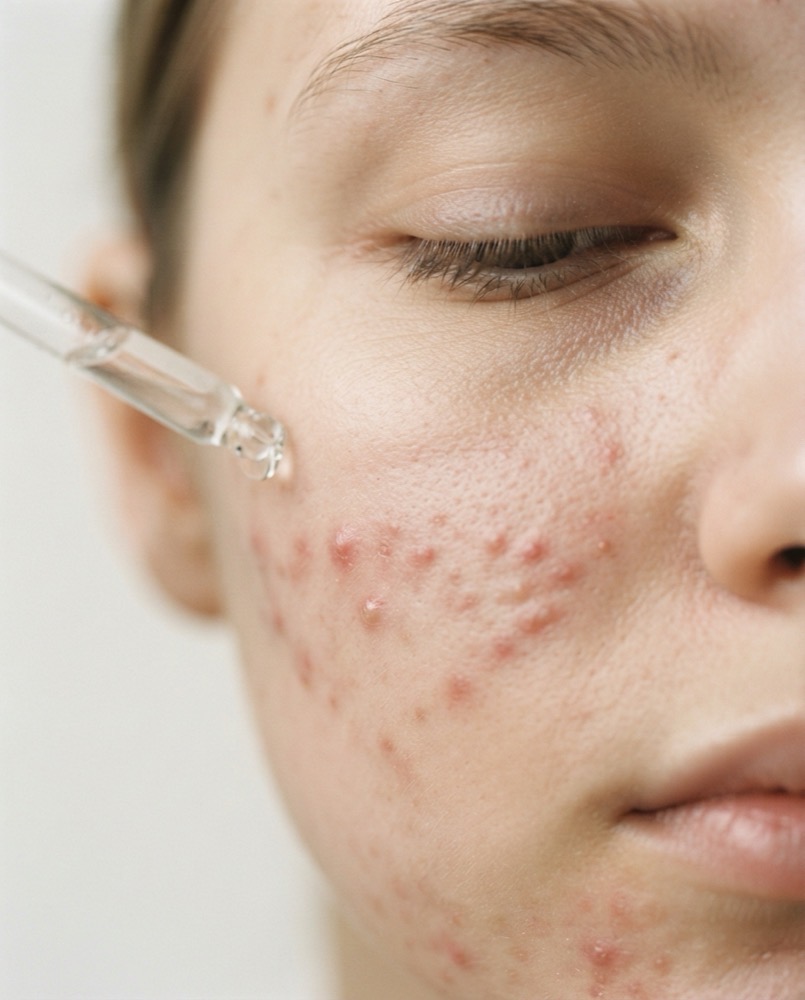
Acne vulgaris is a chronic inflammatory condition of the pilosebaceous unit – the hair follicle and its attached oil gland. It produces blackheads and whiteheads, inflamed papules and pustules, and in severe cases deep nodules and cysts.
It is the most common skin condition worldwide, and it is not a hygiene problem. Acne begins with a microcomedone forming invisibly inside the follicle, weeks before anything shows on the surface.
What causes acne?
Four mechanisms work together: excess sebum driven by androgens, abnormal shedding of cells inside the follicle, overgrowth of Cutibacterium acnes, and the inflammatory response that follows.
Genetics set the baseline. Hormonal fluctuation, stress, high-glycaemic diets, comedogenic products, friction from masks or helmets, and certain medications all push it further. Over-cleansing and picking make it visibly worse.
What ingredients are best for acne?
Salicylic acid clears inside the pore, benzoyl peroxide reduces bacterial load, and retinoids prevent the plug forming in the first place – that last one is the most valuable long-term.
Azelaic acid and niacinamide reduce inflammation and the marks left behind, and sulphur or clay help oily, congested skin. Keep the barrier intact with a gentle cleanser and a light non-comedogenic moisturiser; stripped skin produces more oil. Take our Skin Quiz.