

What is hydroquinone in skincare?
Hydroquinone is a phenolic compound that suppresses melanin production by inhibiting tyrosinase, the key enzyme in the pigment pathway. It has been the dermatological reference standard for skin lightening for decades.
Its regulatory status varies widely. In the United States prescription strengths are 4%; in the European Union and several other markets it is banned from cosmetics entirely and available only through a doctor.
What skin concerns does hydroquinone treat?
It is used for melasma, solar lentigines, post-inflammatory hyperpigmentation and other stubborn pigment that has not responded to gentler agents. Meta-analyses of topical melasma treatments consistently place it among the most effective options.
It is intended for short courses – typically three to six months. Prolonged unsupervised use carries a risk of ochronosis, a blue-black discolouration that is very difficult to reverse, which is why safety reviews stress medical supervision.
What ingredients are best paired with hydroquinone?
It is most effective in the classic triple combination with a retinoid and a mild corticosteroid, prescribed and monitored by a dermatologist. Daily broad-spectrum SPF is mandatory, or the pigment simply returns.
If hydroquinone is unavailable or unsuitable, azelaic acid, tranexamic acid, alpha arbutin, kojic acid, niacinamide and vitamin C are the evidence-backed alternatives – slower, but safe for long-term use. Take our Skin Quiz.
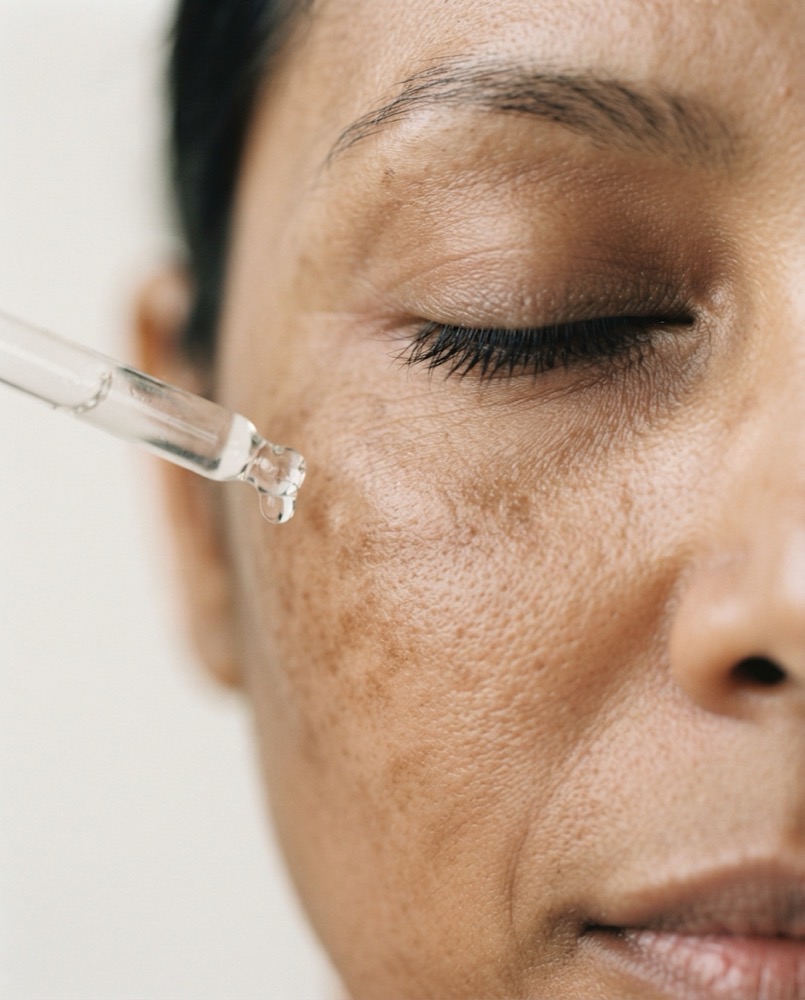
What is pigmentation?
Pigmentation refers to any change in the colour of the skin caused by melanin. Hyperpigmentation – the common form – means patches darker than your natural tone, including sun spots, melasma, freckles and the marks left behind after acne or injury.
Melanin is produced by melanocytes in the lower epidermis and handed to surrounding skin cells. When that process is over-stimulated or unevenly distributed, the result is a visible patch rather than an even tone.
What causes pigmentation?
Ultraviolet exposure is the single largest trigger, because UV directly activates melanin production as a protective response. Inflammation is the second: acne, eczema, friction, waxing, burns or harsh procedures can all leave post-inflammatory hyperpigmentation, which is more common and longer-lasting in deeper skin tones.
Hormonal change, certain medications, heat and genetics complete the picture. Without daily sun protection, treated pigment reliably returns.
What ingredients are best for pigmentation?
The most effective topicals work at different points of melanin production: vitamin C and niacinamide, azelaic acid, tranexamic acid, alpha arbutin, kojic acid and liquorice root extract.
Retinoids and gentle AHAs speed up turnover so pigmented cells clear faster. But broad-spectrum SPF worn daily is the ingredient that decides whether any of it holds – without it, results reverse within weeks. Take our Skin Quiz.