

What is hyaluronic acid in skincare?
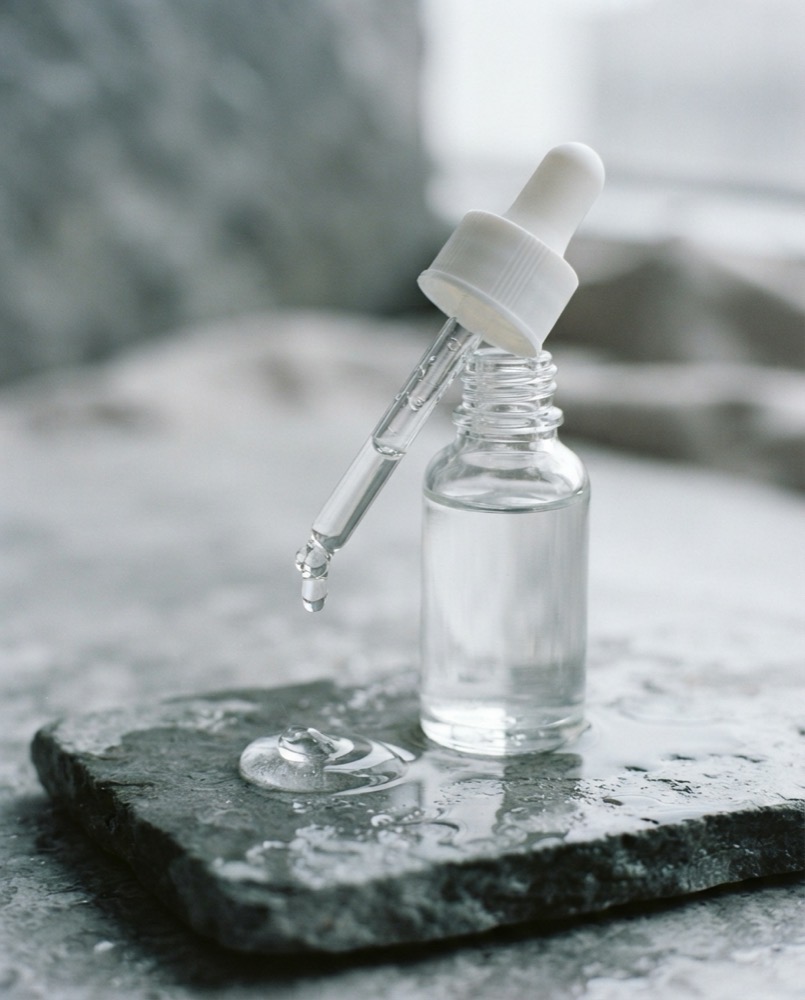
Hyaluronic acid is a glycosaminoglycan that occurs naturally in skin, joints and connective tissue. It is a humectant of remarkable capacity, able to hold many times its own weight in water, which is why it sits in the hydrating step of almost every modern routine.
Molecular weight determines behaviour: high-molecular-weight HA forms a moisture-holding film on the surface, while low-molecular-weight fragments penetrate further for hydration in the deeper epidermis. Good formulas blend several weights.
What skin concerns does hyaluronic acid treat?
It addresses dehydration in any skin type, including oily and acne-prone skin that cannot tolerate heavy oils. Hydrated skin cells sit plumper against one another, which immediately softens the look of fine lines and improves how the face reflects light.
It also supports barrier function and wound healing, and it makes stronger actives – retinoids, acids – far more tolerable by keeping the skin comfortable alongside them.
What ingredients are best paired with hyaluronic acid?
Hyaluronic acid pulls water in but cannot hold it there alone, so always seal it with an occlusive or emollient: ceramides, squalane, shea butter or a simple moisturiser applied straight after.
It layers well with almost everything – vitamin C, niacinamide, retinoids, peptides and AHAs. Apply it to damp skin, and in a very dry climate keep a moisturiser over the top, or it can draw moisture out of the skin rather than into it. Take our Skin Quiz.
What are sun spots?
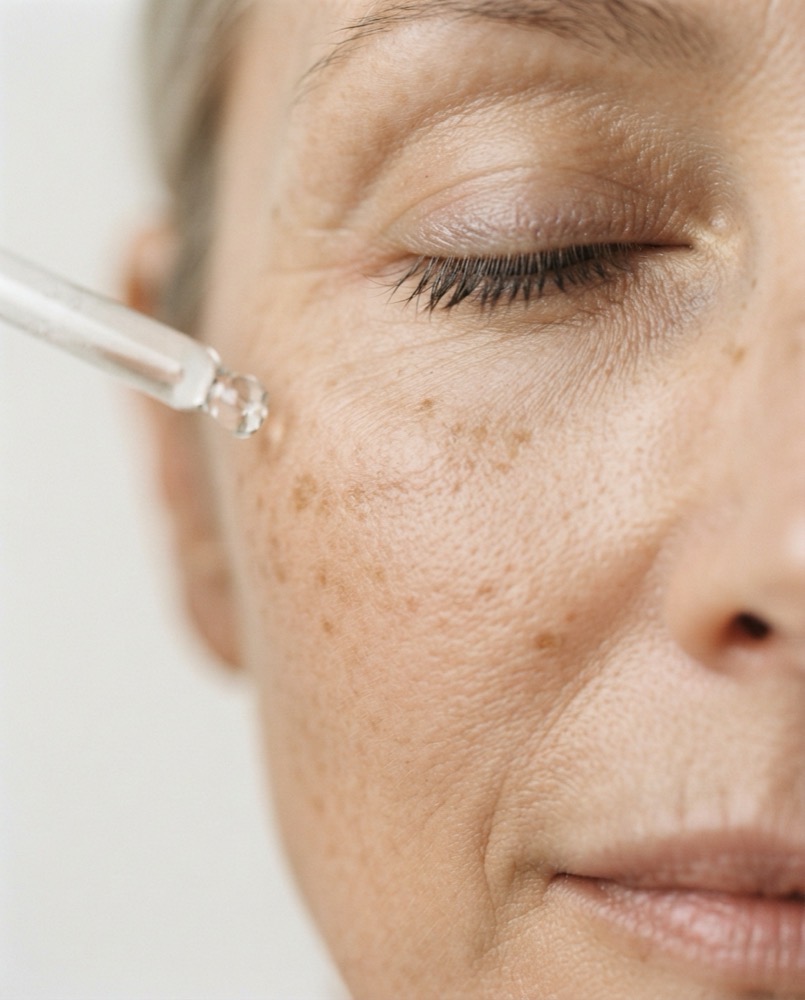
Sun spots are flat patches of concentrated pigment that form where skin has taken the most ultraviolet exposure – cheeks, nose, forehead, hands, shoulders and chest. Dermatologists call them solar lentigines; they are the same thing as age spots.
They are harmless, but they are a visible marker of accumulated photodamage, and they usually arrive alongside other signs of it: fine lines, loss of firmness and an uneven overall tone.
What causes sun spots?
UV radiation prompts melanocytes to produce extra melanin as a defence. With repeated exposure that response becomes localised and fixed, leaving discrete patches instead of an even tan that fades.
Tanning beds, sunburns in childhood, fair skin and outdoor time without protection all increase the count. Incidental exposure – driving, walking, sitting near a window – adds up more than most people expect.
What ingredients are best for sun spots?
Retinoids to accelerate turnover, vitamin C to protect and brighten, and pigment inhibitors such as alpha arbutin, kojic acid, azelaic acid, tranexamic acid and liquorice root are the core toolkit.
Gentle AHAs help shift surface pigment, and niacinamide slows the transfer of melanin into skin cells. None of it holds without daily broad-spectrum SPF and reapplication. Take our Skin Quiz.