

What is hemp seed oil in skincare?
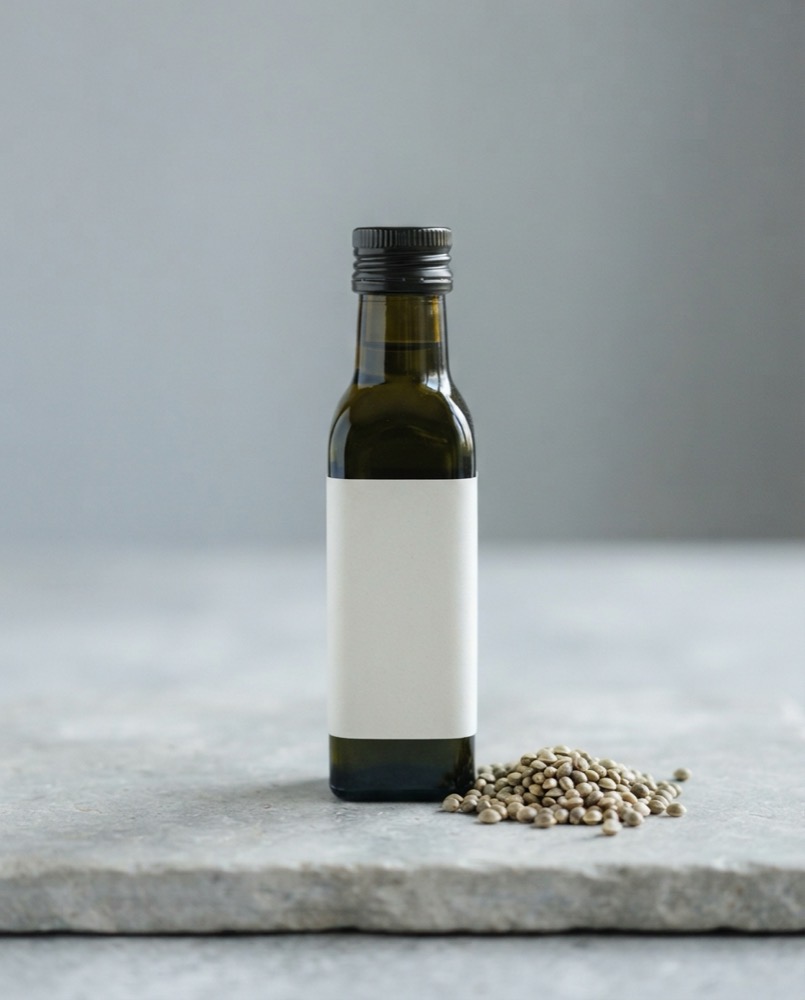
Hemp seed oil is cold-pressed from the seeds of Cannabis sativa. It contains no meaningful CBD or THC – those come from the flowers and leaves – so it is a pure lipid ingredient rather than a cannabinoid one.
Its distinguishing feature is fatty acid balance: roughly 55% linoleic acid and 20% alpha-linolenic acid, close to the ideal ratio for skin. Linoleic acid is a direct precursor to the ceramides that hold the barrier together.
What skin concerns does hemp seed oil treat?
It is one of the better facial oils for oily and acne-prone skin, because linoleic-rich oils thin sebum rather than thicken it, and it rates as non-comedogenic.
Its anti-inflammatory profile makes it useful for eczema, dermatitis and general redness, and its lightweight hydration suits dehydrated skin that cannot tolerate heavy creams. It absorbs quickly and leaves a dry, non-greasy finish.
What ingredients are best paired with hemp seed oil?
Pair it with niacinamide for oil control, hyaluronic acid underneath for hydration, and ceramides alongside for barrier repair.
It buffers retinoids and acids well without blocking them. Like all high-linoleic oils it oxidises quickly, so keep it refrigerated and buy small bottles – rancid oil is pro-inflammatory, which defeats the purpose. Take our Skin Quiz.

What are dark spots?
Dark spots are localised patches where the skin has produced more melanin than the surrounding area. The umbrella term covers sun spots, post-acne marks, melasma patches and freckles – different causes, same visible result.
They are flat rather than raised, vary from light tan to deep brown, and are most noticeable on the face, hands and chest. In deeper skin tones they tend to be darker and to last considerably longer.
What causes dark spots?
Two mechanisms dominate. Ultraviolet exposure triggers protective melanin production, and inflammation – from acne, ingrown hairs, eczema, friction, burns or harsh treatments – leaves post-inflammatory hyperpigmentation behind as it heals.
Hormonal change, some medications and heat add to it. Picking at spots is one of the most avoidable causes: the extra inflammation reliably makes the mark darker and longer-lived than the original blemish.
What ingredients are best for dark spots?
Vitamin C, niacinamide and azelaic acid are the everyday workhorses. For stubborn pigment, alpha arbutin, tranexamic acid, kojic acid and liquorice root extract interrupt melanin production directly.
Retinoids and gentle AHAs clear pigmented cells faster from the surface. Give any routine twelve weeks before judging it, and wear broad-spectrum SPF daily or the spots will simply redarken. Take our Skin Quiz.