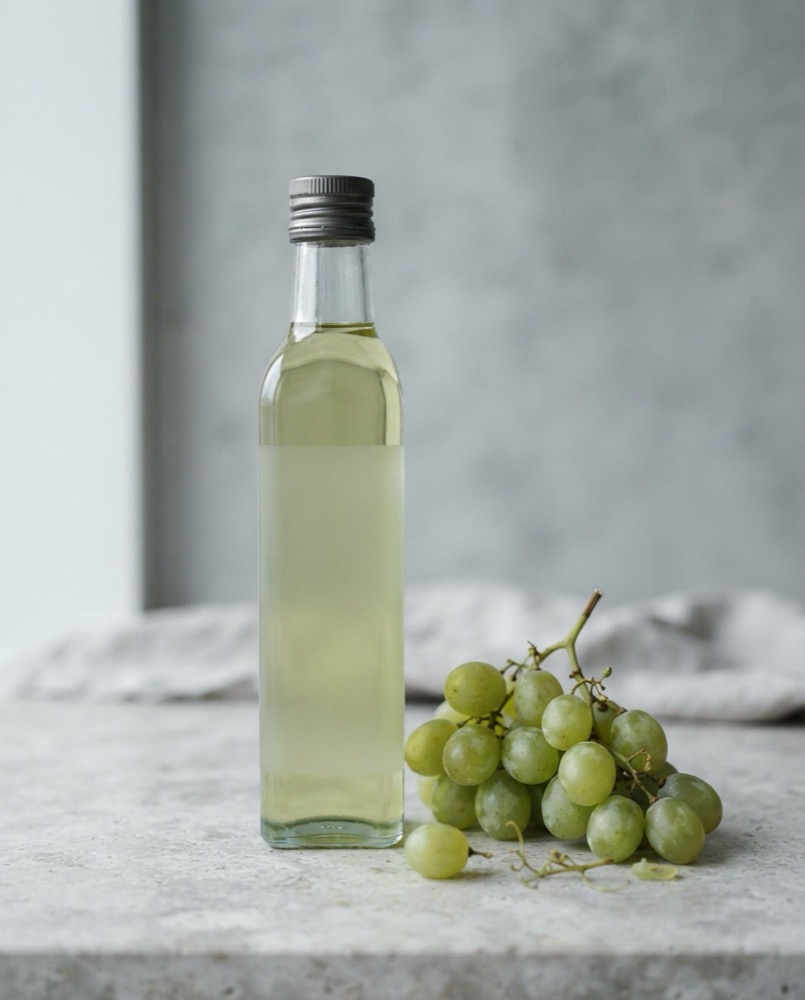
What is grapeseed oil in skincare?
Grapeseed oil is extracted from the seeds left over from winemaking. It is one of the lightest plant oils available and is dominated by linoleic acid – typically around 70% – with vitamin E and proanthocyanidin antioxidants.
That linoleic dominance is what sets it apart. Sebum in acne-prone skin is characteristically low in linoleic acid, so topping it up topically supports the barrier instead of overloading it.
What skin concerns does grapeseed oil treat?
It suits oily, combination and acne-prone skin better than almost any other plant oil: it absorbs quickly, leaves no residue and sits at the low end of the comedogenic scale.
It hydrates without heaviness, its antioxidants help defend against free-radical damage, and its anti-inflammatory activity calms redness. It is also used to soften the appearance of acne scars and to even skin tone over time.
What ingredients are best paired with grapeseed oil?
Layer it over hyaluronic acid or niacinamide and under or instead of a heavier moisturiser. It combines well with ceramides for barrier work and with salicylic acid routines that leave skin dry.
It oxidises faster than more saturated oils, so buy it in small, dark bottles and store it cool. It is also a clean carrier oil for diluting essential oils. Take our Skin Quiz.
What is uneven skin tone?
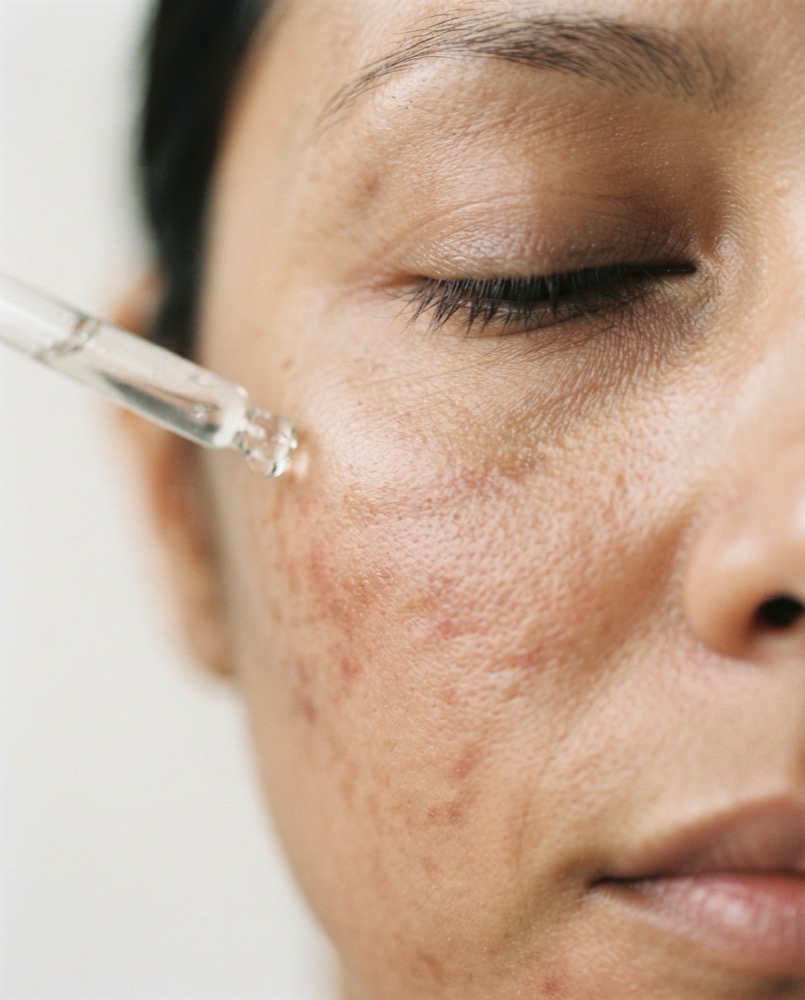
Uneven skin tone describes a complexion that reads patchy rather than uniform – a mix of darker and lighter areas, lingering red or brown marks, blotchy cheeks, and a general loss of clarity.
It usually combines several things at once: hyperpigmentation from sun or inflammation, persistent redness, and surface build-up of dead cells that makes the whole face look mottled and dull.
What causes uneven skin tone?
Ultraviolet exposure is the dominant cause, stimulating melanin unevenly across the face. Post-inflammatory marks from acne, eczema or irritation add brown or red patches that can persist for months.
Hormonal pigmentation, slowed cell turnover with age, dehydration, pollution, smoking and a damaged barrier all compound it. Aggressive scrubbing or unsupervised strong actives frequently make tone more uneven, not less.
What ingredients are best for uneven skin tone?
Vitamin C and niacinamide are the reliable everyday choices – one protects and brightens, the other evens tone and strengthens the barrier. Azelaic acid is unusually useful because it addresses brown marks and redness at once.
Add gentle exfoliation with lactic or glycolic acid to clear surface build-up, retinol to accelerate turnover, and alpha arbutin or tranexamic acid for stubborn pigment. Daily broad-spectrum SPF is what makes the results stick. Take our Skin Quiz.