What is glycerin in skincare?
Glycerin, also called glycerol, is a clear, odourless humectant found naturally in skin lipids and produced commercially from plant oils or by synthesis. It is one of the most widely used ingredients in cosmetics, and one of the best studied.
It draws water into the stratum corneum and holds it there, and it also helps regulate how skin cells mature and shed. Research on glycerol and the skin shows it does considerably more than simply attract moisture.
What skin concerns does glycerin treat?
It relieves dryness, tightness and flaking in every skin type, and it improves barrier function measurably – a controlled study of 20% glycerin cream found gains in both hydration and barrier properties.
It is gentle enough for eczema-prone, sensitive and post-procedure skin, and light enough for oily and acne-prone skin. It also softens the feel of fine lines by plumping dehydrated cells.
What ingredients are best paired with glycerin?
It works best in the classic humectant-emollient-occlusive sequence: glycerin and hyaluronic acid to draw water in, ceramides and squalane to hold the barrier together, and a richer occlusive on top if skin is very dry.
Glycerin also makes exfoliating acids and retinoids far more tolerable. Unlike hyaluronic acid it performs reliably even in low humidity, which is why it remains the workhorse humectant in most formulations. Take our Skin Quiz.
What is uneven skin tone?
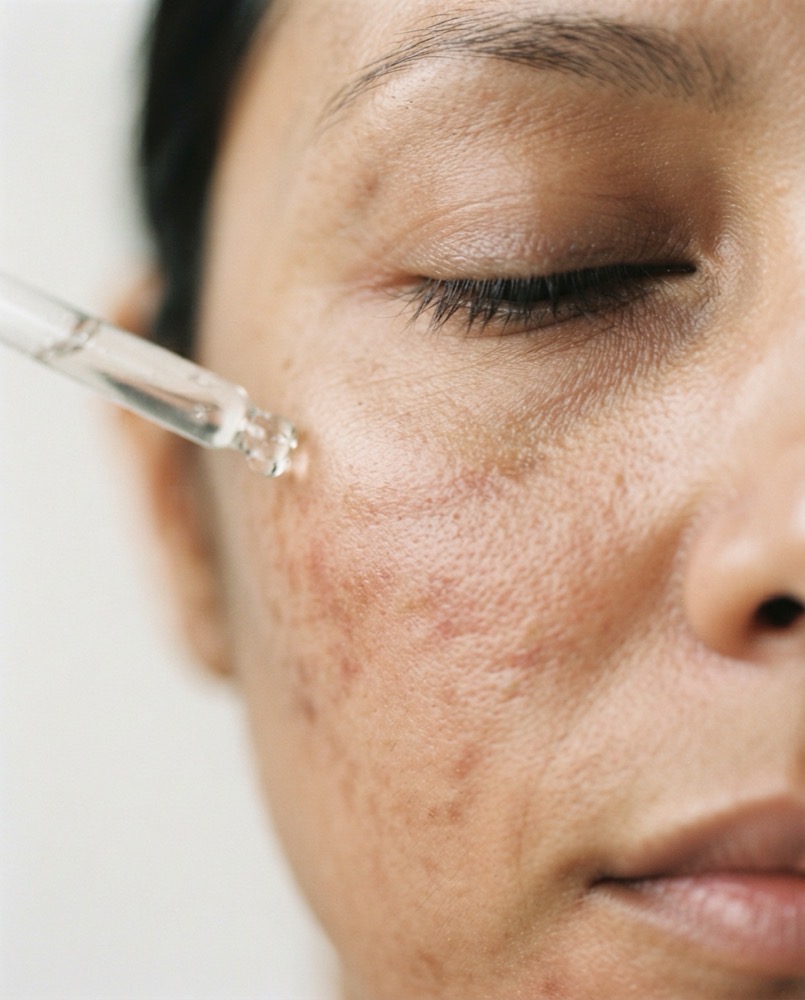
Uneven skin tone describes a complexion that reads patchy rather than uniform – a mix of darker and lighter areas, lingering red or brown marks, blotchy cheeks, and a general loss of clarity.
It usually combines several things at once: hyperpigmentation from sun or inflammation, persistent redness, and surface build-up of dead cells that makes the whole face look mottled and dull.
What causes uneven skin tone?
Ultraviolet exposure is the dominant cause, stimulating melanin unevenly across the face. Post-inflammatory marks from acne, eczema or irritation add brown or red patches that can persist for months.
Hormonal pigmentation, slowed cell turnover with age, dehydration, pollution, smoking and a damaged barrier all compound it. Aggressive scrubbing or unsupervised strong actives frequently make tone more uneven, not less.
What ingredients are best for uneven skin tone?
Vitamin C and niacinamide are the reliable everyday choices – one protects and brightens, the other evens tone and strengthens the barrier. Azelaic acid is unusually useful because it addresses brown marks and redness at once.
Add gentle exfoliation with lactic or glycolic acid to clear surface build-up, retinol to accelerate turnover, and alpha arbutin or tranexamic acid for stubborn pigment. Daily broad-spectrum SPF is what makes the results stick. Take our Skin Quiz.