What is elastin in skincare?
Elastin is the dermal protein that lets skin stretch and snap back. It makes up a small fraction of dermal protein compared with collagen, but it does all the recoil – collagen provides strength, elastin provides spring.
The body essentially stops producing meaningful new elastin after adolescence, and existing fibres are progressively broken down by UV exposure in the process known as solar elastosis. That is why lost elasticity is harder to reverse than lost collagen.
What skin concerns does elastin treat?
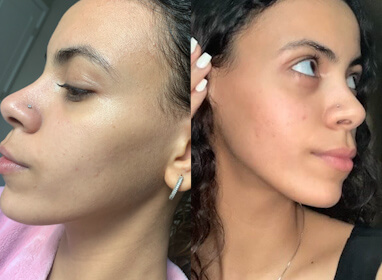
Loss of elastin shows up as sagging, crepiness, skin that stays tented when pinched, and the loose texture around the jaw, neck and under-eyes.
Topical elastin cannot replace what has degraded – the molecule is far too large to reach the dermis – so in creams it acts as a humectant and film-former that smooths the surface. Oral elastin peptides have more support: a randomised placebo-controlled trial of fish-derived elastin peptide found improvements in biophysical properties of ageing skin.
What ingredients are best paired with elastin?
The practical route to elasticity is protecting and stimulating your own fibres. Retinoids and peptides signal fibroblasts to rebuild, vitamin C protects existing fibres from enzymatic breakdown, and daily broad-spectrum SPF prevents further elastosis.
Alongside those, hyaluronic acid, ceramides and squalane keep the skin hydrated and supple, which improves how elastic it looks day to day. Take our Skin Quiz.
What are wrinkles?
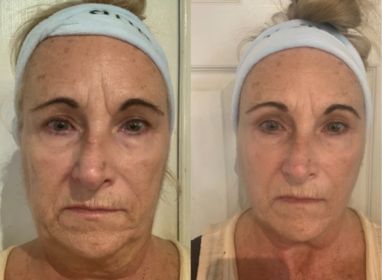
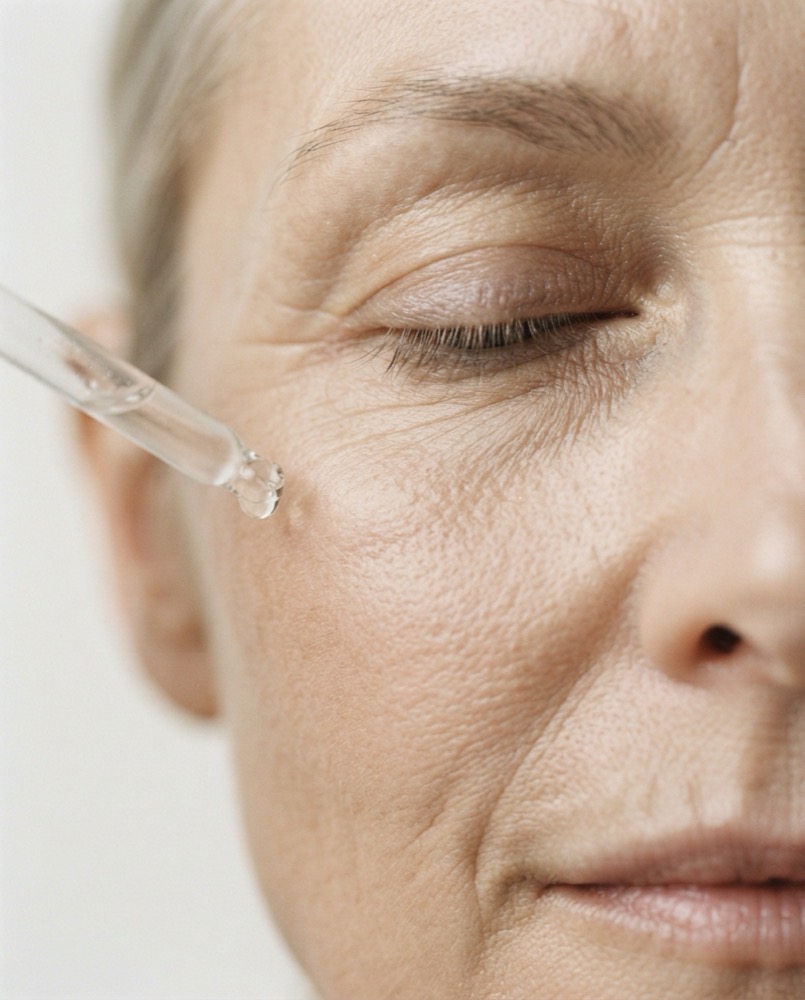
Wrinkles are permanent folds and creases in the skin. They begin as dynamic lines that appear only with expression, then set into static lines visible at rest once the underlying support structure can no longer push them back out.
They form first where skin is thin and movement is constant: crow’s feet, forehead lines, frown lines between the brows, and nasolabial folds. Deeper folds also reflect loss of fat and bone volume, not just skin change.
What causes wrinkles?
Internally, collagen and elastin production declines steadily from the mid-twenties and the dermal matrix thins, so skin loses the scaffolding that keeps it smooth.
Externally, ultraviolet radiation does most of the damage – it activates enzymes that break down collagen and degrades elastic fibres. Smoking, pollution, sugar-driven glycation, poor sleep, sleeping position and repeated facial movement all accelerate the process.
What ingredients are best for wrinkles?
Retinoids have the deepest evidence base for stimulating collagen and measurably reducing wrinkle depth over six to twelve months. Vitamin C supports synthesis while neutralising the free radicals that break it down, and peptides signal repair.
Round it out with hyaluronic acid and ceramides for hydration and barrier strength, niacinamide for elasticity and tone, and AHAs for surface renewal. Daily broad-spectrum SPF is the most effective anti-wrinkle product there is. Take our Skin Quiz.