

What is elastin in skincare?
Elastin is the dermal protein that lets skin stretch and snap back. It makes up a small fraction of dermal protein compared with collagen, but it does all the recoil – collagen provides strength, elastin provides spring.
The body essentially stops producing meaningful new elastin after adolescence, and existing fibres are progressively broken down by UV exposure in the process known as solar elastosis. That is why lost elasticity is harder to reverse than lost collagen.
What skin concerns does elastin treat?
Loss of elastin shows up as sagging, crepiness, skin that stays tented when pinched, and the loose texture around the jaw, neck and under-eyes.
Topical elastin cannot replace what has degraded – the molecule is far too large to reach the dermis – so in creams it acts as a humectant and film-former that smooths the surface. Oral elastin peptides have more support: a randomised placebo-controlled trial of fish-derived elastin peptide found improvements in biophysical properties of ageing skin.
What ingredients are best paired with elastin?
The practical route to elasticity is protecting and stimulating your own fibres. Retinoids and peptides signal fibroblasts to rebuild, vitamin C protects existing fibres from enzymatic breakdown, and daily broad-spectrum SPF prevents further elastosis.
Alongside those, hyaluronic acid, ceramides and squalane keep the skin hydrated and supple, which improves how elastic it looks day to day. Take our Skin Quiz.
What are sun spots?
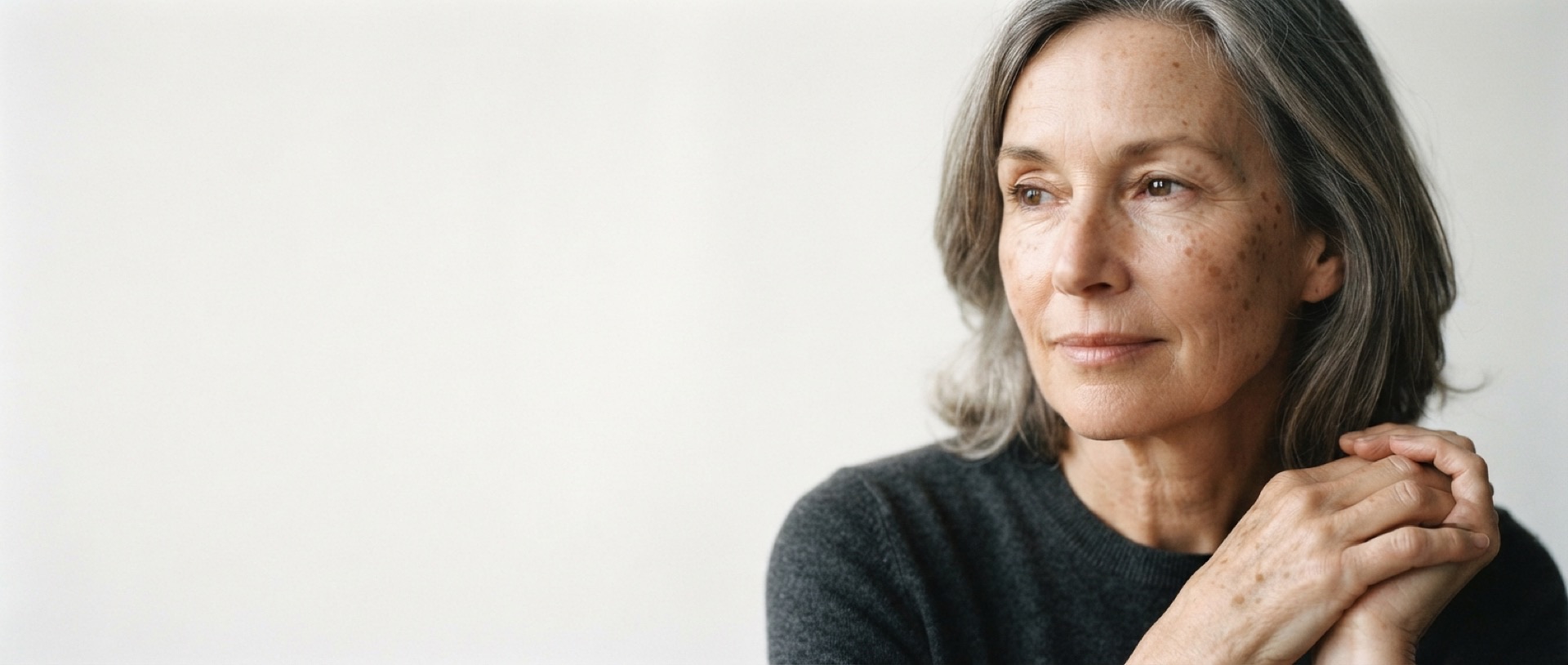
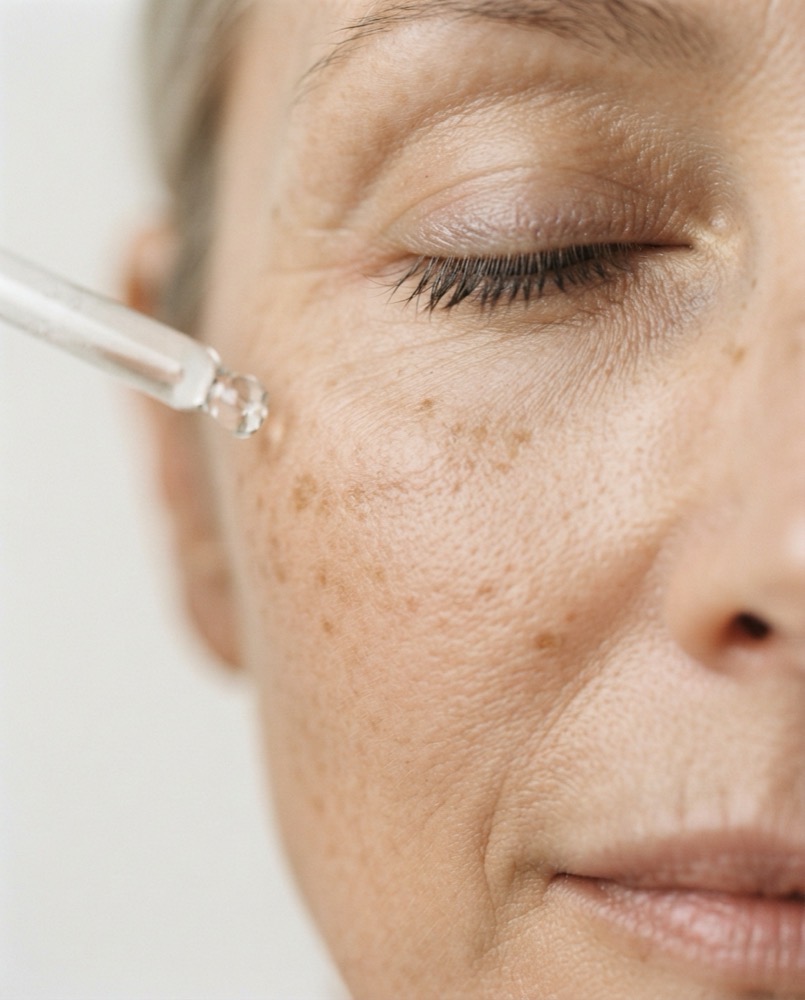
Sun spots are flat patches of concentrated pigment that form where skin has taken the most ultraviolet exposure – cheeks, nose, forehead, hands, shoulders and chest. Dermatologists call them solar lentigines; they are the same thing as age spots.
They are harmless, but they are a visible marker of accumulated photodamage, and they usually arrive alongside other signs of it: fine lines, loss of firmness and an uneven overall tone.
What causes sun spots?
UV radiation prompts melanocytes to produce extra melanin as a defence. With repeated exposure that response becomes localised and fixed, leaving discrete patches instead of an even tan that fades.
Tanning beds, sunburns in childhood, fair skin and outdoor time without protection all increase the count. Incidental exposure – driving, walking, sitting near a window – adds up more than most people expect.
What ingredients are best for sun spots?
Retinoids to accelerate turnover, vitamin C to protect and brighten, and pigment inhibitors such as alpha arbutin, kojic acid, azelaic acid, tranexamic acid and liquorice root are the core toolkit.
Gentle AHAs help shift surface pigment, and niacinamide slows the transfer of melanin into skin cells. None of it holds without daily broad-spectrum SPF and reapplication. Take our Skin Quiz.