What is collagen in skincare?
Collagen is the structural protein that makes up roughly three-quarters of the skin’s dry weight. It forms the scaffolding in the dermis that keeps skin firm, thick and resilient, and production begins declining from the mid-twenties.
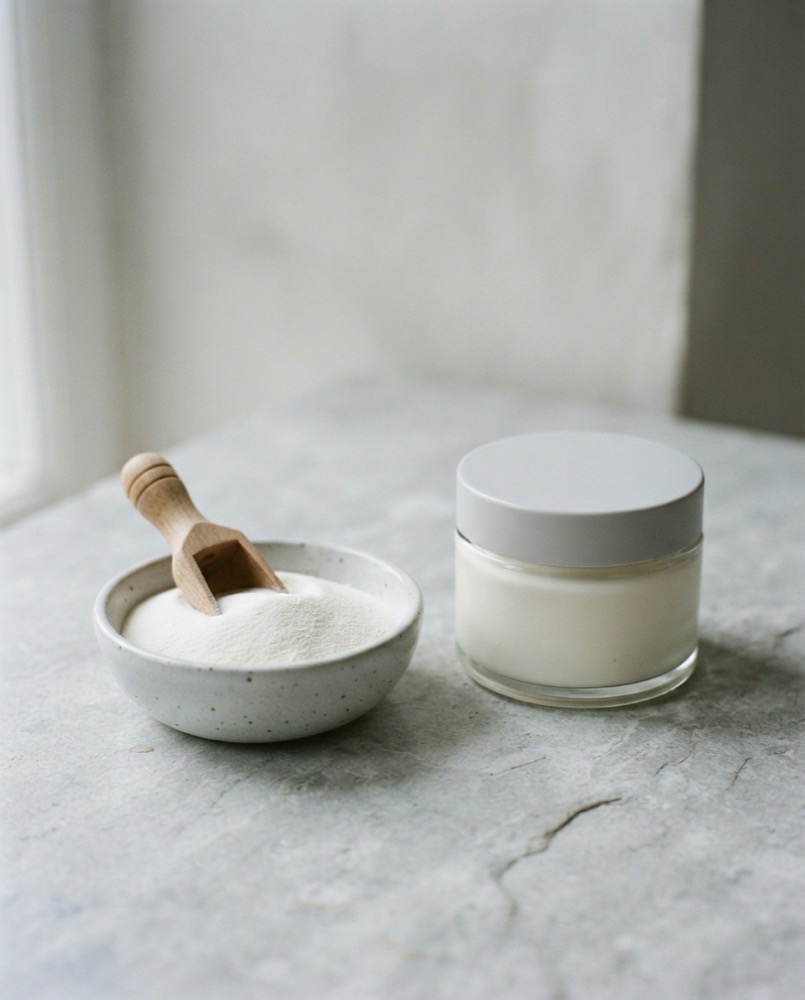
In products it appears either as hydrolysed collagen – broken into smaller peptides – or as an oral supplement. Whole collagen molecules are far too large to cross the skin barrier, so topical collagen works as a humectant and film-former rather than by replacing what you have lost.
What skin concerns does collagen treat?
Applied topically, hydrolysed collagen hydrates the surface and temporarily plumps fine lines, improving smoothness and how skin reflects light.
Taken orally the evidence is stronger: a systematic review and meta-analysis of randomised trials found hydrolysed collagen supplementation improved skin hydration and elasticity, with most studies running eight to twelve weeks.
What ingredients are best paired with collagen?
Vitamin C is the essential partner, because it is a required cofactor for the enzymes that cross-link collagen – without it, your body cannot build collagen regardless of intake.
Retinoids and peptides stimulate fibroblasts to produce more of their own, which does more for firmness than any collagen you apply. Hyaluronic acid, ceramides and daily SPF protect what is already there. Take our Skin Quiz.
What are fine lines?
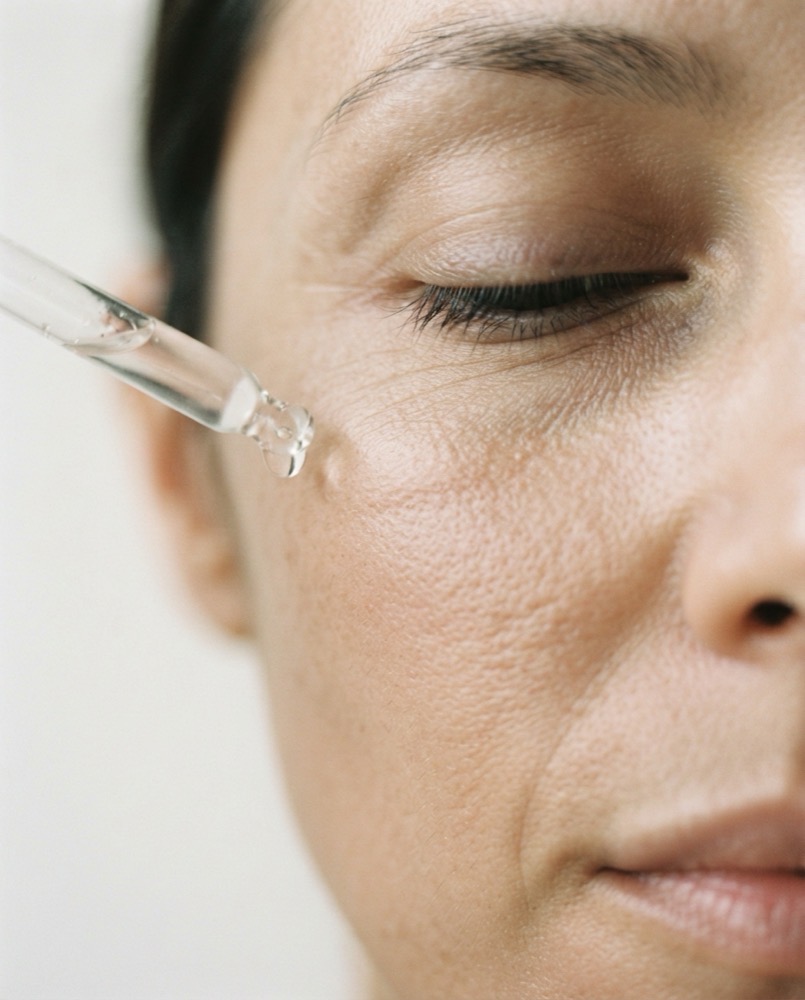
Fine lines are the earliest visible sign of skin ageing: shallow creases that appear where skin is thinnest and most expressive – around the eyes, across the forehead, and at the corners of the mouth.
They differ from established wrinkles in that they are often still dynamic, showing mainly when you smile or squint, and are frequently worsened by dehydration. That makes them the most responsive stage to treat.
What causes fine lines?
Intrinsic ageing does part of the work: collagen production falls by roughly one per cent a year from the mid-twenties, elastin degrades, and the dermal matrix thins so skin no longer springs back.
The larger share is external. Ultraviolet exposure accounts for the majority of visible facial ageing, and pollution, smoking, poor sleep, sugar-driven glycation and repeated facial movement all accelerate it. Dehydration makes existing lines look deeper than they are.
What ingredients are best for fine lines?
Retinol and prescription retinoids have the strongest evidence for stimulating collagen and smoothing texture. Vitamin C protects against free-radical damage while supporting collagen synthesis, and peptides signal the skin to rebuild.
Pair those with hyaluronic acid and ceramides for immediate plumping and barrier support, niacinamide for tone, gentle AHAs for surface renewal, and coenzyme Q10 as an antioxidant. Daily broad-spectrum SPF protects everything else you are doing. Take our Skin Quiz.