

What is butylene glycol in skincare?
Butylene glycol, or 1,3-butylene glycol, is a small alcohol used as a solvent, humectant and texture agent. Like propanediol and propylene glycol it is a workhorse rather than a star, appearing high on ingredient lists because formulas need it to function.
It dissolves ingredients that water alone cannot carry, thins heavy formulations to a pleasant consistency, and helps actives spread and penetrate evenly.
What skin concerns does butylene glycol treat?
It hydrates lightly by drawing water into the surface layers, and it is non-comedogenic and weightless, which makes it common in products aimed at oily and acne-prone skin.
Mostly, though, its value is what it enables: the vitamin C, salicylic acid or plant extract next to it in the formula reaches the skin in usable form. Allergic contact dermatitis to butylene glycol is documented but uncommon, and it is generally better tolerated than propylene glycol.
What ingredients are best paired with butylene glycol?
It pairs with essentially everything, and is most often seen alongside glycerin, hyaluronic acid and botanical extracts it helps keep in solution.
One thing worth knowing if you have reacted to propylene glycol: there is documented cross-reactivity between propylene glycol and butylene glycol, so a known allergy to one is a reason to patch test the other rather than assume it is safe. Take our Skin Quiz.
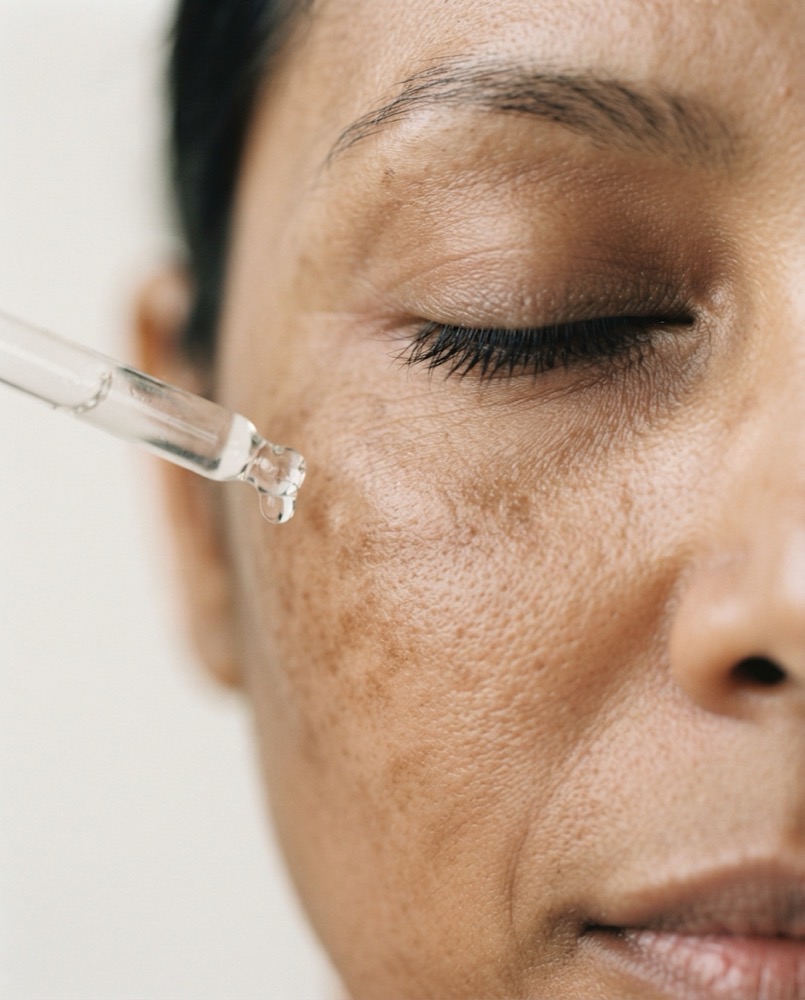
What is pigmentation?
Pigmentation refers to any change in the colour of the skin caused by melanin. Hyperpigmentation – the common form – means patches darker than your natural tone, including sun spots, melasma, freckles and the marks left behind after acne or injury.
Melanin is produced by melanocytes in the lower epidermis and handed to surrounding skin cells. When that process is over-stimulated or unevenly distributed, the result is a visible patch rather than an even tone.
What causes pigmentation?
Ultraviolet exposure is the single largest trigger, because UV directly activates melanin production as a protective response. Inflammation is the second: acne, eczema, friction, waxing, burns or harsh procedures can all leave post-inflammatory hyperpigmentation, which is more common and longer-lasting in deeper skin tones.
Hormonal change, certain medications, heat and genetics complete the picture. Without daily sun protection, treated pigment reliably returns.
What ingredients are best for pigmentation?
The most effective topicals work at different points of melanin production: vitamin C and niacinamide, azelaic acid, tranexamic acid, alpha arbutin, kojic acid and liquorice root extract.
Retinoids and gentle AHAs speed up turnover so pigmented cells clear faster. But broad-spectrum SPF worn daily is the ingredient that decides whether any of it holds – without it, results reverse within weeks. Take our Skin Quiz.