

What is benzoyl peroxide in skincare?
Benzoyl peroxide is an organic peroxide used topically for acne. It releases oxygen into the follicle, which kills Cutibacterium acnes – the bacterium that drives inflammatory breakouts – and mildly loosens the plug of dead cells at the same time.
Its great advantage is that bacteria do not develop resistance to it, unlike topical antibiotics. Over-the-counter strengths run from 2.5% to 10%.
What skin concerns does benzoyl peroxide treat?
It is most effective on inflammatory acne – red papules and pustules – and less so on plain blackheads, where salicylic acid or a retinoid does more.
Trial evidence is consistent, and importantly shows 2.5% works about as well as 10% with considerably less dryness and irritation. Starting low is genuinely the better strategy, not a compromise.
What ingredients are best paired with benzoyl peroxide?
Niacinamide, hyaluronic acid, ceramides and squalane offset the dryness it causes. Using it as a short-contact wash – applied, left five minutes, rinsed – gives most of the benefit with far less irritation.
Keep it away from retinoids and vitamin C in the same application, since it can oxidise them; use one in the morning and the other at night. It bleaches fabric, so expect marks on towels and pillowcases. Take our Skin Quiz.
What is uneven skin tone?
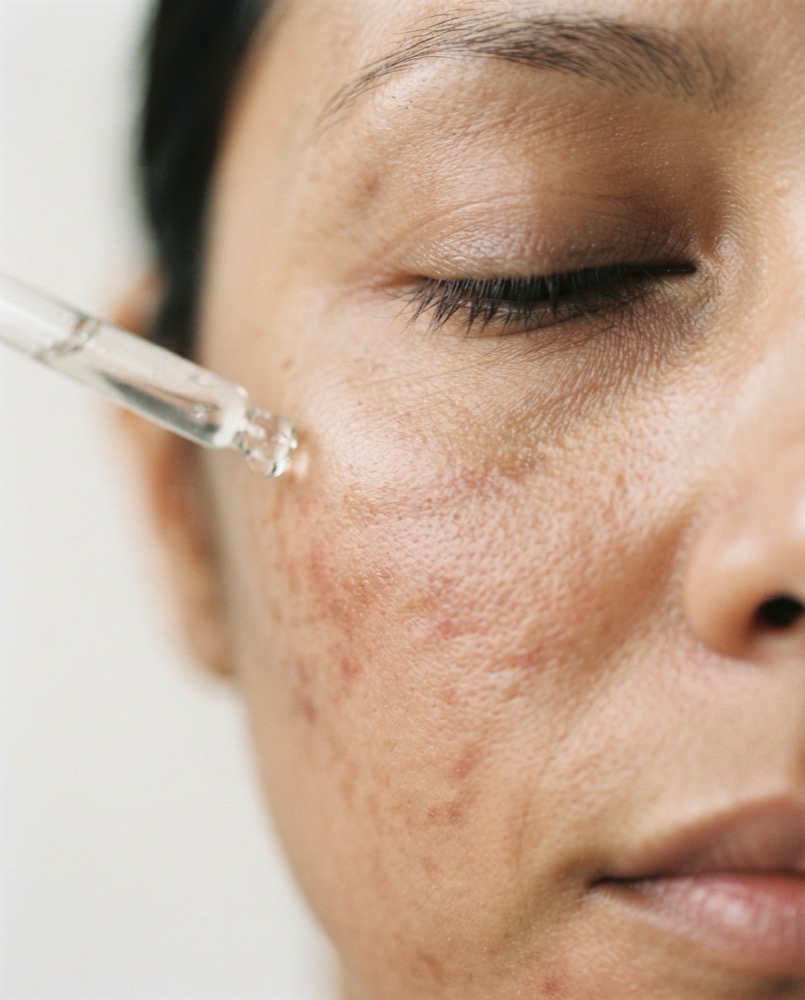
Uneven skin tone describes a complexion that reads patchy rather than uniform – a mix of darker and lighter areas, lingering red or brown marks, blotchy cheeks, and a general loss of clarity.
It usually combines several things at once: hyperpigmentation from sun or inflammation, persistent redness, and surface build-up of dead cells that makes the whole face look mottled and dull.
What causes uneven skin tone?
Ultraviolet exposure is the dominant cause, stimulating melanin unevenly across the face. Post-inflammatory marks from acne, eczema or irritation add brown or red patches that can persist for months.
Hormonal pigmentation, slowed cell turnover with age, dehydration, pollution, smoking and a damaged barrier all compound it. Aggressive scrubbing or unsupervised strong actives frequently make tone more uneven, not less.
What ingredients are best for uneven skin tone?
Vitamin C and niacinamide are the reliable everyday choices – one protects and brightens, the other evens tone and strengthens the barrier. Azelaic acid is unusually useful because it addresses brown marks and redness at once.
Add gentle exfoliation with lactic or glycolic acid to clear surface build-up, retinol to accelerate turnover, and alpha arbutin or tranexamic acid for stubborn pigment. Daily broad-spectrum SPF is what makes the results stick. Take our Skin Quiz.