What is beeswax in skincare?
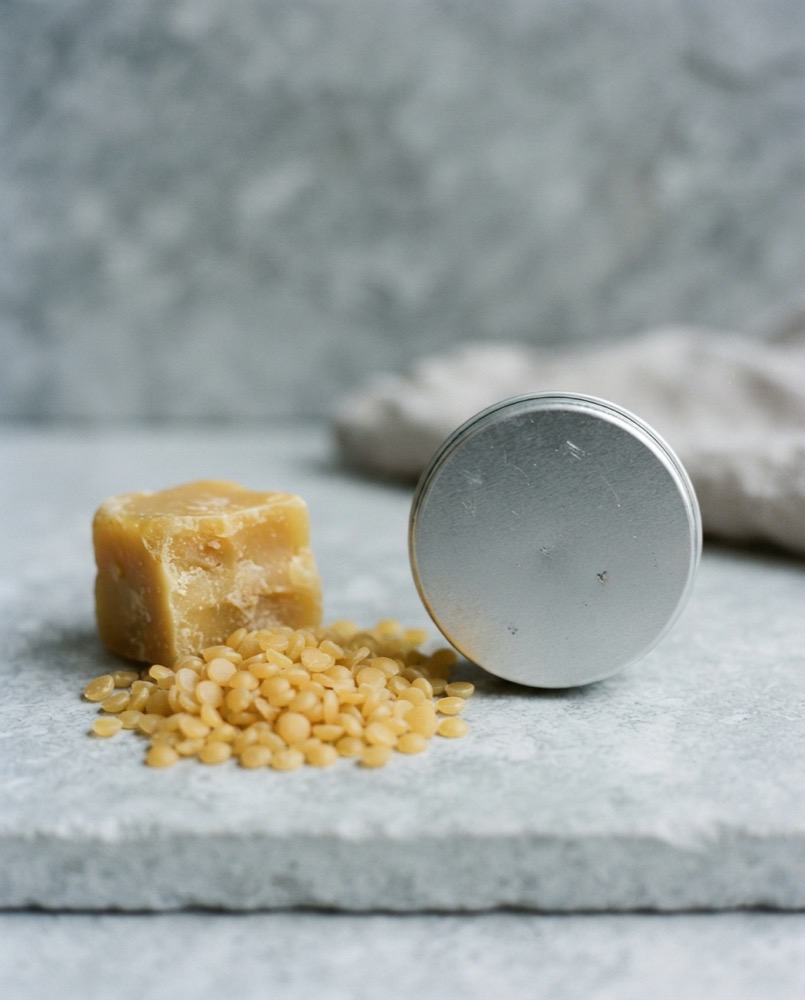
Beeswax, listed as cera alba or cera flava, is the wax honeybees secrete to build honeycomb. Chemically it is a mix of long-chain esters, fatty acids and hydrocarbons, solid at room temperature and softening at body heat.
In formulation it is a structural ingredient as much as a functional one: it thickens, stabilises emulsions, and determines whether a product sets as a firm balm or a soft cream. Reviews of beeswax in skincare cover both roles.
What skin concerns does beeswax treat?
It forms a breathable occlusive film that slows water loss without sealing the skin completely, which makes it excellent for lips, hands, cuticles and wind-exposed skin. Work on bee products in cosmetic matrices documents measurable hydration and barrier gains.
It also contains vitamin A and has mild anti-inflammatory and antibacterial activity. It is comedogenic enough that heavy beeswax balms are best kept off acne-prone facial skin.
What ingredients are best paired with beeswax?
It is the structural partner to shea butter, plant oils and squalane in balms, and works best applied over a hydrating layer so it seals moisture in rather than sealing dryness under.
Honey and propolis are natural companions in bee-derived formulas. Note that beeswax and propolis contact allergy do occur, and the two often cross-react – if you react to one, treat the other with caution. Vegans can look to candelilla or carnauba wax. Take our Skin Quiz.
What are sun spots?
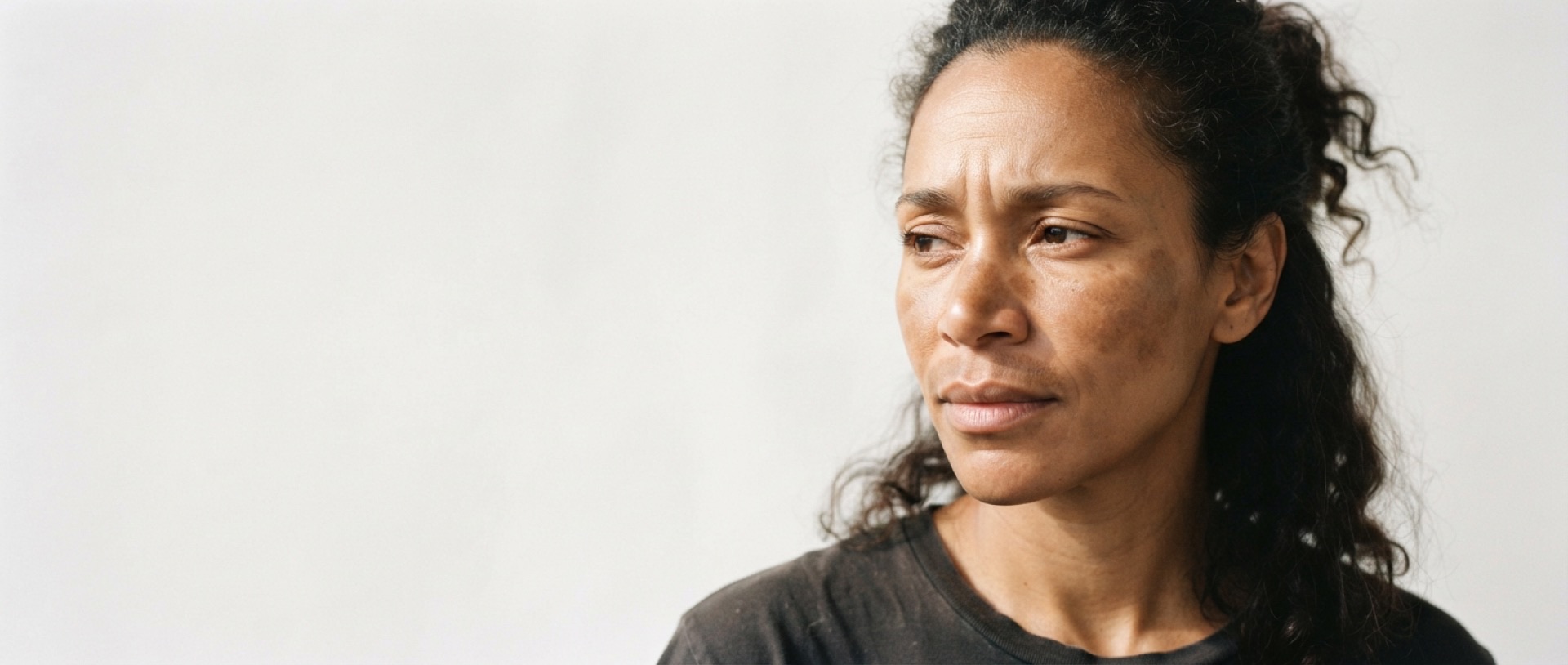
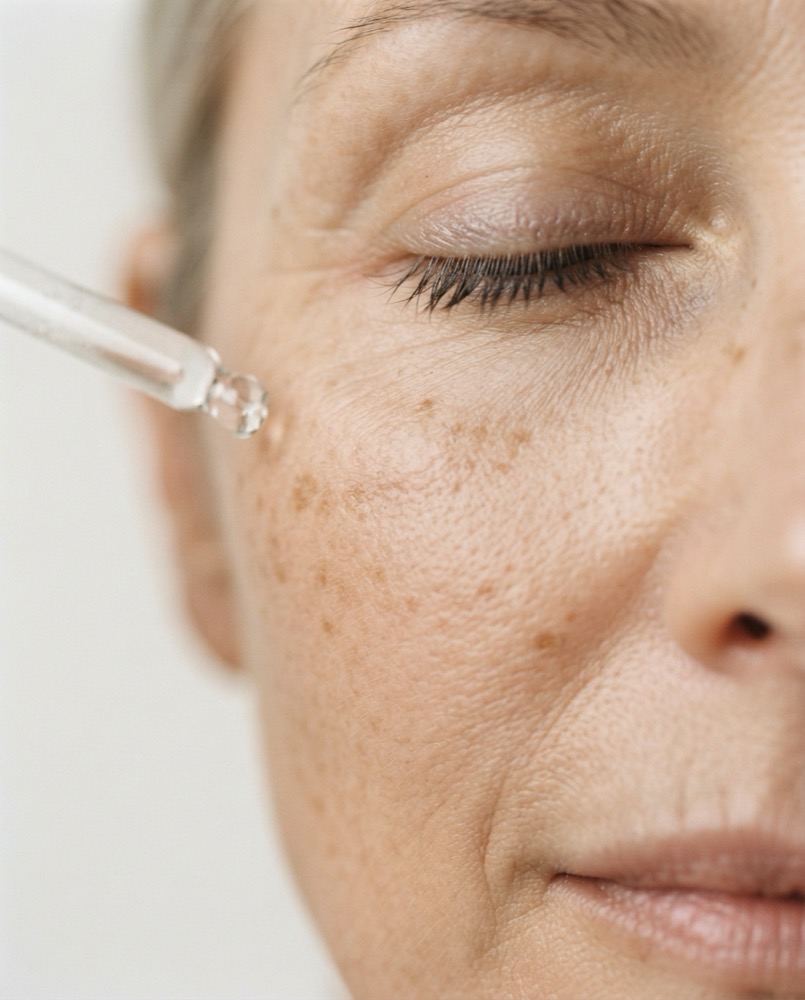
Sun spots are flat patches of concentrated pigment that form where skin has taken the most ultraviolet exposure – cheeks, nose, forehead, hands, shoulders and chest. Dermatologists call them solar lentigines; they are the same thing as age spots.
They are harmless, but they are a visible marker of accumulated photodamage, and they usually arrive alongside other signs of it: fine lines, loss of firmness and an uneven overall tone.
What causes sun spots?
UV radiation prompts melanocytes to produce extra melanin as a defence. With repeated exposure that response becomes localised and fixed, leaving discrete patches instead of an even tan that fades.
Tanning beds, sunburns in childhood, fair skin and outdoor time without protection all increase the count. Incidental exposure – driving, walking, sitting near a window – adds up more than most people expect.
What ingredients are best for sun spots?
Retinoids to accelerate turnover, vitamin C to protect and brighten, and pigment inhibitors such as alpha arbutin, kojic acid, azelaic acid, tranexamic acid and liquorice root are the core toolkit.
Gentle AHAs help shift surface pigment, and niacinamide slows the transfer of melanin into skin cells. None of it holds without daily broad-spectrum SPF and reapplication. Take our Skin Quiz.