What is beeswax in skincare?
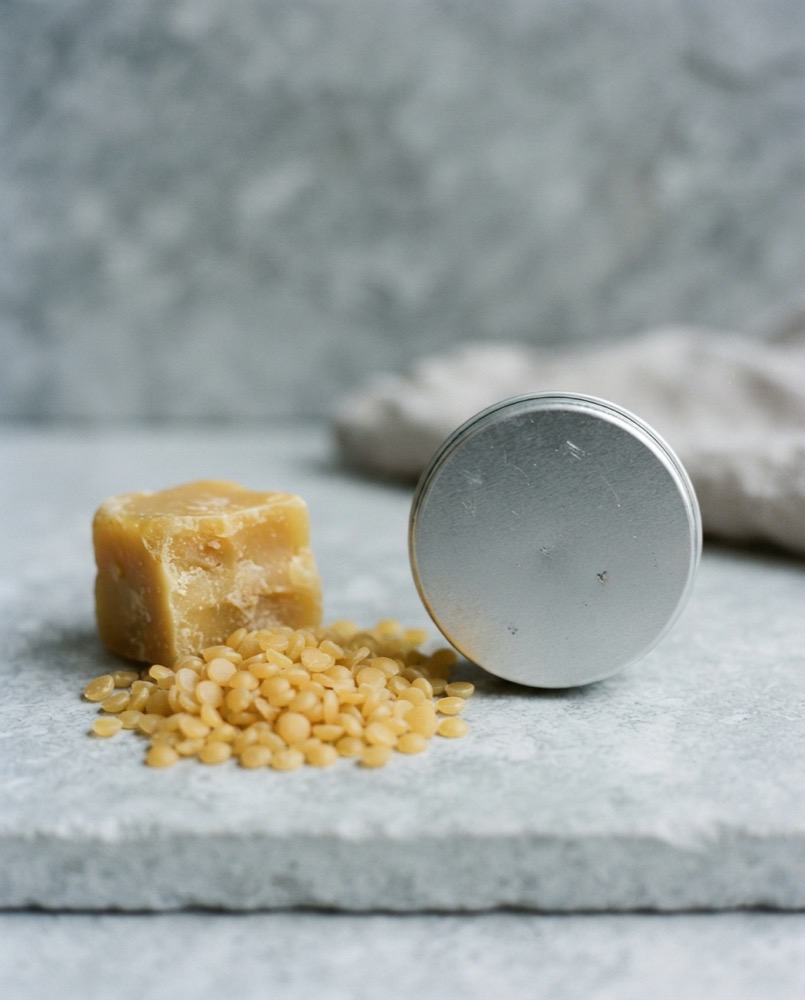
Beeswax, listed as cera alba or cera flava, is the wax honeybees secrete to build honeycomb. Chemically it is a mix of long-chain esters, fatty acids and hydrocarbons, solid at room temperature and softening at body heat.
In formulation it is a structural ingredient as much as a functional one: it thickens, stabilises emulsions, and determines whether a product sets as a firm balm or a soft cream. Reviews of beeswax in skincare cover both roles.
What skin concerns does beeswax treat?
It forms a breathable occlusive film that slows water loss without sealing the skin completely, which makes it excellent for lips, hands, cuticles and wind-exposed skin. Work on bee products in cosmetic matrices documents measurable hydration and barrier gains.
It also contains vitamin A and has mild anti-inflammatory and antibacterial activity. It is comedogenic enough that heavy beeswax balms are best kept off acne-prone facial skin.
What ingredients are best paired with beeswax?
It is the structural partner to shea butter, plant oils and squalane in balms, and works best applied over a hydrating layer so it seals moisture in rather than sealing dryness under.
Honey and propolis are natural companions in bee-derived formulas. Note that beeswax and propolis contact allergy do occur, and the two often cross-react – if you react to one, treat the other with caution. Vegans can look to candelilla or carnauba wax. Take our Skin Quiz.
What is bumpy skin?
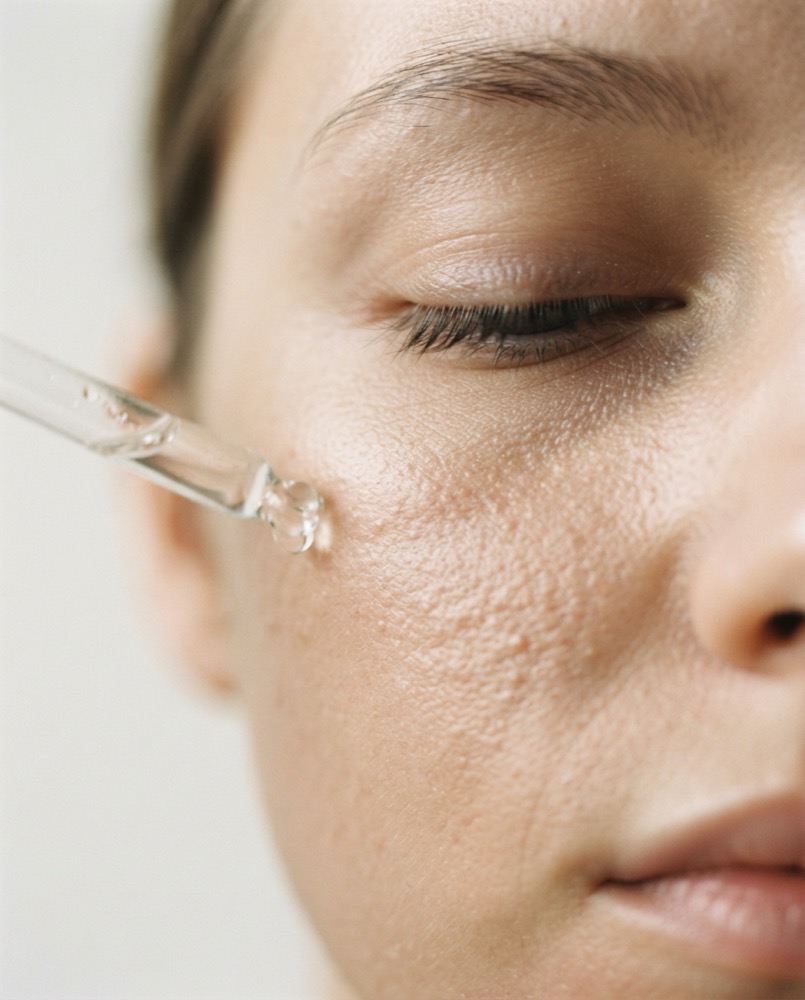
Bumpy skin is a texture problem rather than a single condition. It covers the rough, uneven surface you can feel more than see – most often keratosis pilaris (small hard bumps on the upper arms, thighs and cheeks), closed comedones, milia, or simple build-up of dead cells on the surface.
Keratosis pilaris in particular affects a large share of the population and is harmless, but it makes skin feel like sandpaper and can be stubborn to smooth out.
What causes bumpy skin?
Most bumpy texture comes from keratin plugging the follicle. When dead cells fail to shed cleanly, they collect at the pore opening and form a firm bump – a process closely linked to a weakened permeability barrier and low skin hydration.
Genetics, dry skin, cold weather, eczema and a history of over-scrubbing all make it worse. Aggressive physical exfoliation tends to backfire, inflaming the follicle and thickening the plug.
What ingredients are best for bumpy skin?
Chemical exfoliation works far better than scrubbing. Salicylic acid clears inside the follicle, lactic and glycolic acid loosen surface build-up, and urea both exfoliates and hydrates.
Retinoids normalise how skin sheds over time, while ceramides, niacinamide and hyaluronic acid keep the barrier strong so the plugs stop reforming. Consistency matters more than strength here. Take our Skin Quiz to work out which exfoliant your skin can tolerate.